Why Is Barolo So Expensive?
The real reasons a bottle of Barolo costs what it costs: 38 months of ageing, 2,288 hectares of Nebbiolo, tiny villages and a global reputation, plus the cheapest honest ways to drink it where it is made.
 By Chiara Barbero, Piedmont Bike Tour Guide and Langhe Cycling Specialist
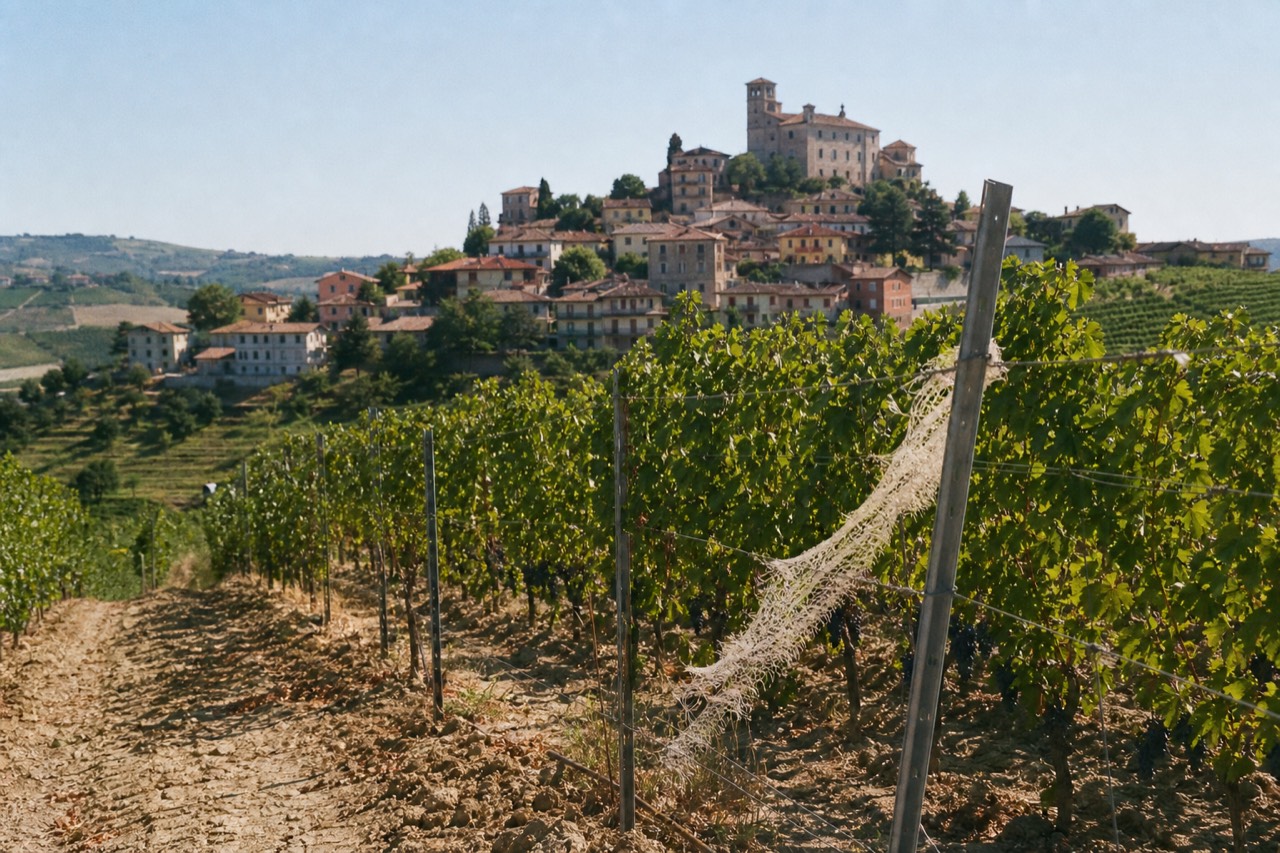
Barolo comes from roughly 2,288 hectares of vineyard across 11 communes in the province of Cuneo, and every bottle must be 100% Nebbiolo aged at least 38 months, 18 of them in wood, counted from 1 November of the harvest year. That is the whole pricing story in one sentence: a small, legally frozen production zone, a late-ripening grape that only makes wine worth the name in a handful of hills, and a cellar obligation that ties up the producer's money for more than three years before a single bottle can legally be sold.
Everything else, the auction prices, the critic scores, the tourist boom since the 2014 UNESCO inscription, sits on top of that base. This article takes the price apart honestly: what the law forces, what the land limits, what the market adds, and where the cheapest legitimate glass is actually found, which is, unsurprisingly for a cycling site, in the village the wine is named after.
Why Is Barolo So Expensive?
Barolo is expensive because supply is legally capped and release is legally delayed. Only 11 communes can grow the grapes, only Nebbiolo counts, and no bottle can be sold until it has spent 38 months ageing, which means every vintage sits unsold in cellars for over three years while costs accrue. Add a global reputation built over two centuries and you get a wine whose price floor cannot fall far.
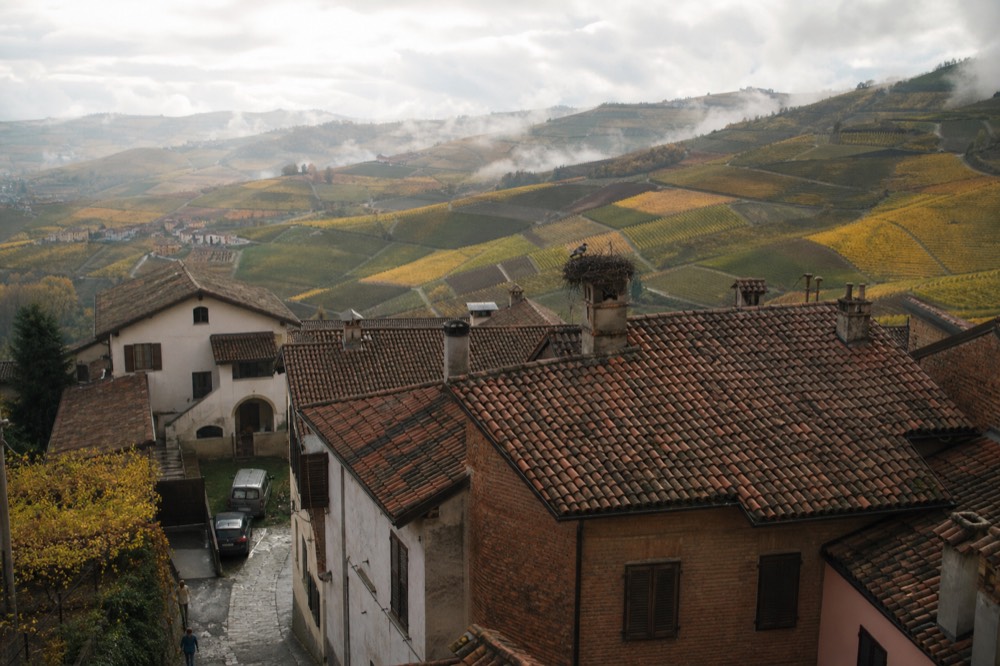
Start with the supply side, because it is fixed by law rather than by choice. The Barolo production zone covers the entire territory of only three communes, Barolo, Castiglione Falletto and Serralunga d'Alba, plus parts of eight more including La Morra, Monforte d'Alba and Novello. Vineyard land inside that zone cannot be expanded on a whim: the denomination's boundaries descend from a ministerial decree of 1933, and the planted area stood at 2,288 hectares in 2025, up 10.6% in a decade but still a fraction of, say, Chianti's scale. When a wine's raw material is confined to one corner of one province, price pressure is structural.
Then there is the grape. Nebbiolo is famously awkward: it ripens later than almost every other Piemontese variety, it is thin-skinned and prone to disease, and away from its best slopes it makes pale, sharp wine rather than the powerful stuff the name promises. The Consorzio's own disciplinare is blunt that Barolo must come exclusively from Nebbiolo vineyards, no blending is permitted. A producer cannot hedge a weak vintage with a friendlier grape the way many regions do.
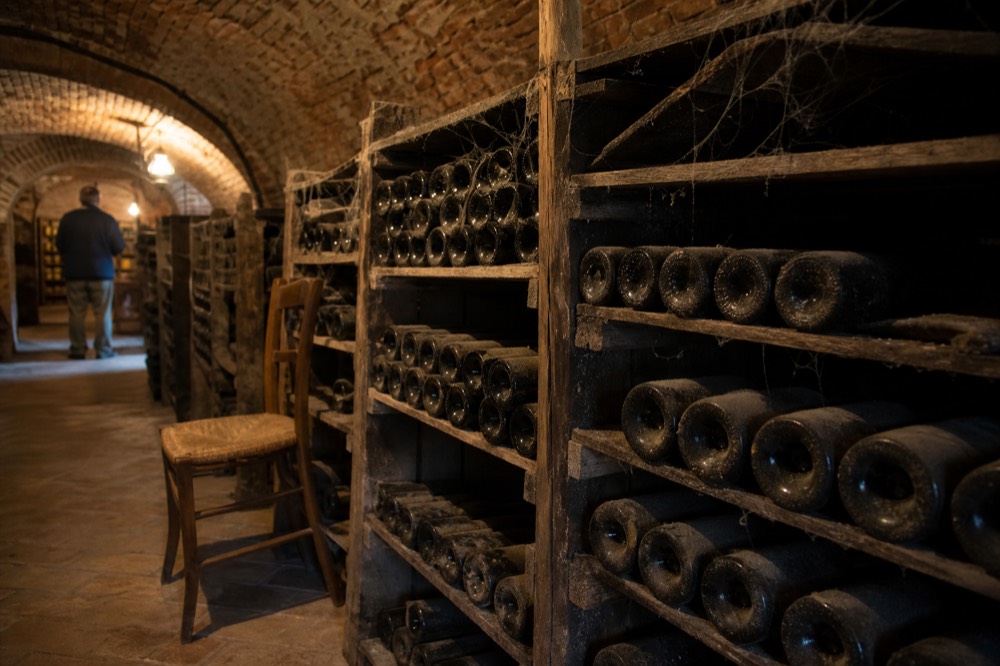
The ageing rule is the third pillar and the least understood. The 38-month minimum, counted from 1 November of the harvest year, is not a marketing choice, it is in the production rules alongside the 62-month minimum for Barolo Riserva. For a producer that means barrels of unsold inventory, warehouse space, tied-up capital and, in the oak barrels required for at least 18 of those months, real equipment cost, all before a single euro comes back. Wine economics being what it is, that wait is priced into the bottle.
Finally, demand. Barolo has been called the "wine of kings" since the 19th century, the Langhe was inscribed by UNESCO in 2014, and Langhe Monferrato Roero recorded 761,274 arrivals in 2025, up 9.6% year on year. Reputation plus capped supply is the classic expensive-wine formula, and Barolo ticks both boxes harder than most.
Riding between the villages is the most direct way to see how small all of this really is, and a guided e-bike loop is the format most visitors settle on.
How Much Does A Bottle Of Barolo Actually Cost?
There is no single answer, but the honest spread runs from roughly 25 to 40 euro for a supermarket or enoteca entry bottle from a small producer, 45 to 80 euro for a good mid-tier estate wine, and 100 euro upward for named-cru bottles, with the top collector wines reaching four figures. At the very top, one Barbaresco neighbour averages $1,308 per bottle at retail, which shows where the ceiling sits for the whole hill family.
The floor of the market is more accessible than most people assume. Plenty of honest, small-producer Barolo, often from younger vines or less famous MGA crus, sells in Alba's enoteche and Italian supermarkets in the 25 to 40 euro band. It is still Barolo: same 11-commune zone, same 100% Nebbiolo, same 38-month wait. What you give up at that price is cellar pedigree and single-vineyard fame, not legality or typicity.
The middle of the market, where most readers will actually buy, is the 45 to 80 euro band for estate wines from known producers. Above that, bottles carrying a famous MGA name such as Brunate or Cerequio climb quickly, and the 2026 Gambero Rosso guide awarded Tre Bicchieri to several 2021 Barolos including Vietti's Barolo Brunate and Michele Chiarlo's Barolo Cerequio, the kind of score that adds a premium layer to an already sought-after label.
| Price band (retail) | What you typically get | Where it is easiest to find |
|---|---|---|
| ~25-40 euro | Entry Barolo from small or cooperative producers, younger vineyards, no famous cru name | Supermarkets in Piemonte, Alba enoteche, cellar-door sales |
| ~45-80 euro | Estate Barolo from a named producer, often a village-level blend | Wine shops, producer direct, regional online retailers |
| ~80-150 euro | Single MGA cru bottles from established estates | Specialist wine merchants, allocation lists |
| 150 euro+ | Top crus, old vines, benchmark producers, collector vintages | Fine-wine retailers and auctions |
One comparison worth holding in mind: the 2025 Piemontese vintage closed 7-10% below 2024 in quantity, at roughly 2.15 million hectolitres, but with high quality ratings, eight to nine stars on the Consorzio's own annual scale, for Nebbiolo. Scarcity plus quality is exactly the combination that pushes the middle band upward in the years that follow.
What Makes Barolo Different From Cheaper Nebbiolo Wines?
The difference is the zone and the cellar time, not the grape. Langhe Nebbiolo and Barolo can come from the same hills and the same variety, but Barolo must come from the 11-commune zone and must age 38 months, while Langhe Nebbiolo has lighter rules and can be released young. That is why a Langhe Nebbiolo can cost a third of a Barolo from vines a few hundred metres apart.
This is the single most useful thing a price-conscious drinker can learn, and we cover the full comparison in Barolo vs Langhe Nebbiolo explained. In short: Langhe DOC is the region's flexible appellation, it grew 101.3% in vineyard area over the last decade, more than Barolo's entire planted footprint, and it lets producers make approachable Nebbiolo without the long ageing obligation. The wine can be very good. It is simply not allowed to be Barolo.
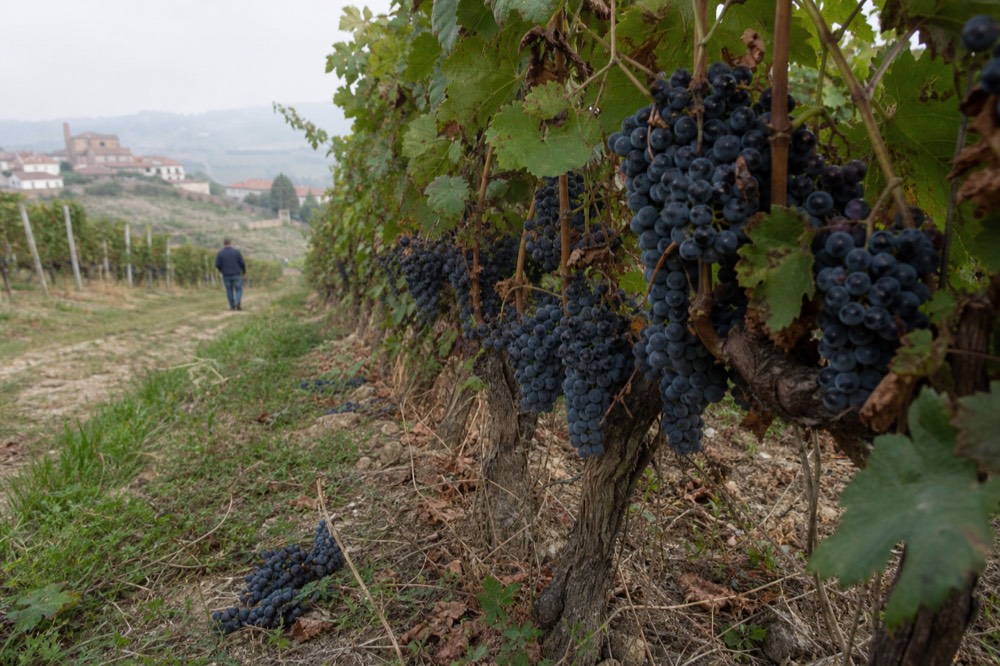
The same logic runs toward Barbaresco, the other great Nebbiolo of the hills. Barbaresco needs 24 months of ageing, 9 in oak, against Barolo's 38 and 18, from a zone made up of Barbaresco, Treiso, Neive and part of Alba. Same grape, same hills, roughly a year and a half less cellar time, and usually a meaningfully lower shelf price. If the question is "how do I drink this style of wine for less", Barbaresco and Langhe Nebbiolo are the two honest answers, and we weigh them up in is Barbaresco better than Barolo?.
For a visitor standing in the hills, the cheapest legitimate route into Barolo is not a bottle at all, it is the tasting room. Langhe wine tastings with a cellar visit in the Alba area are listed from around 25 to 50 euro per person, and many cellars pour their entry Barolo as part of a flight, which means the cost of trying the wine where it was made can be a tenth of taking a bottle home.
Should you book a cellar visit or ride to the villages?
If you are already coming to the Langhe, the villages themselves are compact enough that a bike is a genuinely practical way between them. Barolo village has 613 residents, Serralunga d'Alba 484, Castiglione Falletto 655: this is not a region of sprawling estates, it is a cluster of hamlets a few kilometres apart, every one of them inside about 20 km of Alba.
A guided loop removes the two real frictions, route-finding on unmarked farm roads and guessing which cellars take walk-ins. The Langhe Slow e-bike tour between Serralunga d'Alba and Barolo runs about 5.5 hours from $157 per person and visits two of the villages whose names are on the labels, which is the closest thing to understanding the price tag: you can see with your own eyes how few hectares there actually are.
Where Does The Money In A Barolo Bottle Go?
Mostly into time, land and labour. The 38-month ageing rule ties up capital, the zone's tiny area makes vineyard land extraordinarily scarce, Nebbiolo's late ripening and disease sensitivity raise farming cost per bottle, and small family estates spread all of that across modest production. Distribution, marketing and, more recently, import tariffs add the final layers on top of the cellar door price.
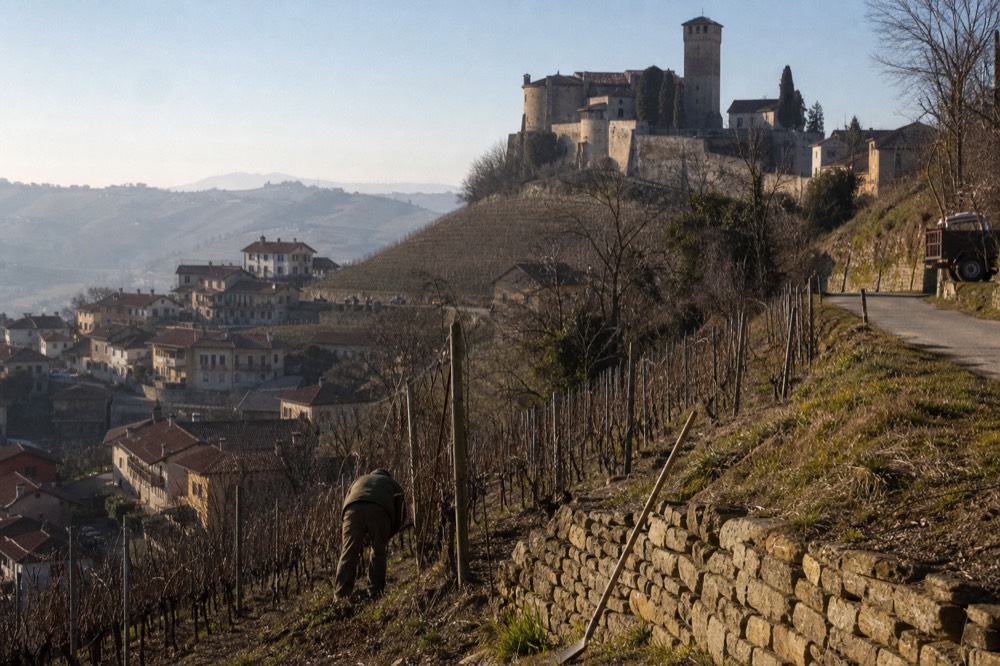
Work backwards from the glass. Nebbiolo is picked last of the major Piemontese varieties, in the Langhe typically from late September, with Barolo fruit often the last off the hill around early October, which means a full season of exposure to weather risk. The 2026 season made the point brutally: record heat brought the Nebbiolo harvest forward into early September, and a supercell on 7 August dropped 80 mm of rain and hail on Langhe vineyards just before picking. A grape that hangs longest costs most to protect.
Then the wait. Thirty-eight months is not just storage, it is oak barrels (18 months minimum), temperature-controlled cellar space, evaporation losses, and for the Riserva tier, 62 months. A producer selling the 2026 vintage cannot legally part with a single bottle until that vintage has passed its full ageing window more than three years later, and has been paying for the wine continuously since the vines were pruned in winter 2025. Few products legally require the manufacturer to bank three years of working capital per unit before the first sale, and that cost is not optional, it is the disciplinare, published by the Consorzio at langhevini.it.
Then the land. With the zone frozen and demand global, vineyard values inside the 11 communes reflect scarcity in its purest form. No verified per-hectare figure for Barolo-zone vineyard land is published on this site, but the direction is not in doubt: a denomination whose entire planted area is 2,288 hectares cannot expand to meet demand, and everything from the 2014 UNESCO inscription to the post-pandemic tourism wave has pushed more buyers at that fixed supply.
Finally the market layers: export costs, and in 2026, tariffs. The 15% US tariff confirmed in September 2026 lands on American shelves, not on Italian cellar doors, which is one more reason the advice below is not just romantic, it is cheaper.
What Is The Cheapest Legitimate Way To Drink Barolo?
Drink it in the Langhe, in the cellar it came from. A tasting flight at a producer or enoteca runs roughly 25 to 50 euro and typically includes the estate's Barolo, against 45 euro or more to buy the same bottle retail at home. Add the fact that cellar-door visits, village festivals and by-the-glass pours at local bars exist at every price point, and the region itself is the discount.
This is where the price-objection question honestly ends. The wine is expensive everywhere, but it is least expensive, and most generously poured, where it is made. The Festa del Vino in Alba's historic centre runs on two September Sundays with a Via del Vino tasting at 18 euro including the glass and bag, and Cantine Aperte, the national open-cellars weekend, took place across the Langhe at the end of May, with participating Barolo-area cellars pouring flights alongside visits. Festival formats like these let you taste several producers' Barolo for the cost of one bottle.
The second honest discount is the glass pour. Bars and enoteche in Alba, La Morra and Barolo village sell Barolo by the glass, and while prices vary, a pour is the only way to try a 100-euro wine for a fraction of the bottle. The third is the vertical option covered earlier: Langhe Nebbiolo and Barbaresco give you the grape and the hills for less, and a good cellar visit will pour them side by side so you can taste exactly what the 38 months and the zone buy you.
And the fourth, if you are mobile, is combining the tasting with the villages. An e-bike rental with food and wine experiences included in the Langa del Barolo runs from $52 per person for about a day, which puts several cellar villages within reach without a car, and leaves more of the budget for what is in the glass. Check availability for the guided Serralunga-Barolo loop if you would rather have the route and the cellar stops arranged, or read our planning piece on wineries in Piedmont that welcome visitors. This is the approach Piedmont Bike Tours was built around: the wine's price is fixed by law and scarcity, but your cost to taste it is not.
The pattern across all four routes is the same: the wine's price is fixed by law and scarcity, but your cost to taste it is not. The region rewards being there in person, on foot or on two wheels, far more than any wine shop at home does.
These are the questions buyers actually ask once they see the shelf price, answered with the verified figures above: the legal ageing minimum, the size of the zone, the honest retail bands and the cheaper neighbouring wines that share the same grape and the same hills.
Common Questions About Barolo's Price
why is barolo so expensive?
Barolo is expensive because its supply is capped by law, only 11 communes can grow it, only Nebbiolo counts, and the planted area is 2,288 hectares, and because every bottle must age 38 months before it can be sold, tying up producers' capital for over three years per vintage. A global reputation built over two centuries, and demand sharpened by UNESCO-listed tourism since 2014, sits on top of that fixed supply.
Is Barolo worth the money?
At cellar-door and village prices, for most wine drinkers yes: a 25 to 50 euro tasting flight at the producer is one of the best value ways to drink benchmark Nebbiolo. At collector retail prices for famous crus, worth becomes a personal judgement about pedigree and ageing potential rather than raw pleasure per euro.
What is a cheap alternative to Barolo?
Langhe Nebbiolo and Barbaresco, in that order. Both use the same grape from the same hills: Langhe Nebbiolo carries lighter ageing rules and typically costs a third of Barolo, while Barbaresco needs 24 months of ageing against Barolo's 38 and usually sells for meaningfully less.
How long must Barolo age before it can be sold?
A minimum of 38 months, of which at least 18 in wood, counted from 1 November of the harvest year. Barolo Riserva requires 62 months. This is a legal requirement in the production rules, not a producer preference, and it is a major component of the wine's cost.
Does Barolo get cheaper if you buy it in Piedmont?
Generally yes. Entry-level Barolo from small producers is common in Alba's enoteche and regional supermarkets in the 25 to 40 euro band, cellar-door sales cut out distribution layers, and festival tastings and by-the-glass pours let you taste the wine for a fraction of a bottle's price.