What Is The Best White Wine From Piedmont?
The honest answer to Piedmont's best white wine: Gavi, Roero Arneis and Alta Langa compared, with real market figures and where each fits on a Langhe and Monferrato bike ride.
 By Chiara Barbero, Piedmont Bike Tour Guide and Langhe Cycling Specialist
What Is The Best White Wine From Piedmont?
The best white wine from Piedmont is Gavi, made from the Cortese grape, if you want the purest bottle. Pick Roero Arneis for a white grown closest to the Langhe bike routes, and choose Alta Langa when the occasion calls for something sparkling. Gavi earns the title on scale too, with roughly 14 million bottles sold in 2025 and 91% of them exported.
Every Piedmont article you have ever read opens with Barolo. The region itself leans that way: of its 44,961 hectares of vineyard, the vines visitors come for are mostly Nebbiolo, Barbera and Dolcetto, and the visitor traffic follows the reds through the Barolo villages. The consequence is that the whites get written up as an afterthought, usually one line at the end of a list.
That is a mistake, and it is an open lane for anyone riding these hills. The white-wine zones, Gavi in the far southeast, the Roero north of the Tanaro, the Alta Langa sparkling vineyards in the hills above the reds, are exactly the areas where cycling traffic thins out and lunch stops still pour whatever the family drinks rather than what a checklist recommends. Ask for the house white in a village osteria around Canale or Ovada and you will drink better and pay less than you would on the Barolo strip.
The three names to know are Gavi, Roero Arneis and Alta Langa, with Timorasso and Erbaluce as the enthusiasts' choices. This article compares them properly: what each grape tastes like, what the current numbers say about production and demand, and which one fits the kind of day you are actually planning on a bike.
Why Gavi Leads On Numbers And Purity
Gavi DOCG leads on both counts: it is Piedmont's white-wine heavyweight by every measurable standard, selling approximately 14 million bottles in 2025 with 91% exported, over 7 million of them to the UK alone, from a zone that has grown 9.7% in a decade, while its dry, high-acidity Cortese character, all citrus and green apple rather than peach, delivers the purity that cuts through butter and fried food.
The 91% export figure is the one that should reshape how you think about Gavi. This is not a local curiosity; it is one of the most successfully exported white wines in Italy, and the demand sits mostly abroad, which is why a visitor can sometimes find the good stuff more easily in London than in Alba. In the zone itself, around Gavi town and the communes of the lower Lemme valley, you get the full range: basic Gavi DOCG, single-vineyard bottlings, and Gavi del Comune di Gavi (often shortened to Gavi di Gavi) for fruit from the tight historic centre of the zone.
| Wine | Grape | Where it grows | Style in one line |
|---|---|---|---|
| Gavi DOCG | Cortese | Gavi and the Lemme valley, southeast Piedmont | Dry, steely, citrus acidity, the aperitivo white |
| Roero Arneis | Arneis | Roero, north bank of the Tanaro | Softer, pear and white flowers, the lunch white |
| Alta Langa DOCG | Chardonnay, Pinot Nero | Hilly communes across the region | Traditional-method sparkling, the celebration white |
| Timorasso | Timorasso | Tortona hills, Colli Tortonesi | Structured, age-worthy, the collector's white |
| Erbaluce | Erbaluce | Canavese, north of Turin | Crisp still and passito styles, the local's white |
Cortese has grown around Gavi for centuries, and the DOCG discipline keeps the production zone small and the yields honest. What has changed recently is demand: Federdoc's June 2026 bulletin records the commercial scale above, and the direction of travel is clear from the vineyard numbers, with the appellation up to 1,644 hectares in 2025 from 1,499 a decade earlier, growth of just under 10% while the wine's reputation for refreshment keeps spreading. The Federdoc bulletin is the primary source for those bottle and export figures.
For a cyclist, the practical point is pairing. Gavi's acidity is a tool: it resets your palate after a plate of agnolotti or a warm afternoon in the saddle in a way that softer whites do not. Serve it cold, order it by the half-litre in simple places, and do not chase the fancy single vineyards unless you specifically want mineral tension, because the base wine is already the point.
If you are mapping a riding day around this article, note that Gavi sits well east of the Langhe, a transfer rather than a pedal from Alba, but it overlaps neatly with Monferrato riding. The trio below is sorted for exactly that.
Between them, those three tours cover the white-wine half of the region: the Ovada hills of Monferrato, the Costigliole d'Asti Barbera country where whites still appear on every table, and the Asti culinary circuit, each with tastings built into the ride.
Roero Arneis: The White You Actually Pass On The Bike
Roero Arneis is the white wine Langhe riders actually drink, because it grows on the north bank of the Tanaro, the side of the river the big red tours skip. Made from the Arneis grape in the sandy Roero hills, it is rounder than Gavi, with pear, apricot and white flowers, softer acidity, and a slightly oily mid-palate that makes it a better food wine than an aperitivo.
The Roero is geologically different country from the Langhe, younger and sandier ground cut by the Rocche, the erosion cliffs that drop away from the plateau near Canale and Monteu Roero. Arneis is the native white that grew here alongside Nebbiolo for centuries, historically blended in to soften the reds, then nearly abandoned as a variety on its own, then rescued in the second half of the twentieth century when a handful of producers started bottling it pure. It is now the reason many riders cross the Tanaro at all.
The number that matters is the demand shift. Roero Arneis drew requests for 500,000 additional bottles in 2026 compared with 2025, according to the Federdoc bulletin, a strong signal for a denomination that was recently considered niche. There is also an older tradition here of Arneis made in a lightly sparkling style, frizzante, which survives in some cellars and which pairs surprisingly well with a plate of cold cuts after a hot climb. The Roero DOCG reds from Nebbiolo deserve their own paragraph elsewhere; the point here is that Arneis is the lunch wine, and the Roero is where the traffic-free roads are.
For riding, this is the most convenient of the three whites. From Alba, the crossing to Canale is about 14 km, and the Roero's sandy lanes climb more gently than the Langhe's clay-limestone steps, since Canale's centre sits at 201 m against La Morra's 508 m. A loop that pairs a Langhe morning with a Roero lunch stop is one of the best-value days in the region. If reds are still on your list, our guide to wineries in Piedmont that welcome visitors covers the estates on both banks.
Deciding between tasting mornings and a full guided day is where most planning stalls, and this is a genuine decision moment.
The CicloDiVino tour from Ovada takes about four hours and is listed from $93 per person, with tastings included along the route. Ovada sits deep in the Monferrato, the quiet hilly zone between the Gavi and Asti white-wine areas, and the ride is built around producers rather than mileage. As a new listing it has no review history yet, so book with the usual care and check the cancellation terms on the operator's listing before committing.
Alta Langa: The Sparkling White That Competes With Champagne
Alta Langa DOCG is Piedmont's traditional-method sparkling wine, bottle-fermented like Champagne, made from Chardonnay and Pinot Nero grown in the region's high hills, and it is the fastest-growing of the three whites. The denomination passed 501 hectares of inscribed vineyard by the end of 2025 with more than 2 million bottles claimed, 10% growth over 2024, and the Consorzio has proposed adding 50 hectares of new plantings for the 2026-2028 triennial program.0 hectares of new plantings for 2026 to 2028.
Traditional method means the second fermentation happens in the bottle you buy, with the wine resting on its lees, generally for well over a year, before disgorgement. Italy has several sparkling appellations but Alta Langa is the only one of this quality tier that is, by rule, made from Chardonnay and Pinot Nero across a defined set of high communes in Piedmont rather than from local aromatic grapes. The style is dry, bready, citrus-cream, and noticeably serious next to a glass of Asti Spumante, which is made from Moscato and is sweet.
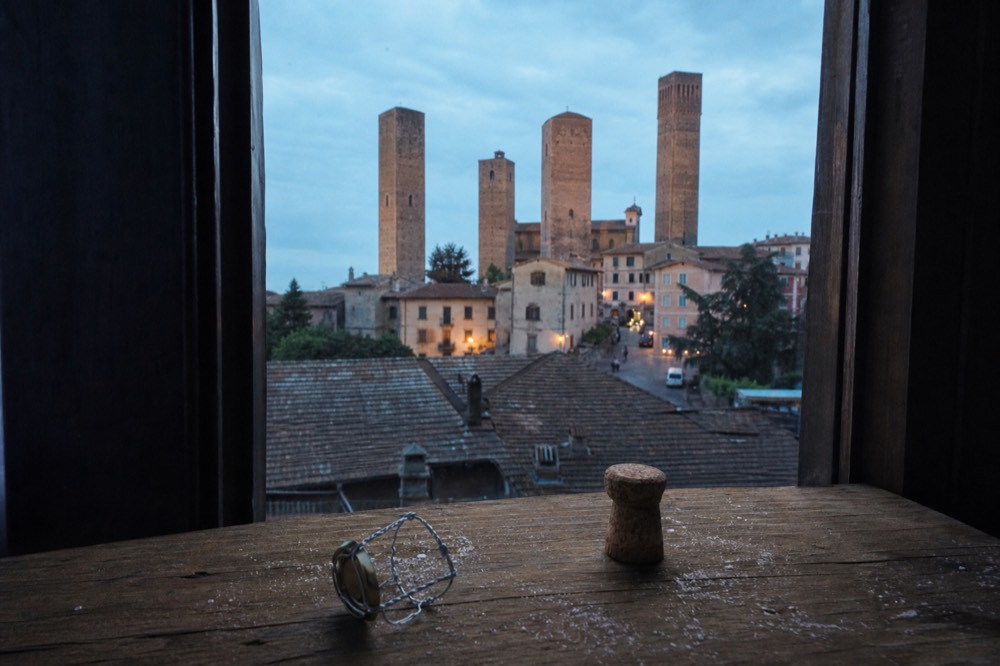
The production figures come from the regional register published in 2026, which records the hectare total, the bottle claims and the 10% growth, and the planting proposal for the 2026 to 2028 triennial program is the Consorzio's own plan, filed with the Regione Piemonte. For a market read, that combination, double-digit growth plus new plantings, is what a denomination looks like when it is selling everything it can make.
For a visitor the decision is simple. If the occasion is a celebration, a birthday on tour, the last night of a multi-day ride, or you simply want the best glass on the list, Alta Langa is the answer, and it usually costs a fraction of Champagne at restaurant mark-ups. The vineyards sit in the high hills, including the Alta Langa proper above the Langhe, so a sparkling stop can be folded into a climbing day; the run from Alba up toward the Alta Langa high country involves roughly a thousand metres of ascent, which is one way of earning the second glass.
Timorasso, Erbaluce And The Enthusiasts' Whites
Beyond the big three, Piedmont's white story runs through Timorasso and Erbaluce, two varieties with almost no international profile but devoted local followings. Timorasso, from the Tortona hills in the province of Alessandria, makes structured, mineral, age-worthy whites that critics compare to serious Riesling. Erbaluce, in the Canavese north of Turin, gives both a crisp still wine and a celebrated passito, and neither grape will appear on a standard tourist wine list, which is exactly the appeal.
Timorasso was nearly extinct by the 1980s, reduced to a handful of hectares, and its revival is one of the genuine recent stories in Italian wine, driven by a small group of producers around Tortona who believed in the grape's thickness of skin and capacity to age. The wines are dry, often fermented and aged in steel to keep the minerality, and they can stand a decade in the cellar. Production remains tiny relative to Gavi, so treat any bottle you meet as worth ordering.
Erbaluce belongs to a different geography, the Canavese and the hills north of Turin, including the Carema terraces that cling to the Alpine edge of the region. The still version is light, high-acid, almond-and-citrus; the passito, made from dried grapes, is one of Piedmont's historic sweet wines. If your trip includes Turin rather than only the Langhe, Erbaluce is the white to look for on local lists, and it pairs naturally with the region's cheese courses.
None of this requires a car. A bike day with a Timorasso lunch stop in the Colli Tortonesi or an Erbaluce detour north of Turin is exactly the kind of route Piedmont Bike Tours exists to write about, and it is the part of the region where you will share the road with tractors rather than tour buses. For contrast with the red side of the shelf, our piece on the best red wine from Piedmont covers the Nebbiolo question.
Which White To Order, By The Day You Are Having
Match the white to the moment: Gavi for the cleanest glass before or after food, Roero Arneis for a proper mid-ride lunch, Alta Langa when the evening matters, Timorasso when you find it, and Erbaluce when you are near Turin. There is no single best white in Piedmont, and the region's own numbers, 14 million Gavi bottles, half a million more Arneis requested, and 10% Alta Langa growth, show all three thriving rather than competing for one crown.
The pattern that emerges from the market data is a region quietly rebalancing toward its whites. Gavi's export machine keeps pulling Cortese out of the region, Arneis demand is outrunning supply, and Alta Langa is planting new hectares, all while the red conversation stays fixed on the same handful of famous villages. For a rider, that means the white-wine zones, the Roero, the Monferrato, the Tortona and Gavi hills, hold the quieter roads, the shorter tasting queues and the lower bills.
A practical note on how to buy. In restaurants, the half-litre of house white in Roero or Monferrato country is frequently local and good; ask what it is rather than defaulting to a bottled brand. In cellars, cellar visits with tastings around Alba are listed from roughly 25 to 50 euro per person, so budget for two or three visits across a weekend rather than a dozen. And if you are riding in September, note that in the Acquese zone, heat-accelerated ripening brought the 2026 Moscato harvest forward to the first days of August, a reminder that the region's wine calendar is shifting earlier and cellar-visit schedules shift with it.
For riders who want the whites built into the day rather than hunted down at lunch, the Asti culinary cycling tour runs about four hours with food and wine tastings from $186 per person, threading the flat Tanaro-side country where a white-heavy itinerary makes most sense. It is a new listing without reviews yet, so read the inclusions on the operator's page before booking.
If your base is Alba or Bra and you want the whites without a long transfer, the Roero crossing is the natural half-day, while Ovada and the Monferrato reward a full day and a train-assisted start. Both approaches work; the only real mistake is doing all Barolo and none of this.
Common Questions About White Wine In Piedmont
What is the best white wine from Piedmont?
There is no single answer, but the three that define the category are Gavi DOCG for its purity and scale, Roero Arneis for its softness and its location next to the Langhe bike routes, and Alta Langa for traditional-method sparkling. Gavi leads on volume, with about 14 million bottles sold in 2025 and 91% shipped abroad. If forced to pick one glass, order Gavi as an aperitivo and Arneis with lunch.
Is Gavi the same as Pinot Grigio?
No. Gavi is made from the Cortese grape, a native of southeast Piedmont, and it is drier and more acidic than most Pinot Grigio, with citrus and green apple fruit rather than pear and spice. The two are often shelved side by side abroad, which is why Gavi is sometimes described as the connoisseur's alternative.
What does Roero Arneis taste like?
Arneis is rounder and softer than Gavi, with pear, apricot and white flower aromas, moderate acidity and a slightly textured mid-palate. It is a food wine more than an aperitivo, and it pairs well with the region's pasta dishes and cold cuts. Some producers also make a lightly sparkling frizzante version.
Is Alta Langa as good as Champagne?
It is made the same way, with a second fermentation in bottle and long ageing on the lees, from Chardonnay and Pinot Nero, and the best bottlings stand comparison with mid-tier Champagne at a lower price. Whether it matches the top houses is a matter of taste, but it is the closest thing Piedmont has to a celebration wine, and demand is growing fast, up 10% in 2025.
Can you visit Gavi and Roero wineries on a bike tour?
Yes. The Roero sits directly across the Tanaro from Alba, about 14 km from Canale, and makes an easy half-day loop. Gavi is further east and overlaps better with Monferrato riding, including guided options like the CicloDiVino tour from Ovada, listed from $93 per person with tastings included. Tastings with a cellar visit in the Alba area are listed from around 25 to 50 euro per person.
What is the rarest white grape in Piedmont?
Timorasso, from the Tortona hills, is the enthusiasts' answer: it was nearly extinct by the 1980s and now produces structured, mineral, age-worthy whites from a small number of producers. Erbaluce in the Canavese, including its historic passito, is the other insider's choice, particularly if your trip includes Turin.