Is Turin Good For Cycling?
Turin is flatter and better organised for cycling than most Italian cities, with a growing bike-share scheme and measured ridership growth, and the Langhe wine hills start about an hour outside the city.
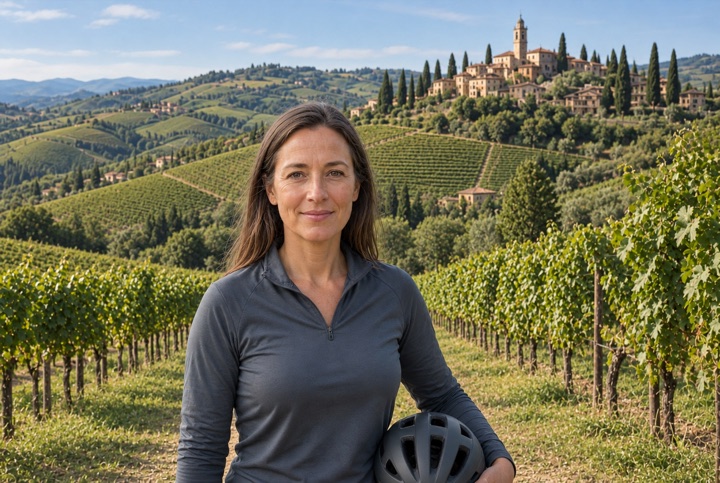 By Chiara Barbero, Piedmont Bike Tour Guide and Langhe Cycling Specialist
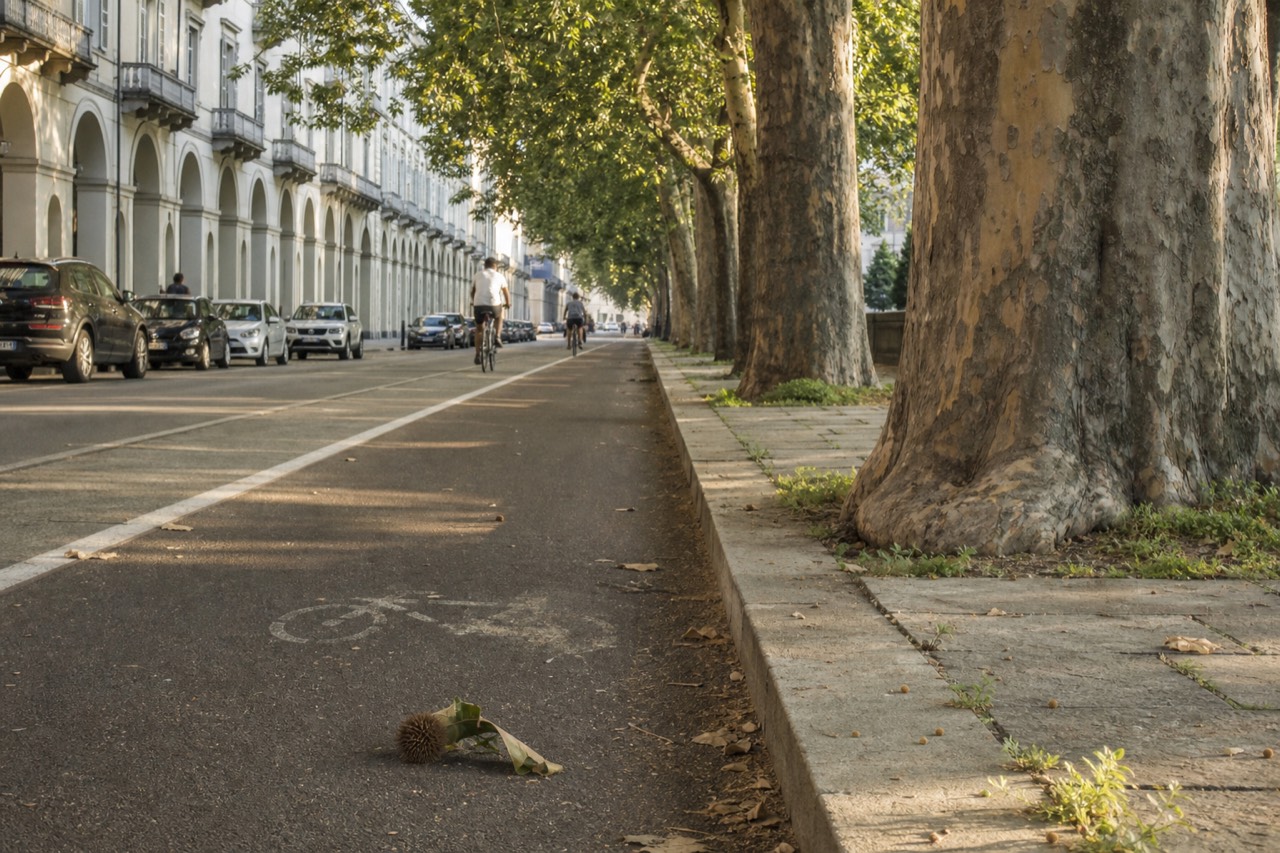
Is Turin Good For Cycling?
Yes, Turin is good for cycling, and measurably getting better. The city's own Biciplan sensors counted 8.9 million cyclist passages over the most recent full year reported, an average of about 24,000 a day, and the metropolitan plan targets an additional 85 km of protected lanes and a 15 percent cycling share of trips. The flat grid of the centre and the Po river corridor make the city itself genuinely rideable.
Turin has quietly become one of the more serious cycling cities in northern Italy, and unlike many Italian cities it can prove it with numbers rather than slogans. The Biciplan counter network across 33 sensors recorded 8.9 million cyclist passages in the most recent full year reported, averaging 24,000 daily, according to reporting on the plan's progress. That is not Amsterdam, but it is a real, measured base of everyday riding in a city that spent most of the twentieth century organised around Fiat factories and cars.
The geography helps. Turin sits on the flat Po plain at the foot of the Alps, so the central grid of arcaded streets, grand squares and riverside boulevards involves almost none of the climbing that defeats casual riders in, say, Genoa or Rome. The city also has a genuine cycling revival story: the metropolitan Biciplan targets an additional 85 km of protected bike lanes and a 15 percent modal share for cycling, per the Città Metropolitana di Torino's own plan page.
There is one honest caveat, and it shapes this whole article. City riders searching this question are often one paragraph away from realising that the riding Piedmont is famous for, the wine hills of the Langhe, the Barolo villages, the Roero, starts about an hour outside the city. Turin is a good cycling city; it is also the gateway to one of the best cycling regions in Europe. Both halves of that sentence are true, and the best trip uses them both.
If you want to see the city itself on two wheels in a single morning, a guided ride is the most efficient format. The Turin: Highlights and Hidden Gems Guided Bike Tour runs about 3.5 hours, is rated 4.8 across 144 reviews, and costs $45 per person, with the operator's live listing carrying current dates and availability.
What Is Cycling In Turin Actually Like On The Ground?
Practical and mostly flat, with a mix of protected lanes, painted lanes and shared river paths. The centre is a readable grid of straight boulevards, the Po corridor gives long traffic-free kilometres, and traffic is calmer than in Naples or Rome though still Italian. Cobblestones in the historic squares and tram tracks are the main things to watch.
Turin's street plan is a gift to cyclists. The Roman-era core was rebuilt on a grid, and the Savoy-era additions stretched that grid into long, straight, tree-lined avenues with porticoed sidewalks. For a visitor on a bike this means you can navigate by counting blocks rather than reading a map, and the main axis from Piazza Castello through Piazza San Carlo to Piazza Carlo Felice runs almost dead straight.
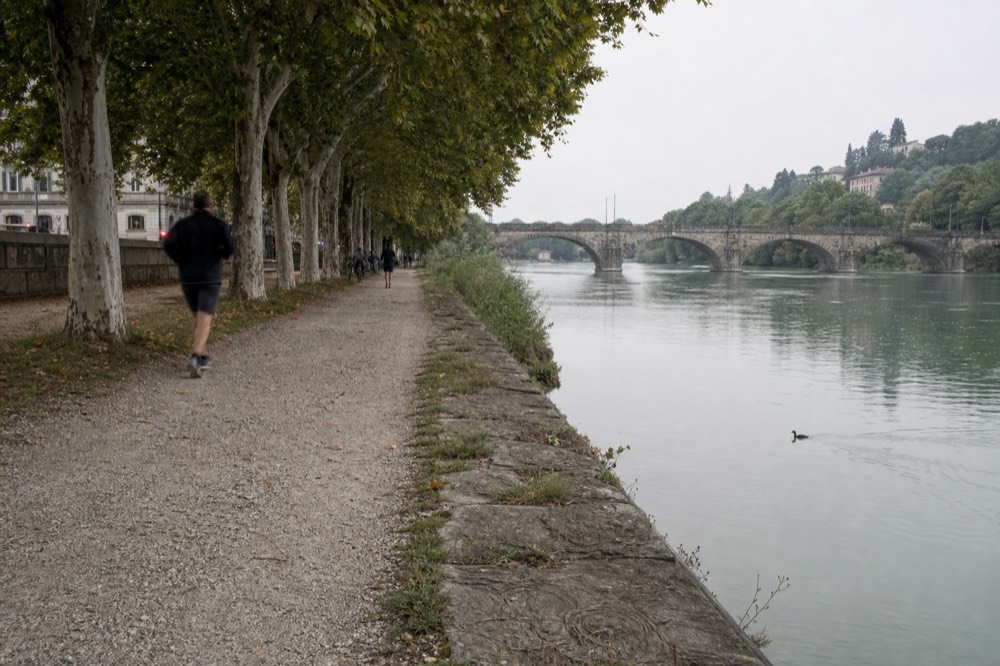
The Po river is the second asset. The east bank carries long stretches of path through Parco del Valentino, the city's main riverside park, and you can ride north or south along the river for kilometres with no motor traffic at all. This is where the city's recreational riders concentrate on weekends, and it is also where the climb toward the hill of Superga begins, for anyone who wants a serious ascent without leaving town.
The infrastructure is improving but uneven. The Biciplan's 85 km of additional protected lanes are a target, not a finished network, and in the historic centre you will spend time mixing with cars, buses and trams. Two hazards deserve specific mention: polished cobblestones in the old squares, slippery especially in rain, and tram tracks, which catch narrow road-bike tyres. Cross tracks square-on, not at a shallow angle.
A note on Italian cycling law that applies everywhere in the country, city included. There is no helmet law at any age in Italy, but a reflective vest is legally required outside built-up areas from half an hour after sunset to half an hour before sunrise, and in tunnels at any hour, under Article 182 of the Codice della Strada. A bell is also required equipment on every bicycle. If you rent in Turin and ride out toward the hills, a vest is worth packing.
Can You Rent A Bike Or Use Bike-Share In Turin?
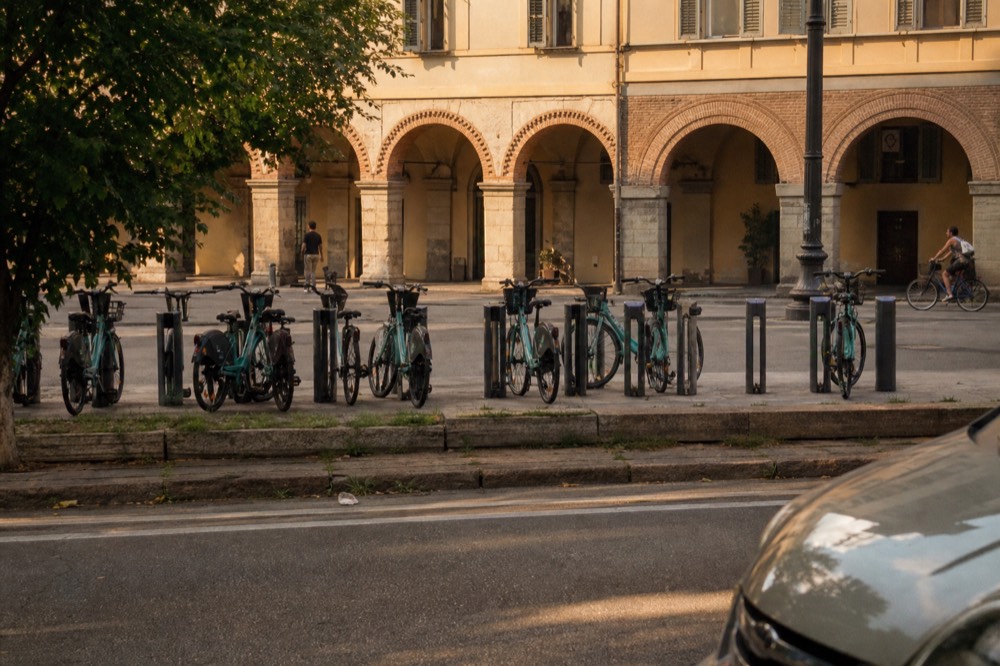
Yes, on both counts. A metropolitan bike, e-bike, scooter and monopattino sharing service covering Turin and 15 surrounding communes will launch with 8,900 vehicles by the end of October 2026, and private rental shops in the centre offer everything from city bikes to e-bikes and road bikes for day hire.
The sharing story is the biggest change on the ground. A new metropolitan bike and e-bike sharing service covering Turin plus 15 surrounding communes is set to launch launches with 8,900 vehicles, including e-bikes, by the end of October 2026, as La Stampa reported. For a visitor, that means short point-to-point rides across the centre should become straightforward, though you should check the app's coverage area and pricing structure before relying on it for a full day.
Guided tours are the other easy option, and Turin has several with real track records. The Turin: City Highlights Guided Bike Tour runs about 3 hours, is rated 4.6 across 497 reviews, and costs $35 per person. The Turin E-Bike Tour: Explore the City and Its Best Viewpoint runs about 3 hours, is rated 4.9 across 371 reviews, and costs from $45 per person, using pedal assist to reach the city's best panorama without arriving exhausted. And the Turin: Authentic Piemontese Feast Bike Tour, about 3 hours and from $58 per person, pairs the ride with a proper local meal, though with only 2 reviews so far it is too early to judge it on ratings.
For independent riding, the practical comparison looks like this:
| Option | Best for | Typical commitment | What to check |
|---|---|---|---|
| Bike-share (from late Oct 2026) | Short hops across the centre | Minutes to hours | Coverage area, unlock fees, app registration |
| Private rental shop | Half or full-day independent rides | A day | Fleet type, helmet included, deposit |
| Guided city bike tour | First visit, limited time | About 3-3.5 hours | Group size, route, what's included |
| Guided e-bike tour | Reaching viewpoints with less effort | About 3 hours | Battery range, hill route |
One planning detail worth knowing: a GTT single city ticket costs €1.90 digitally or €2.00 on paper, and bikes fold into the picture if you ride out and want to come back by other means. On regional trains, Trenitalia charges a €3.50 bike supplement valid until 23:59 on the ticket date, and folded folding bikes travel free on all Regionale trains.
If a guided morning ride sounds like the right way to see the city, it is worth locking in before you travel.
Where Do You Ride Once You Leave The City?
South into the Langhe wine hills, which begin about an hour from Turin by car or a little over 90 minutes by direct regional train to Alba. Every one of the famous Barolo and Barbaresco villages sits within roughly 20 km of Alba, and the contrast with the flat city could not be sharper: about 877 m of climbing on a 67.9 km loop through the Barolo villages.
This is the paragraph most people searching "is Turin good for cycling" are actually heading toward. Turin the city is pleasant and flat; Piedmont the region is one of the great cycling destinations in Europe, and the boundary between the two is about an hour of travel. The direct Turin to Alba train runs on the Torino-Bra-Alba line with no change required, taking a little over an hour and a half, and a bike supplement of €3.50 covers an assembled bicycle on the Regionale services marked with the bike pictogram.
Once in the Langhe, the terrain transforms. The computed Barolo villages loop from Alba, linking Grinzane Cavour, La Morra, Barolo, Novello, Monforte d'Alba, Serralunga d'Alba and Castiglione Falletto, runs 67.9 km with roughly 877 m of ascent. The Barbaresco loop is gentler at 35.6 km and about 457 m of climbing. And for riders who want the real thing, the run from Alba up to Mombarcaro in the Alta Langa gains about 1,040 m over 41.4 km, topping out near the highest ground in the Langhe at 896 m.
The e-bike question answers itself here. Pedal-assist bikes in Italy are limited to 250 W of nominal power and 25 km/h of assisted speed, with the motor cutting out when you stop pedalling, and that is exactly enough to turn the Langhe's rolling climbs into a ride almost anyone can finish. That is why the region's guided e-bike tours, like the Barolo Wine Region: E-Bike Tour through the Vineyards with a Picnic, about 6 hours and $93 per person, have become the most popular format for visitors. Our guide to e-bike touring in the Langhe covers the terrain argument in detail.
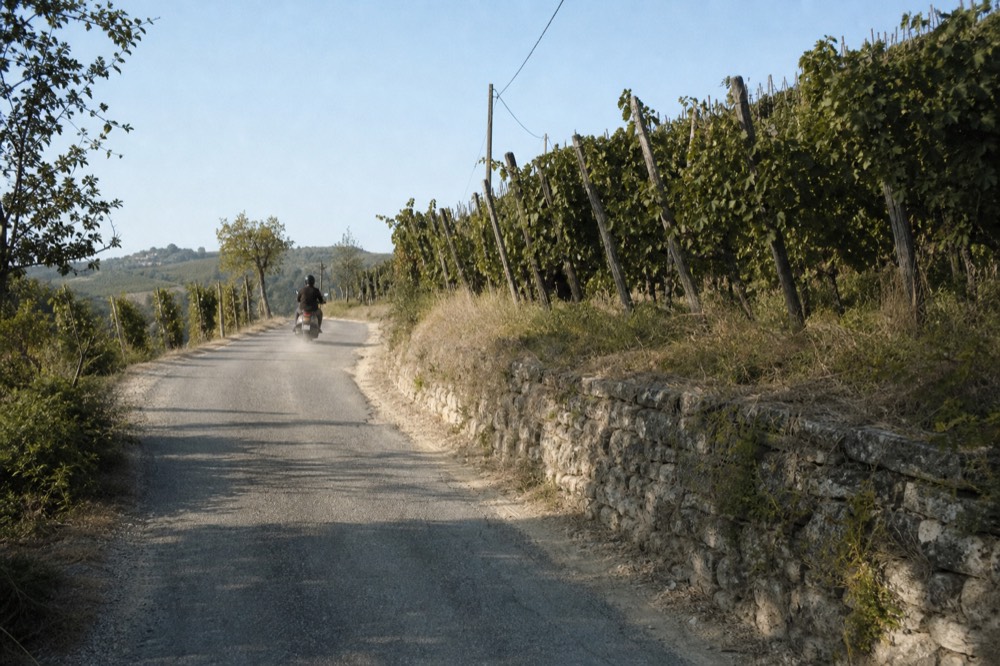
For riders who prefer to stay closer to the city, the Po valley itself offers genuinely flat touring. The VenTo cycle route project, over 700 km along the Po embankments from Venice toward Turin, is the long-distance ambition in the corridor, though its built share is fragmented and no reliable "kilometres rideable today" figure exists. Closer to town, the Superga hill above the city gives a proper climb with a basilica and a famous viewpoint at the top, reachable from the river paths in a morning.
If the wine-hill half of the trip appeals, the practical base question matters more than the bike question, and our where to stay in Piedmont guide works through Alba, Barolo and Asti for cyclists.
When Is The Best Time Of Year To Cycle Around Turin?
May, June and September for the hills, spring through autumn for the city itself. September stands out for the wine region, with an average high of about 23.6 °C at Alba coinciding with the harvest, while July and August bring average highs near 29 °C, and November is the wettest month of the year at around 115 mm of rain.
The climate logic is straightforward. Turin and the Langhe share a continental pattern with hot summers, and the months that combine comfortable temperatures with low rainfall are May, June and September. September is the standout: harvest is underway in the vineyards, the summer heat has broken, and the average high at Alba sits at about 23.6 °C against July's 29.2 °C. These are computed 30-year averages from reanalysis data, so treat them as typical conditions rather than a forecast.
One recent caveat deserves honesty. Summer 2026 was the hottest on record in Piedmont, surpassing 2003, with the longest June heat wave on record producing 18 consecutive tropical nights in Turin, per Arpa Piemonte. Torino recorded 36 °C on 5 September 2026, a September record dating back to 1895. One season does not make a climate trend, but if you are planning a July or August trip, plan around the heat: ride early, use the morning for climbing, and treat the afternoon as time for museums and cellars.
November through February is the off-season for good reason. November averages around 115 mm of rain, the wettest month of the year, and winter fog on the Po plain is a real phenomenon, though no verified frequency data exists. The compensation is the white truffle season, which runs legally from 1 October to 31 January in Piedmont, and the Alba truffle fair, whose 96th edition runs 10 October to 6 December 2026. Autumn colour in the vineyards follows the harvest, through October and November, with Nebbiolo leaves turning yellow and Dolcetto red.
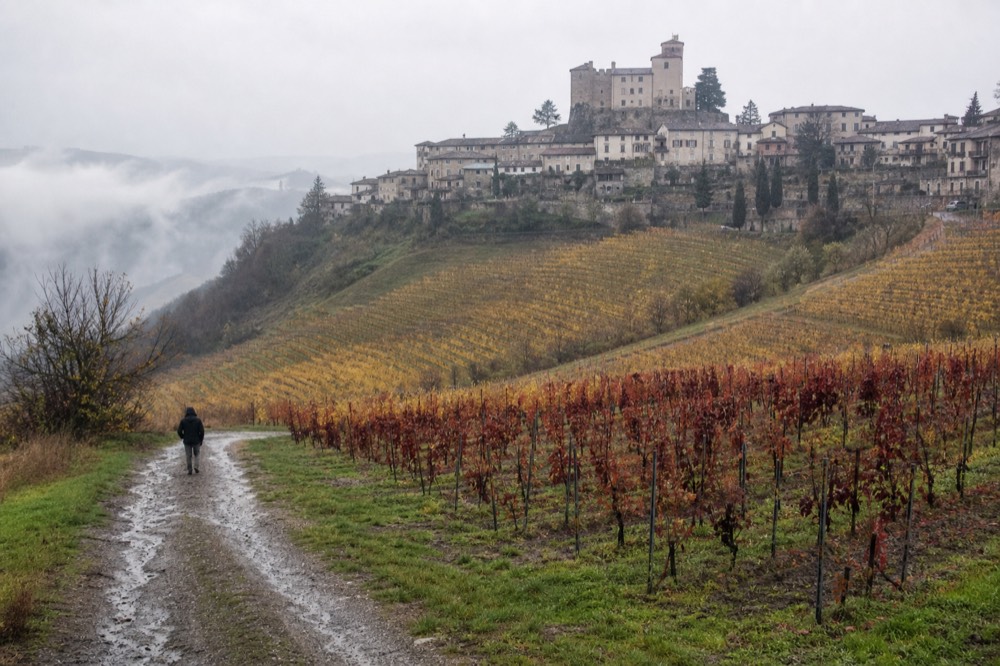
For a city-plus-hills combination, the strongest single week is mid-September to early October: warm days, the harvest in full swing, and the truffle season opening. That window is also the busiest in the wine villages, so book accommodation in Alba or the villages early.
Is Turin A Good Base For A Cycling Holiday?
Yes, if you want a city break with riding attached, and no if riding is the whole point. Turin gives you museums, restaurants and easy flat rides, with the Langhe 60 to 90 minutes away by train or car. A dedicated cycling trip is better based in Alba, where every major wine village is within about 20 km and the climbing starts at your door.
The honest framing is that Turin and Alba do different jobs. Turin is a sophisticated, underrated city with world-class museums, including the Museo Egizio, whose full-price ticket costs €18 with mandatory online timed entry, and a food culture that runs from historic cafés to a growing set of Bib Gourmand addresses. Average tourist length of stay in Turin and its first belt was 2.5 nights in 2025, per Visit Piemonte data, which tells you most visits are short city breaks rather than riding holidays.
For that visitor, a half-day guided bike tour is the right dose of cycling: see the city, ride the river, be done by lunch. The Turin: Highlights and Hidden Gems Guided Bike Tour fits this exactly, at about 3.5 hours, rated 4.8 across 144 reviews, from $45 per person.
For the rider whose holiday is built around the bike, base yourself in Alba or one of the wine villages instead, and treat Turin as the arrival point. Direct trains connect Turin and Alba in a little over an hour and a half, and the €3.50 regional bike supplement means you can bring the bike you rented, or your own, without fuss. Our day tours from Turin guide covers the options for doing the hills as a day trip if you would rather keep a Turin hotel. Whichever way you split the trip, Piedmont Bike Tours covers both halves, the city rides and the wine-hill loops, in one place.
A useful signal about where cycling in Piedmont is heading: the Isnart-Legambiente "Viaggiare con la bici 2026" report estimates 49 million cycle tourism presences in Italy for 2025, generating a 6.4 billion euro economic impact, and e-bikes are credited with lowering the physical barriers that kept older riders and many women out of the sport. Women accounted for 47.1 percent of Italian cycle tourists in 2025, up from 29.7 percent in 2024. The infrastructure money follows: the region's PieMonta in bici programme reached 58 million euro in total allocation by late 2025, including a funded but not yet built 32.5 km cycle route between Alba and Canelli.
The verdict, then, is a two-part answer. As a cycling city, Turin is good and improving, flat, legible, increasingly equipped, with a river corridor that lets you ride for kilometres without a car in sight. As a cycling region's front door, it is excellent, because the Langhe begins an hour south and offers some of the best riding in Italy. The mistake is not choosing between them; it is arriving without knowing the second half exists.
These are the questions riders actually ask before booking a Turin trip, from bike-share and train logistics to helmet law and the best month to ride. Each answer sticks to verified figures: the 8.9 million annual cyclist passages, the €3.50 regional bike supplement, and the September average high of about 23.6 °C in the wine hills.
Common Questions About Cycling In Turin
Is Turin good for cycling?
Yes. Turin is flat, organised around a legible grid, has long traffic-free stretches along the Po, and recorded 8.9 million cyclist passages across its Biciplan sensor network in the most recent full year reported. A new 8,900-vehicle bike-share service covering the city and 15 communes launches by the end of October 2026.
Is Turin flat or hilly for bikes?
The centre and the river corridor are flat, sitting on the Po plain. The Superga hill east of the city offers a genuine climb with a viewpoint at the top. Serious climbing begins south of the city, in the Langhe, where the Barolo villages loop involves roughly 877 m of ascent over 67.9 km.
Can I take a bike on the train from Turin to the Langhe?
Yes. Direct regional trains run from Turin to Alba on the Torino-Bra-Alba line with no change, taking a little over an hour and a half. An assembled bike needs a €3.50 supplement on Regionale trains marked with the bike pictogram, valid until 23:59 on the ticket date. Folded folding bikes travel free.
Do I need to wear a helmet when cycling in Turin?
No, there is no helmet law in Italy at any age. However, a reflective vest is legally required outside built-up areas from half an hour after sunset to half an hour before sunrise, and in tunnels at any hour. A bell is required equipment on every bicycle.
Are there guided bike tours in Turin?
Several. The Turin: Highlights and Hidden Gems Guided Bike Tour runs about 3.5 hours, is rated 4.8 across 144 reviews and costs from $45 per person. A shorter City Highlights tour runs about 3 hours from $35, and an e-bike version rated 4.9 across 371 reviews covers the city and its best viewpoint from $45.
What is the best month for a cycling trip to Turin and Piedmont?
May, June and September. September combines an average high of about 23.6 °C in the wine hills with the grape harvest, making it the standout month. July and August average highs near 29 °C, and November is the wettest month at around 115 mm of rain.