Why Piedmont Is The Best Area In Italy For Cycling
Piedmont combines UNESCO vineyard roads, gentle climbs, and world-class food and wine. Here's why it's the best area in Italy for cycling, and how it compares to Tuscany, Veneto, and the Dolomites.
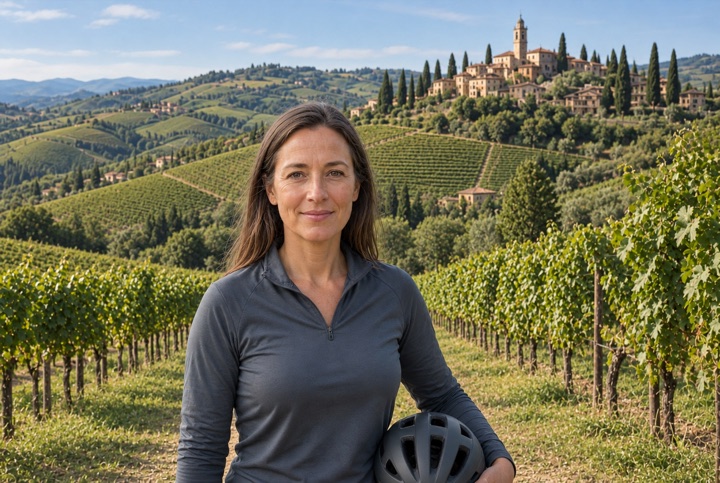 By Chiara Barbero, Piedmont Bike Tour Guide and Langhe Cycling Specialist
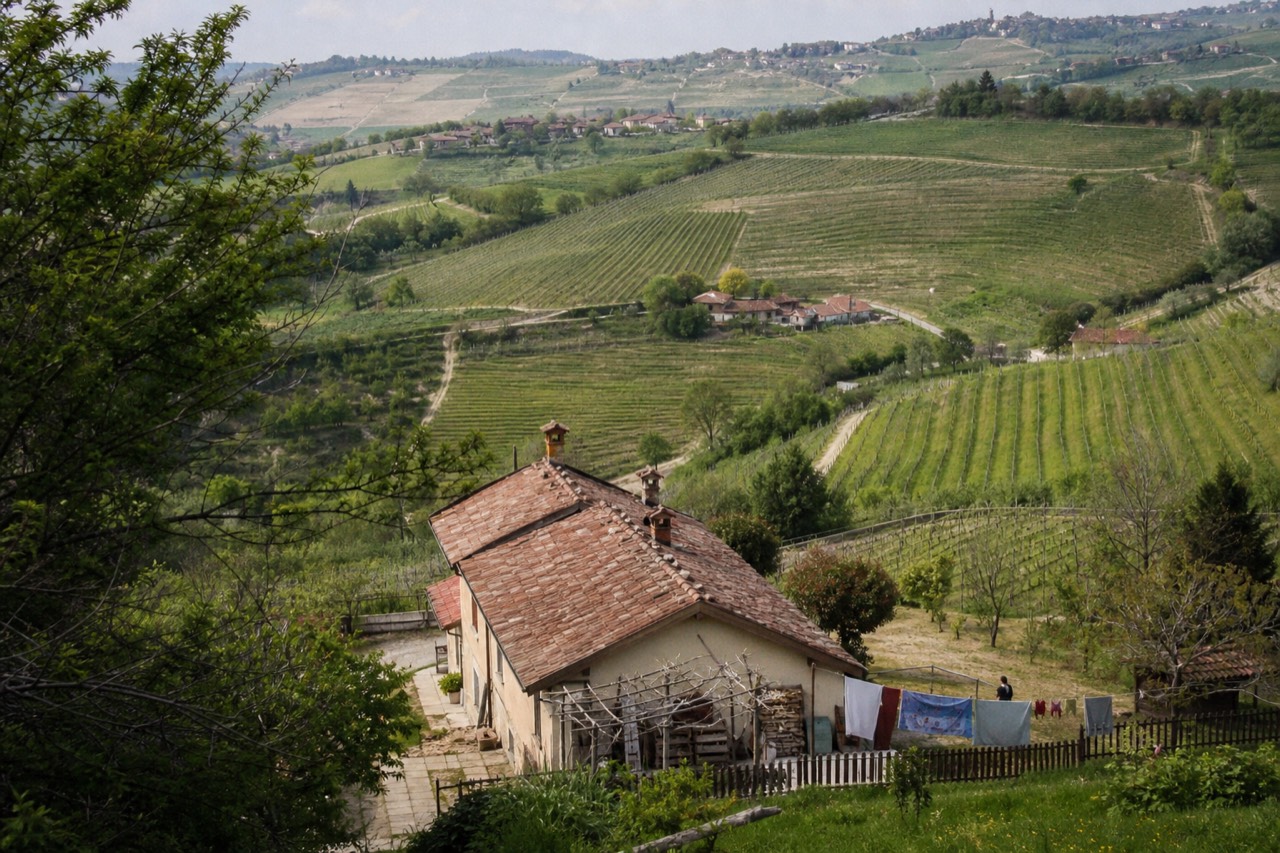
What Is The Best Area In Italy For Cycling?
Piedmont is the best area in Italy for cycling, combining quiet vineyard roads, gentle climbs through UNESCO-listed Langhe, Roero and Monferrato hills, and exceptional food and wine. Riders seeking cultural depth and scenic routes without extreme gradients will find it unmatched.
Italy’s cycle tourism is booming. The Isnart-Legambiente “Viaggiare con la bici 2026” report estimates 49 million cycle tourism presences in 2025 generated a 6.4 billion euro economic impact. Women accounted for 47.1 percent of Italian cycle tourists, up from 29.7 percent in 2024, and baby boomers made up 14 percent, nearly double the previous year. E-bikes have lowered physical barriers and contributed to this broader participation. At Piedmont Bike Tours, we focus on this corner of northwest Italy, where the riding is as much about the stops as the pedalling.
The region’s cycle infrastructure is expanding rapidly. The Bar to Bar route, a 124 km ring through the Barbaresco and Barolo hills, earned a special mention at the Green Road Award in 2025, while the Ciclovia del Mare in Piemonte shared first place in the Oscar del Cicloturismo 2026. A new metropolitan bike-sharing service covering Turin and 15 surrounding communes will launch with 8,900 vehicles by October 2026, according to La Stampa. For a deeper look at the riding itself, see our guide to cycling in Piedmont Italy.
Three tours that show the region’s range, from a mountain bike adventure in Monferrato to a food-focused e-bike ride near Asti:
What Makes Piedmont Stand Out For Cyclists?
Piedmont distinguishes itself with UNESCO-listed vineyard landscapes, quiet back roads, and a climate that extends rides into October, offering a balanced terrain of rolling hills that challenge without breaking the legs and flat valley routes. This mix, with less traffic and less grueling climbs than Tuscany or the Dolomites, makes it a uniquely welcoming destination for cyclists.
The highest point in the Langhe is Mombarcaro at 896 metres, so even the toughest climb stays under 900 metres. By contrast, the Alta Langa climb to Mombarcaro gains over 1,000 metres in 41 kilometres, offering real elevation for riders who want it. This variety means a single trip can mix easy valley spins with challenging hill days. The Barolo bike tour routes guide details the classic loops and the villages they pass through.
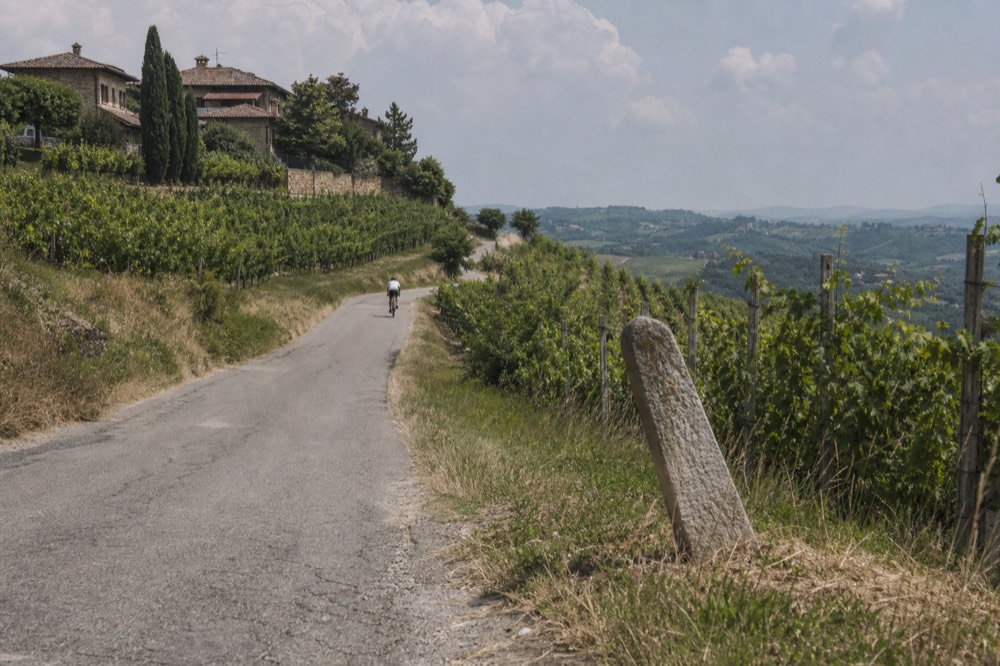
Food and wine are woven into every ride. The harvest runs from mid-August for early varieties through late September for Nebbiolo, and the white truffle season opens on 1 October. A morning ride can end at a cellar door in Barolo or Barbaresco, where tastings typically run from $25 to $50 per person. The region’s 19 DOCG and 41 DOC appellations, more than any other Italian region, mean there is always a new wine to try within pedalling distance. The Consorzio di Tutela Barolo Barbaresco Alba Langhe e Dogliani protects nine denominations and counts over 550 members.
A 32.5 km cycle path linking Alba to Canelli, the Ciclovia delle Colline Unesco, has been funded with 10 million euros from the Regione Piemonte and is due to start construction soon. Once built, it will connect several of the UNESCO-listed vineyard areas directly. For now, the quiet provincial roads already offer some of the best cycling in the country. Our e-bike tours in Italy page explains why the Langhe suits pedal assist so well.
For riders planning around the calendar, the timing of the harvest shapes the whole riding season. From mid-August, when the early varieties come in, through late September, when Nebbiolo is picked, the vineyards are at their busiest, and the roads between them carry the rhythm of the campaign. Riders who arrive in October get the payoff: the white truffle season opens on 1 October, so a long morning on the bike can be followed by a meal where the new season's truffle takes centre stage. The extended climate means this is not a shoulder-season gamble but a reliable window for cycling.
The terrain numbers tell their own story. With the Langhe's highest point at Mombarcaro, 896 metres, most loop rides stay well below that ceiling, which keeps the climbing honest but manageable. Riders who want a bigger day can take on the Alta Langa climb to Mombarcaro, which gains over 1,000 metres across 41 kilometres, a long, steady effort rather than a short, sharp shock. That contrast is the region's strength: the same base, the same quiet roads, and the choice each morning between an easy valley spin and a challenging hill day.
The wine landscape rewards curiosity. With 19 DOCG and 41 DOC appellations, more than any other Italian region, a cyclist could ride a different loop every day of a two-week trip and still not exhaust the denominations within pedalling distance. The Consorzio di Tutela Barolo Barbaresco Alba Langhe e Dogliani protects nine denominations and counts over 550 members, which means cellar doors are plentiful and easy to reach by bike. Tastings typically run from $25 to $50 per person, so a stop in Barolo or Barbaresco after a morning ride is a straightforward addition to the day rather than a major excursion.
Looking ahead, the Ciclovia delle Colline Unesco will add a 32.5 km cycle path linking Alba to Canelli, funded with 10 million euros from the Regione Piemonte and due to start construction soon. Once built, it will connect several of the UNESCO-listed vineyard areas directly, giving riders a car-free spine through the hills. Until then, the quiet provincial roads already offer some of the best cycling in the country, and the Langhe's rolling terrain is well suited to pedal assist, as our e-bike tours in Italy page explains.
Ready to ride Monferrato’s hills?
Free cancellation and pay-later options are available on the live listing.
How Does Piedmont Compare To Other Italian Cycling Regions?
Compared with Tuscany, Piedmont offers similar vineyard scenery but far less tourist traffic, and compared with the Dolomites, its climbs are far less severe. Its 43,031 hectares of vineyards across Cuneo, Asti, and Alessandria create quiet back roads linking medieval villages, family-run trattorias, and cellar doors.
The table below summarises the key differences for a cyclist choosing where to ride.
| Region | Typical terrain | Climbing profile | Food and wine | Best for |
|---|---|---|---|---|
| Piedmont | UNESCO vineyard hills, river valleys | Rolling, highest point 896 m; flat valley option | Barolo, Barbaresco, truffles, hazelnuts | E-bike tours, leisure riders, food-focused trips |
| Tuscany | Chianti hills, cypress-lined ridges | Similar rolling profile but busier roads | Chianti Classico, olive oil, steak | Classic road cycling, but traffic can be heavy in high season |
| Dolomites | High alpine passes, dramatic rock faces | Severe, multiple 1,000 m+ climbs per day | Hearty mountain fare, speck, local cheeses | Fit road cyclists seeking iconic climbs |
| Veneto | Prosecco hills, flat Po plain sections | Gentle to moderate, with some steeper ramps | Prosecco, radicchio, seafood near the coast | Mixed-terrain touring, easy access from Venice |
Piedmont's advantage is the balance it strikes. A rider can tackle the 877-metre Barolo loop in the morning, eat a plate of tajarin with truffles at lunch, and spin back along the flat Tanaro valley in the afternoon, all without touching a major road. Tuscany offers similar beauty but suffers from heavier tourist traffic on its most famous routes. The Dolomites are spectacular but demand a level of fitness that excludes many leisure cyclists. For a rider who wants a multi-day tour with great food, comfortable climbs, and quiet roads, Piedmont is the strongest candidate. Our Monferrato and Roero cycling guide explores the quieter half of the region in detail.
Food and wine tours are the region's signature. The Costigliole d'Asti e-bike tour combines rolling hills with tastings of Barbera and local cheeses, making it an ideal introduction to the area.
A closer look at the climbing numbers helps explain why Piedmont suits such a wide range of riders. With a highest point of 896 metres, the region never asks a cyclist to contend with true alpine altitude, and the difference between that ceiling and the 877-metre Barolo loop tells you something useful: the signature Barolo loop climbs 877 m in total, just shy of Mombarcaro's 896 m summit. In practical terms, that means a rider who completes the Barolo loop has effectively conquered the region's ceiling, and every other route in the area sits at or below that benchmark. Compare that with the Dolomites, where the table notes multiple climbs exceeding 1,000 metres in a single day, and the contrast becomes stark. A Dolomites itinerary can demand more vertical metres before lunch than a Piedmont itinerary demands across an entire trip. For cyclists who ride a few times a month rather than a few times a week, this distinction is the difference between a holiday that feels like achievement and one that feels like punishment. Tuscany, by contrast, shares Piedmont's rolling profile, which is precisely why the two regions compete for the same riders, but Tuscany's busiest routes carry traffic that Piedmont's back roads simply do not see.
The spread of vineyards across three provinces, Cuneo, Asti, and Alessandria, also shapes how a multi-day tour can be structured. Because the 44,961 hectares of vineyards are distributed rather than concentrated in one small pocket, a rider can plan a point-to-point route that moves through different wine zones on successive days without ever needing a long transfer or a stretch of major road. The villages, trattorias, and cellar doors that dot these back roads function as natural waypoints, so a day's ride can be broken into comfortable segments punctuated by food stops rather than one long slog between distant landmarks. This is where Piedmont's food focus becomes a structural advantage rather than just a pleasant bonus. In the Dolomites, the food is hearty mountain fare, speck and local cheeses, designed to fuel serious exertion. In Tuscany, the draw is Chianti Classico, olive oil, and steak, but the roads that serve the most famous of it can be crowded in high season. In Piedmont, the pairing of Barolo, Barbaresco, truffles, and hazelnuts with quiet roads means the culinary stops and the cycling experience reinforce each other rather than competing for attention.
The flat valley option deserves emphasis, because it is the feature that most clearly separates Piedmont from its rivals in the table. The Tanaro valley, mentioned above as the afternoon return leg of a typical day, gives tour planners a genuine low-gradient alternative on any day when legs are tired or the weather turns. Veneto offers something similar with its flat Po plain sections, but its steeper ramps in the Prosecco hills mean a mixed group still faces pitches that not everyone will enjoy. Piedmont's structure, rolling hills above and a flat corridor below, means a couple or a group of friends with different fitness levels can ride the same trip without splitting up. The stronger riders take the hill routes through the vineyards; the others ride the valley floor; and everyone meets at the same trattoria for lunch. E-bike riders get the same benefit in reverse, using the motor to join the hill routes on some days and conserving battery on the flat sections on others. This flexibility is why the region's best-for column reads e-bike tours, leisure riders, and food-focused trips rather than a narrower description aimed at one type of cyclist. A rider weighing Piedmont against Veneto should also consider access: Veneto's easy access from Venice suits travellers combining a city stay with cycling, while Piedmont rewards those willing to commit a full trip to the region, and that commitment is repaid with roads that see far less tourist traffic than Tuscany's marquee routes.
Which Piedmont Tours Suit Different Riders?
Piedmont offers tours for every rider: off-road enthusiasts can take the five-hour Nizza Monferrato mountain bike ride from $250, food-focused cyclists enjoy the four-hour Asti culinary e-bike tour with easy pedalling and tastings, and those preferring a gentle pace can spin through the Barolo villages.
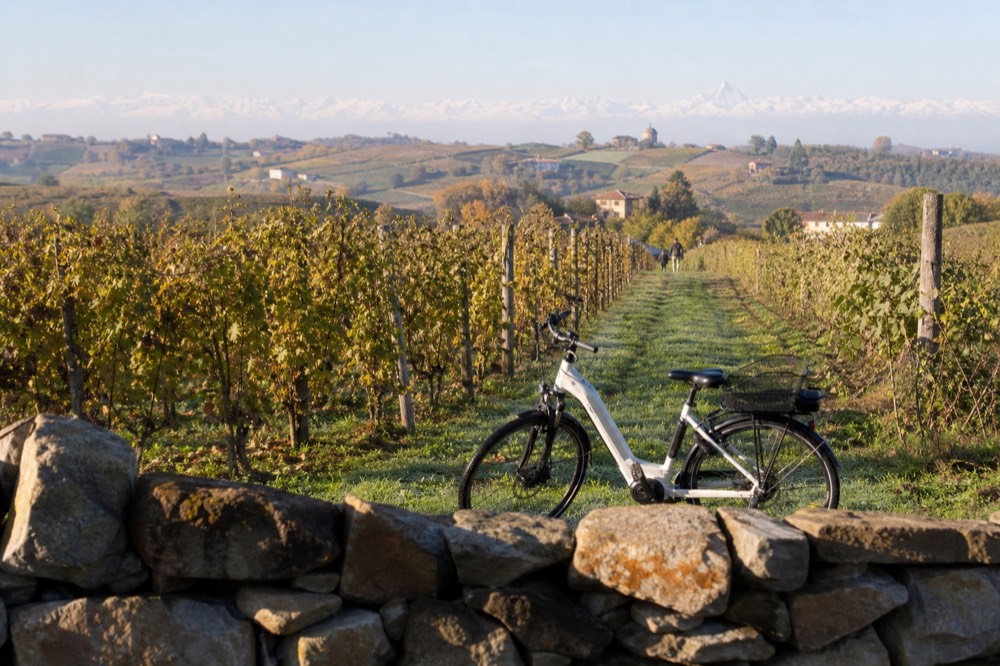
Rental shops in Alba, Bra, and Castiglione Falletto offer pedal-assist bikes that flatten the hills without removing the sense of effort. The e-bike rules in Italy are straightforward: a standard 25 km/h pedelec with a 250 W motor is legally a bicycle, requiring no licence, plate, or insurance. A reflective vest is mandatory outside built-up areas after dark and in tunnels, and a bell is required equipment. There is no helmet law for any age, though wearing one is strongly recommended. For a full breakdown, see are e-bikes allowed in Italy.
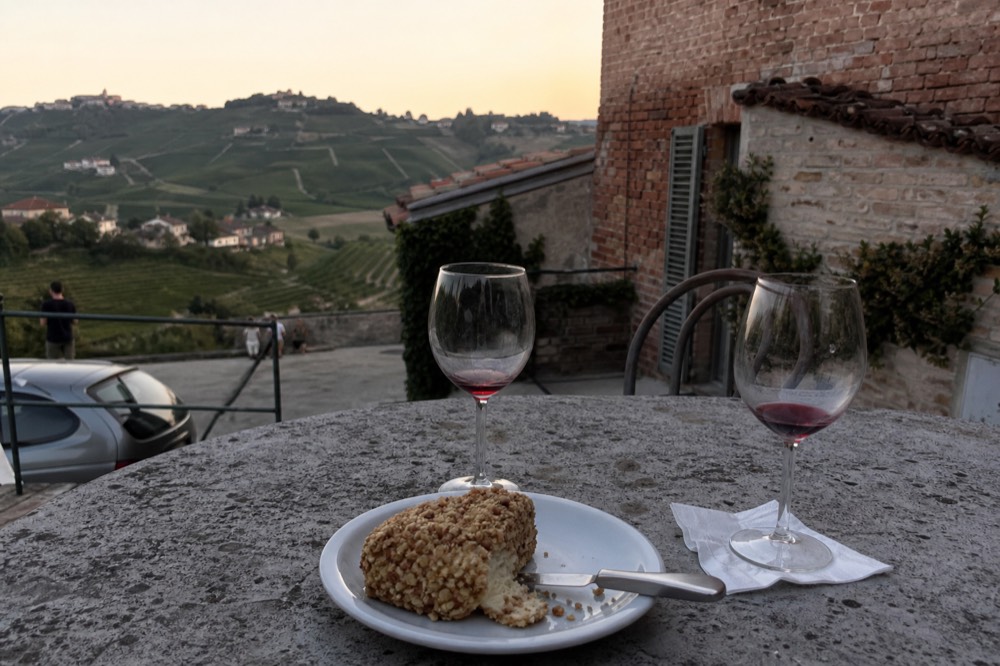
The best area in Italy for cycling is not a single route or a famous climb. It is a region that lets a rider string together three or four days of varied riding, eat well every evening, and finish the trip feeling they have seen a real place rather than a tick-list of viewpoints. Piedmont delivers that combination more consistently than anywhere else in the country. For more on why the region is worth visiting, read is Piedmont Italy worth visiting.
Three tours that capture the region’s range:
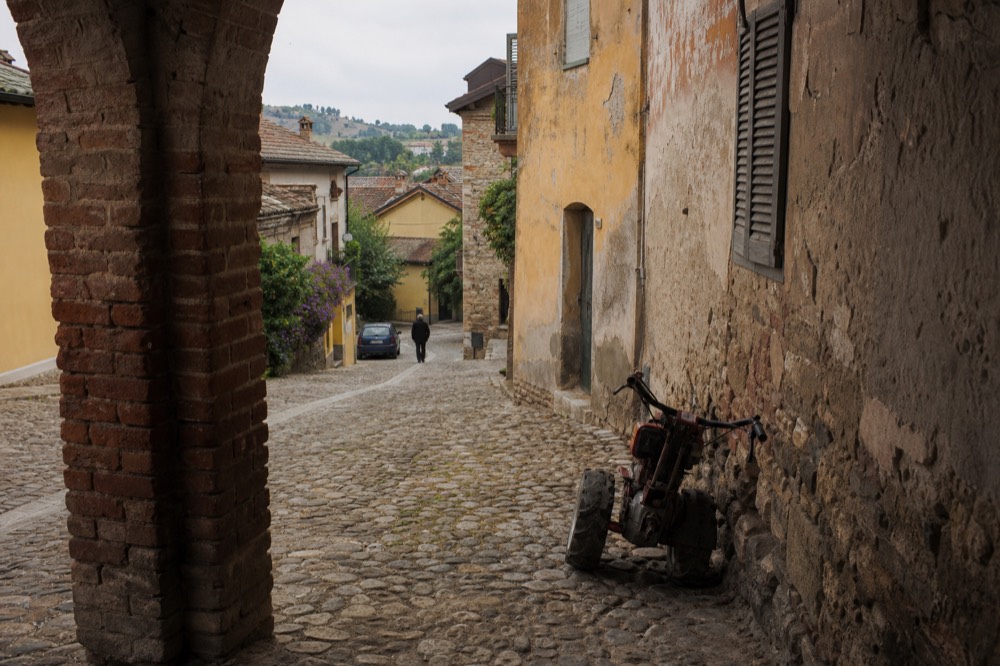
Choosing between these three options comes down to how you want to feel at the end of the day. The Nizza Monferrato mountain bike ride suits riders who measure a good day in sweat and singletrack, and its five-hour format means you should come with a reasonable base fitness rather than treating it as a first ride of the season. The Asti culinary e-bike tour works in the opposite direction: the pedal-assist removes the worry about hills, the four-hour length leaves room for a long lunch, and the tastings are built into the route rather than bolted on as an afterthought. It is a strong pick for couples or groups where one person rides regularly and the other does not, because the e-bike closes most of the gap in ability.
The Barolo villages option is the easiest to fit around other holiday plans. A gentle spin between villages can be shortened or extended depending on energy and appetite, and because the terrain is forgiving, it doubles as a recovery ride if you have already done the Nizza Monferrato route earlier in the week. This is also the tour where the e-bike rules matter least in practice: you will rarely be riding after dark or through tunnels, so the vest and bell requirements are easy to satisfy.
A practical way to structure a multi-day trip is to book the mountain bike ride early in your stay, follow it with the Asti culinary tour as a lighter, food-focused day, and save the Barolo villages for a final easy morning before driving home. Renting from Alba, Bra, or Castiglione Falletto keeps all three tours within reach without changing bases, and because the same rental shops supply pedal-assist bikes, mixed-ability groups can ride together on every day of the itinerary rather than splitting up.
Common Questions About The Best Cycling Area In Italy
What is the best area in Italy for cycling?
Piedmont offers the strongest mix of scenic vineyard roads, manageable climbs, world-class food and wine, and a growing network of e-bike tours and cycle paths. It suits leisure riders, e-bike tourists, and anyone who wants a multi-day trip built around great meals and quiet pedalling.
Is Piedmont good for beginner cyclists?
Yes. The Tanaro valley is almost completely flat, and many e-bike tours handle the hills for you. The Barolo villages loop climbs about 877 metres over 68 kilometres, a rolling profile that a moderately fit rider can manage with an e-bike or a low gear.
What is the best time to cycle in Piedmont?
May, June, and September offer warm days without the intense heat of July and August. September coincides with the Nebbiolo harvest and the start of white truffle season, making it the standout month for a cycling trip.
Do I need an e-bike to ride in Piedmont?
Not necessarily, but an e-bike flattens the rolling hills and lets you cover more ground without exhausting yourself. The region has several rental shops in Alba, Bra, and Castiglione Falletto, and most guided tours provide pedal-assist bikes.
How does cycling in Piedmont compare to Tuscany?
Both regions offer vineyard scenery and excellent food, but Piedmont’s roads are generally quieter and its climbs less severe. Tuscany’s Chianti hills can be busy with tourist traffic in high season, while Piedmont’s back roads stay peaceful even in September and October.