Barolo Vs Barbaresco: Two Nebbiolo Hills, Two Different Rides
Barolo and Barbaresco are two of Italy's most famous red wines, both made from Nebbiolo grapes grown on the same UNESCO hills. But the two regions feel very different from the saddle. This guide compares the cycling, the climbs, and the wine so you can pick the right ride.
 By Chiara Barbero, Piedmont Bike Tour Guide and Langhe Cycling Specialist
Short answer
Barolo's hills are higher, its loops longer, and its villages more famous; Barbaresco is lower, quieter, and more compact. Both reward an e-bike, and the choice comes down to whether you want the grand tour or the intimate one.
Barolo Vs Barbaresco: How Do They Compare For Cycling?
Barolo and Barbaresco are two Nebbiolo wine regions on opposite sides of the Tanaro River, both UNESCO-listed, but they ride differently. Barolo's hills are higher, its villages more famous, and its loops longer and steeper. Barbaresco is lower, quieter, and more compact, with gentler gradients that suit a half-day spin. Both reward a day on an e-bike, and the choice comes down to whether you want the grand tour or the intimate one.
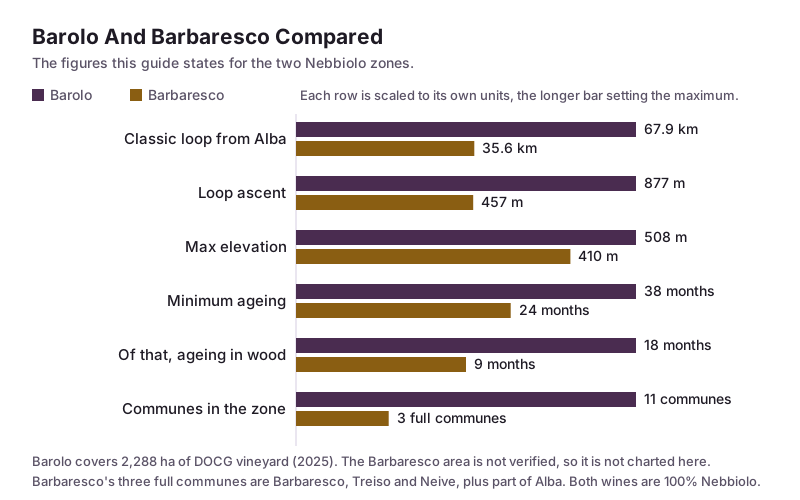
The Langhe hills south of Alba are the heart of Piedmont Bike Tours territory. The Tanaro River cuts a flat corridor through the landscape, and the two wine zones sit on opposite banks: Barolo to the south, Barbaresco to the north-east. The difference is not only in the bottle. Barolo's vineyards climb from about 200 m to over 500 m at La Morra, while Barbaresco tops out around 410 m. The Barolo zone is larger, with 11 communes and 2,288 hectares of DOCG vineyard; Barbaresco covers just three full communes plus part of Alba. That scale translates directly to the saddle: a full Barolo villages loop from Alba runs nearly 68 km with roughly 877 m of climbing, while the Barbaresco loop is a more manageable 35.6 km and 457 m of ascent. Both are threaded with quiet roads, steep vineyard tracks, and the kind of views that make you stop and pull out a camera.
| Metric | Barolo | Barbaresco |
|---|---|---|
| DOCG vineyard area (2025) | 2,288 ha | Not verified (smaller) |
| Number of communes | 11 (3 fully, 8 partially) | 3 full (Barbaresco, Treiso, Neive) + part of Alba |
| Max elevation | 508 m (La Morra) | 410 m (Treiso area) |
| Classic loop from Alba | ~67.9 km, ~877 m ascent | ~35.6 km, ~457 m ascent |
| Minimum ageing | 38 months (18 in wood) | 24 months (9 in wood) |
| Grape | 100% Nebbiolo | 100% Nebbiolo |
| UNESCO component | Barolo Langa | Barbaresco Hills |
Which Has The Better Cycling Routes?
Both regions offer quiet roads and vineyard views, but Barolo gives you a full-day epic while Barbaresco is the better half-day ride. The Barolo villages loop is the classic 68 km ring with roughly 877 m of climbing; Barbaresco's loop is half the distance and half the climbing. The Barolo loop is the one every cyclist wants to tick off. Starting from Alba, you climb gently through Grinzane Cavour (201 m) before the road rises more seriously to La Morra, the highest village at 508 m. The descent into Barolo (303 m) is a reward, and the stretch through Novello and Monforte d'Alba keeps the elevation high before a final push past Serralunga d'Alba and Castiglione Falletto. The total ascent is about 877 m, all on paved roads with almost no traffic once you leave the valley. An e-bike flattens the hardest ramps, but even with pedal assist it is a substantial day.
Barbaresco's loop is gentler. From Alba you ride east to Barbaresco village (262 m), then north to Neive (294 m) and south to Treiso, before looping back. The total climbing is about 457 m over 35.6 km, with no single climb as long as the pull to La Morra. The roads are narrower and even quieter; you are more likely to share them with a tractor than a car. It is the ride to choose if you want to finish by early afternoon and spend the rest of the day tasting.
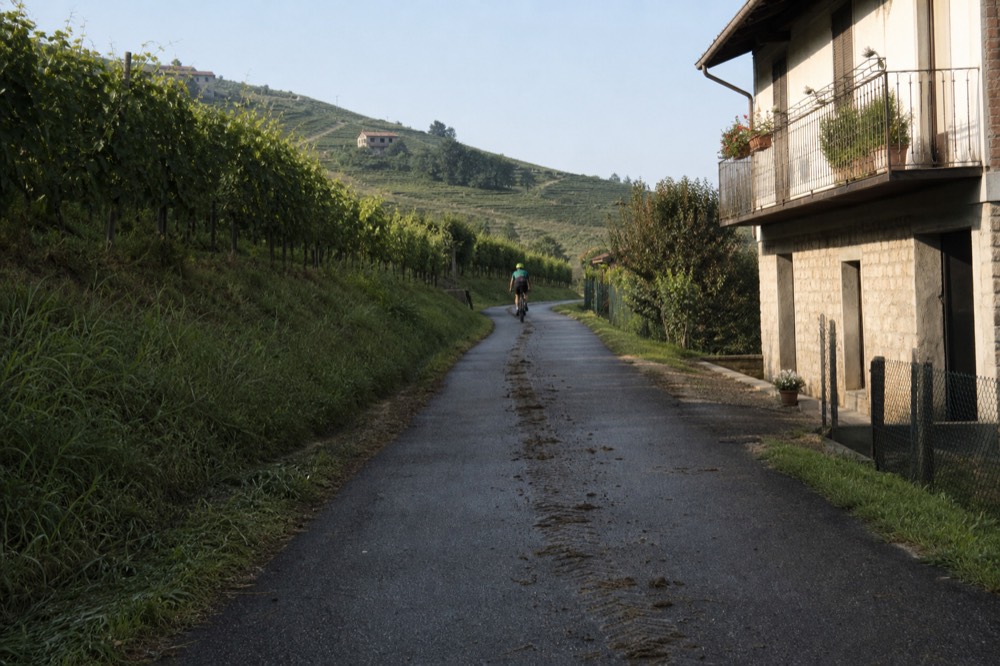
A guided e-bike tour makes both loops accessible without worrying about navigation. The Barolo guided scenic e-bike tour with wine tasting runs about five hours and includes a cellar stop, while the Langhe del Barolo private e-bike tour adds the option of dirt roads for a more adventurous ride.
For Barbaresco, a cycling tour from Neive to Barbaresco covers the core of the region in about five hours, and an e-bike rental with food and wine experiences in Barbaresco lets you design your own half-day loop.
If you want to extend your ride into the Monferrato, the three tours below offer a different side of Piedmont, with food and wine pairings that contrast nicely with the Langhe's Nebbiolo focus (see Worth Visiting Piedmont?).
Each of these tours mixes riding with food and wine, and they are all bookable on the operator's live listing.
How Do The Climbs Compare?
Barolo's climbs are longer and higher, with the pull to La Morra gaining over 300 m from the valley floor. Barbaresco's climbs are shorter and less steep, with the highest point around 410 m. Both are manageable on an e-bike, but a rider on a standard bike will feel the difference after the first hour.
The numbers tell the story. The Barolo villages loop packs 877 m of ascent into 68 km, with several climbs that rise 100–150 m at a time. The hardest sustained effort is the road from the Tanaro valley up to La Morra, which gains about 329 m over 15.8 km from Alba, though the gradient is never savage. Barbaresco's loop climbs only 457 m over 35.6 km, and the highest point is roughly 410 m near Treiso. There is no single climb that matches the La Morra pull.
The difference matters more on a warm day. Alba's average July high is 29.2 °C, and the Barolo loop has less shade than Barbaresco's narrower, tree-lined lanes. An e-bike neutralises the climbing gap, which is why so many visitors choose pedal assist for the Barolo side. If you are on a standard road bike, Barbaresco is the easier introduction and still delivers the Nebbiolo views.
| Climb | Distance (km) | Ascent (m) | Max elevation (m) |
|---|---|---|---|
| Alba to La Morra | 15.8 | 329 | 508 |
| Alba to Barolo (via Grinzane Cavour) | 13.9 | 120 | 303 |
| Barbaresco loop (full) | 35.6 | 457 | 410 |
| Alba to Neive | 13.4 | ~150 | 294 |
An e-bike tour handles the climbing for you, so you can focus on the views and the wine instead of the gradient. The tour below is a good way to combine riding with the Monferrato's food and wine, and it pairs well with a morning in the Langhe hills.
What About The Wine? Barolo Vs Barbaresco Tasting
Barolo is often called the king of Italian reds, with a structure that demands ageing; Barbaresco is the queen, more approachable earlier. Both are 100% Nebbiolo, but the soils and microclimates produce different expressions. A tasting on the Barolo side tends to be more formal and cellar-focused, while Barbaresco's smaller producers often welcome you into the family kitchen.
The wine is the reason most visitors come, and the contrast is real. Barolo must age at least 38 months from 1 November of the harvest year, with 18 months in wood; Riserva requires 62 months. Barbaresco ages 24 months, nine in wood, and Riserva four years. That extra year in the cellar gives Barolo a firmer tannic backbone and an earthier, more truffle-and-tar character. Barbaresco is softer, more floral, and ready to drink sooner, though the best examples age beautifully.
Tasting experiences differ too. In the Barolo villages, many cellars are historic names with dedicated tasting rooms and booking systems. A visit often costs €25–50 per person for a flight of four or five wines with a cellar tour. In Barbaresco, the producers are smaller and more likely to pour a glass at the kitchen table. The Museo Renato Ratti del Barolo e dei Vini d'Alba in La Morra reopened in October 2025 and is free on weekends, a good starting point for understanding the region.
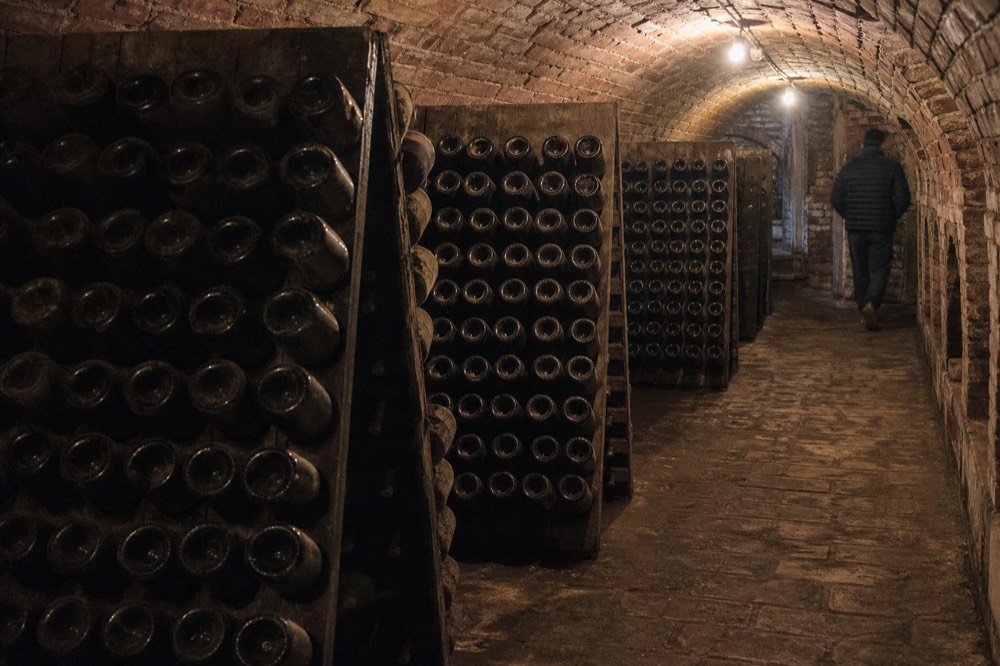
The 2026 harvest is already underway, and early reports describe healthy, concentrated grapes despite the heat. If you ride in late September or early October, you may see pickers in the vineyards and the first fermentations in the cellars. The autumn colours follow soon after, with Nebbiolo leaves turning yellow and Dolcetto red, usually from mid-October.
The soils underpin the difference. In Barolo, two main geological zones shape the wine: the Tortonian marls around La Morra and Barolo give perfumed, softer tannins, while the Serravallian sandstone and limestone of Monforte d’Alba and Serralunga d’Alba yield more structured, long-lived wines. Barbaresco sits almost entirely on Tortonian soils, which explains its earlier charm. Many producers in both zones now practise organic or biodynamic viticulture, and you can often taste the difference in clarity of fruit, particularly with younger vintages poured straight from tank or barrel.
Booking ahead is essential for most Barolo cellars, especially the famous names in the “Golden Mile” between Castiglione Falletto and Monforte. Spots fill weeks in advance during the autumn truffle season. In Barbaresco, the cooperative Produttori del Barbaresco offers a no-reservation tasting of their nine single-vineyard crus, a rare chance to compare terroir side by side for around €20. If you are cycling, the ridge road from Barbaresco to Neive gives a gentle ride with panoramic vineyard views and half a dozen family cantinas where a knock on the door is still often answered with a corkscrew.
Which Side Is More Scenic?
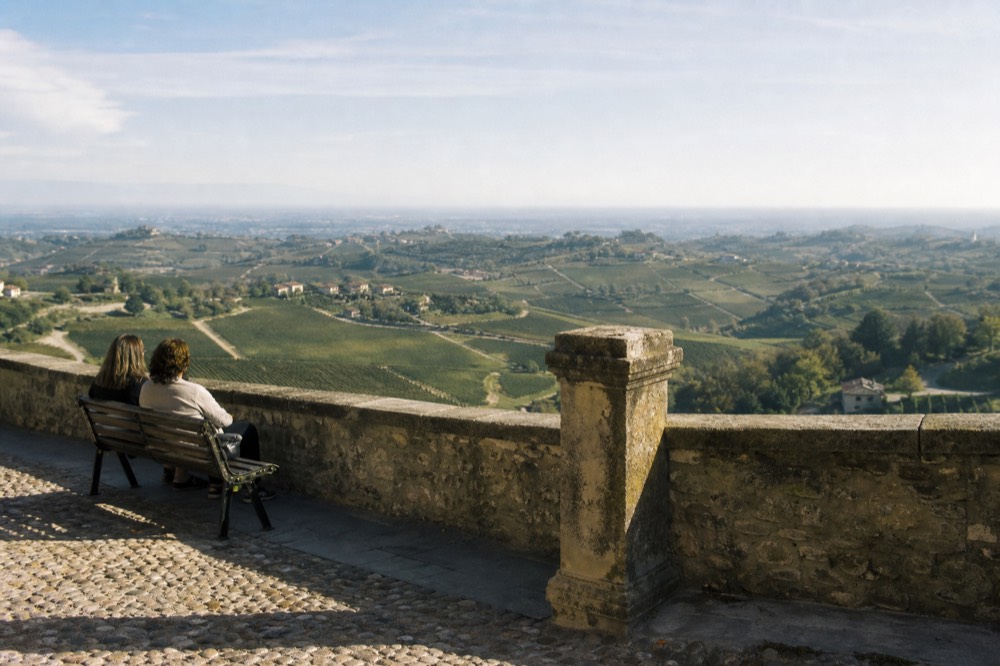
Both are stunning, but Barolo has the iconic postcard views: the castle of Grinzane Cavour, the hilltop village of La Morra, the endless rows of vines climbing to Serralunga d'Alba. Barbaresco is softer and more intimate, with the Tanaro River glinting in the valley and the Alps visible on a clear day from the higher ridges.
The Barolo landscape is the one that appears on wine labels. The villages sit on ridges and hilltops, each with a bell tower and a castle, and the vineyards roll away in every direction. The view from La Morra on a clear autumn morning is one of the great sights of Italian wine country, with the Maritime Alps to the west and the Monferrato hills to the east. The Barolo loop takes you through this panorama for hours.
Barbaresco is quieter and greener. The hills are lower, the woods more frequent, and the villages feel less discovered. From the ridge above Barbaresco village, you look north across the Tanaro to the Roero, a different geological world of sandy cliffs and erosion gullies. The Barbaresco loop is shorter, so you have more time to stop and take it in. If you want the grand tour, ride Barolo. If you want a morning of beauty and an afternoon of food, ride Barbaresco.
Can You Ride Both In One Day?
It is possible to touch both regions in a single long day, but it works better as two separate rides. The Barolo loop alone takes four to five hours with stops, and adding Barbaresco would combine both loops and their climbs into a single ride, a serious day even on an e-bike. A better plan is to ride one side in the morning, then drive or take a short transfer to the other for a tasting in the afternoon.
The two zones are only about 10 km apart as the crow flies, but the roads between them drop into the Tanaro valley and climb back out. A combined loop from Alba through Barbaresco and then south to Barolo would be a very long day with both the 877 m Barolo loop and the 457 m Barbaresco loop. Most riders will enjoy the experience more by choosing one region for the ride and saving the other for a leisurely visit.
If you are based in Alba, you can ride the Barbaresco loop in the morning, return for lunch, and then drive or take a short taxi to La Morra or Barolo village for an afternoon tasting. Alternatively, book a guided tour that handles the logistics. The Langhe del Barolo private e-bike tour can be customised to include both sides if you have a full day and a guide who knows the quiet connecting roads.
How Does The Monferrato Fit In?
The Monferrato hills east of Asti are the third great Piedmont wine region, and they offer a different ride entirely: lower, hillier in a gentler way, and far less visited than either Barolo or Barbaresco. If you have already ridden the Langhe, the Monferrato is the next step.
Monferrato is part of the same UNESCO inscription, with its own DOCGs like Barbera d'Asti and Nizza. The landscape is more pastoral, with hazelnut groves mixing with vineyards, and the roads are even emptier. An e-bike tour from Costigliole d'Asti pairs food and wine with a ride through this quieter side of Piedmont. It is the perfect contrast after a day in the Barolo crowds.
What Should You Know Before You Ride?
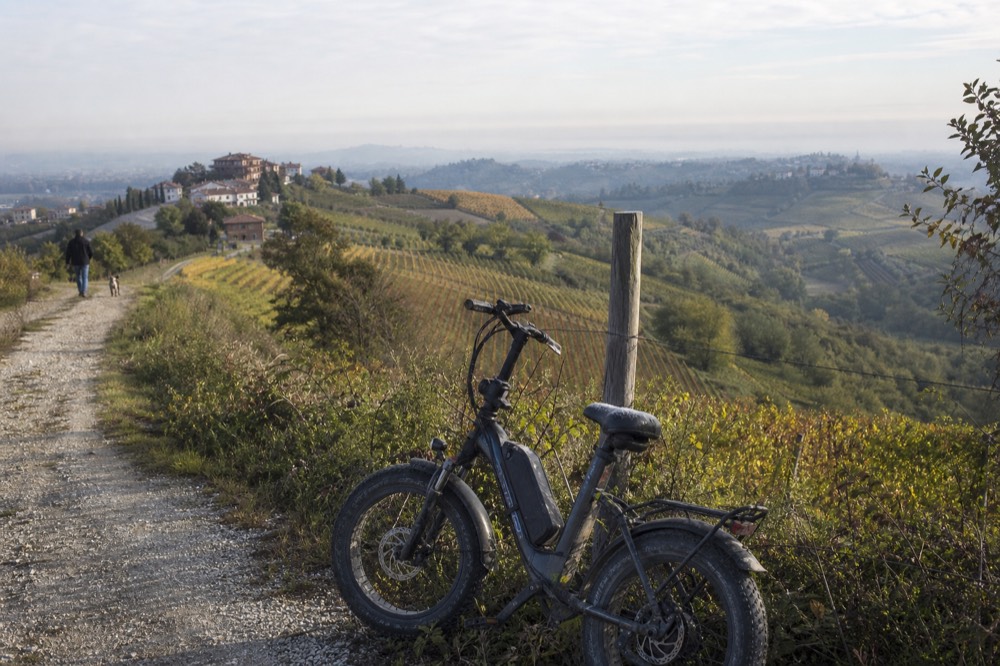
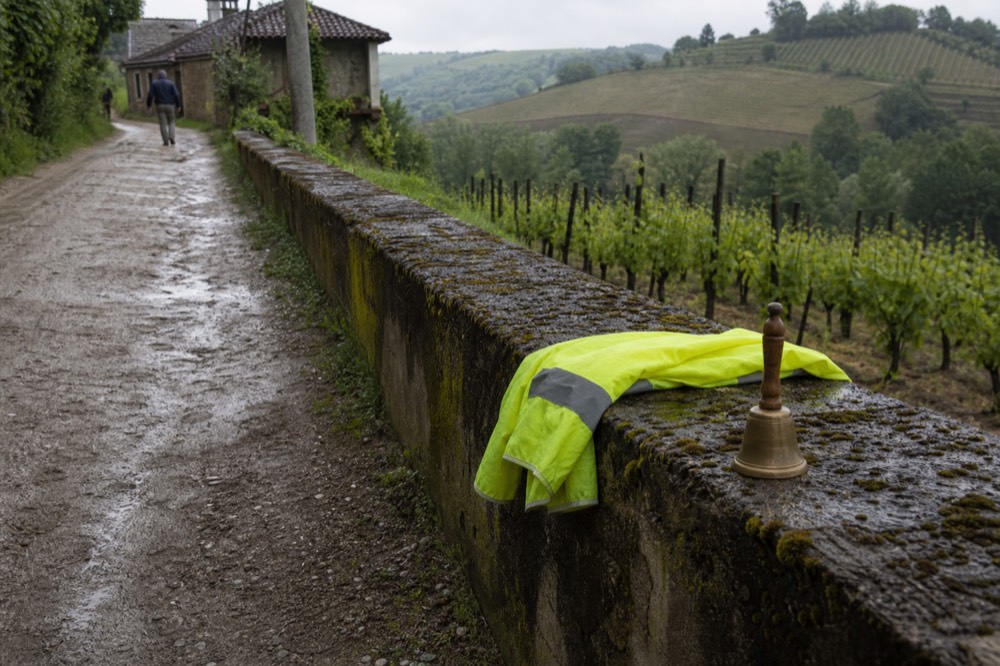
Italian cycling law requires a reflective vest outside built-up areas after dark and in tunnels, and a bell on the bike. There is no helmet law for any age, but a helmet is strongly recommended. E-bikes are limited to 250 W and 25 km/h assisted speed; anything faster is classed as a moped and needs registration and insurance.
These rules matter on the Langhe roads. Much of the riding is outside built-up areas, so if you are out near dusk, you must have a high-visibility vest. A bell is legally required equipment, though few rental bikes outside Italy come with one; check with your rental shop. The 1.5 m minimum passing distance for motor vehicles is law, but on narrow vineyard roads it is not always practical, so ride defensively.
The best months to ride are May, June, and September. September is the standout: average highs of 23.6 °C, the harvest underway, and the vines beginning to turn. July and August are hot, with average highs near 30 °C and little shade on the Barolo loop. November is the wettest month, with 115 mm of rain on average, and the fog can roll in from the Po plain.
| Month | Avg high (°C) | Avg low (°C) | Avg precipitation (mm) |
|---|---|---|---|
| May | 21.5 | 12.0 | 88 |
| June | 26.1 | 16.0 | 67 |
| July | 29.2 | 18.7 | 37 |
| August | 28.8 | 18.9 | 49 |
| September | 23.6 | 14.7 | 81 |
| October | 17.6 | 10.4 | 90 |
How To Plan A Barolo Or Barbaresco Ride
Start from Alba, the natural base for both regions. Alba sits at 179 m on the Tanaro River, with bike rental shops, train connections to Turin, and plenty of places to eat. From Alba, the Barolo loop is a clockwise circuit through the southern hills; the Barbaresco loop heads east and north. Both are signposted in parts, but a GPS route or a guide makes the day smoother.
Alba is the hub. You can reach it by train from Turin in a little over an hour and a half, or drive from Turin Caselle Airport in about 90 minutes. Bike rental exists in Alba itself and in Castiglione Falletto, right in the Barolo zone. An e-bike is the most popular choice for the Barolo loop, while a standard road bike is fine for Barbaresco if you are reasonably fit.
If you want a guided experience, the Barolo scenic e-bike tour with wine tasting covers the core of the region in about five hours, with a cellar stop included. For Barbaresco, a cycling tour from Neive to Barbaresco follows the classic route. Both are bookable on the operator's live listing.
For more on the practicalities, see our guides to cycling in Piedmont Italy and Barolo bike tour routes.
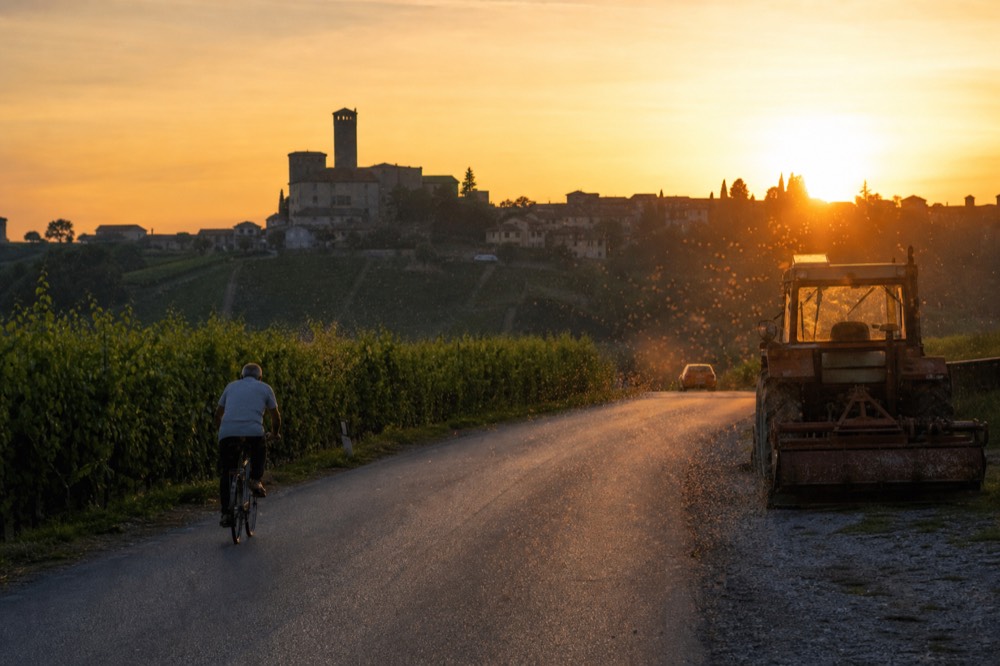
Whichever side you choose, the Langhe hills deliver a ride you won't forget. The best move is to book one guided tour, see where it takes you, and return for the other side another day.
Common Questions About Barolo Vs Barbaresco
Which is better for cycling, Barolo or Barbaresco?
It depends on your fitness and ambition. Barolo offers the classic full-day loop with more climbing and famous villages; Barbaresco is a shorter, easier ride that still delivers Nebbiolo views. Both are excellent on an e-bike.
Is Barbaresco easier to ride than Barolo?
Yes. The Barbaresco loop is about half the distance and half the climbing, with no climb as long as the pull to La Morra. It is the better choice for a relaxed half-day.
Do I need an e-bike for the Langhe hills?
Not strictly, but an e-bike makes the Barolo loop far more enjoyable, especially in summer heat. For Barbaresco, a standard road bike is fine if you are comfortable with rolling hills.
How far apart are Barolo and Barbaresco?
The two zones are about 10 km apart as the crow flies, but the roads dip into the Tanaro valley and climb back out. A combined ride would be a very long day with both loops' climbing.
Can I visit both in one day?
You can ride one side in the morning and visit the other by car or taxi in the afternoon. A full-day guided e-bike tour can also be customised to include both, but it is a long day.
What is the best month to ride?
September is ideal: warm but not hot, the harvest is underway, and the vines start to colour. May and June are also excellent. Avoid July and August if you dislike heat, and November is the wettest month.