Best Time To Visit Piedmont Italy For Riding And Harvest
Two calendars decide when Piedmont is at its best: the weather a cyclist can actually ride in, and the wine and truffle events that make the trip worth the flights. They only fully overlap for about six weeks each year, from mid-September to late October.
 By Chiara Barbero, Piedmont Bike Tour Guide and Langhe Cycling Specialist
Short answer
The best time to visit Piedmont is mid-September to late October, when average highs sit near 23.6 °C, the Nebbiolo harvest is underway and the Alba white truffle fair opens on 10 October 2026. May and June are the strong alternative: warm, green and quieter, with Cantine Aperte on 30 and 31 May.
Two calendars govern Piedmont, and most visitors only look at one. The first is weather: when the hills are warm enough, dry enough and light enough to ride. The second is the wine and food year: when the harvest happens, when the cellars open their doors, when the truffle fair fills Alba. The useful planning fact, the one this whole site exists to publish, is that those two calendars overlap for roughly six weeks a year. Miss the overlap and you get either good riding with closed cellars, or great wine events with weather you would rather not pedal in.
Alba sits at 179 m, the vineyard hills climb from there toward Mombarcaro at 886 m, and the whole region runs on a continental rhythm: hot dry summers, a short golden autumn, wet Novembers. The month-by-month detail below is built from computed 30-year climate averages, the 2026 event calendar and the harvest pattern verified from producer and consortium sources. The advice is Piedmont Bike Tours' own, and it is aimed squarely at people who plan trips around a bike.
When Is The Best Time To Visit Piedmont Italy?
The best time to visit Piedmont is mid-September to late October, when the riding weather and the wine calendar overlap. Average highs near 23.6 °C make September the finest cycling month of the year, the Nebbiolo harvest is in full swing, and the Alba white truffle fair opens on 10 October. May and June are the second-best window, warm and green, before summer heat arrives.
That six-week overlap is the single most useful planning fact this site can publish. Before mid-September the harvest has not started in earnest and the cellars are busy with vineyard work rather than visitors. After late October the vine colours fade, November brings the wettest weather of the year at an average 115 mm of rain, and many family-run operations shift into winter mode. Inside the window you get all three at once: rideable temperatures, grapes coming off the hills, and the start of the truffle season.
The window is also, unavoidably, the busiest time. Recent reporting found that summer visitor numbers in Langhe and Roero now exceed the traditional autumn season, with May to August accounting for 50% of annual presences, but October remains the peak month for Alba accommodation demand. Book lodging early if your dates fall inside the overlap.
What Is The Weather Like Month By Month In The Langhe?
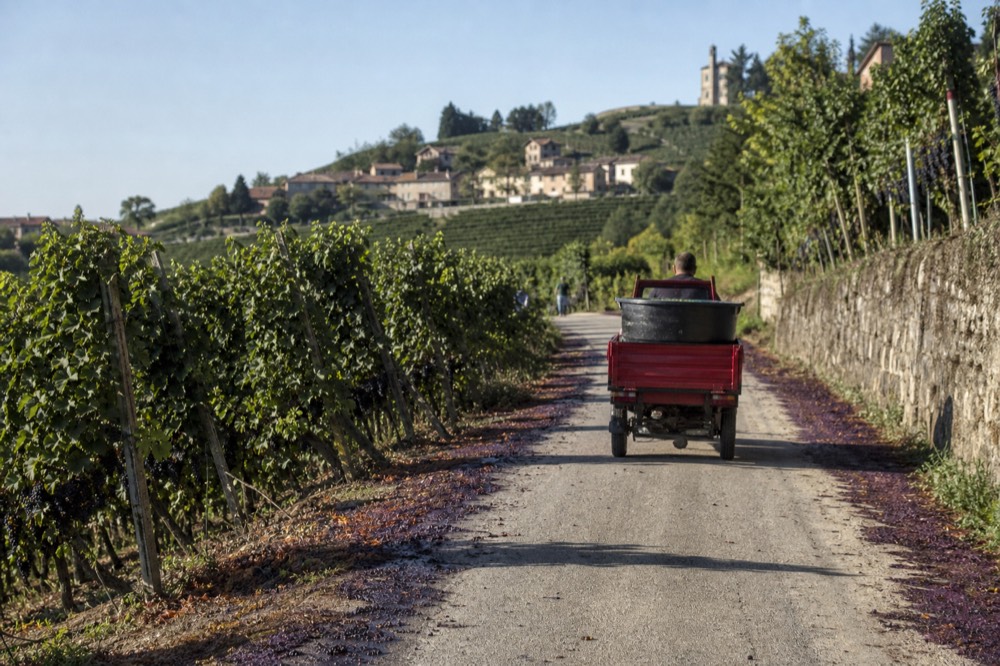
Typical conditions at Alba, averaged over the 30 years from 1991 to 2020, run from July highs of 29.2 °C with only 37 mm of rain to November's 115 mm, the wettest month. September averages a 23.6 °C high and 81 mm of rain, and May sits at 21.5 °C with 88 mm. Winter lows fall to around freezing from December through February.
These figures are computed from the ERA5 reanalysis dataset rather than read from a single weather station, so treat them as typical conditions rather than an official Italian meteorological record. The shape is what matters, and it is very consistent: a dry heat peak in July, a wettest month in November, and two shoulder seasons, May to June and September to October, that carry the best riding weather of the year.
| Month | Avg high (°C) | Avg low (°C) | Avg rain (mm) |
|---|---|---|---|
| January | 7.2 | −0.2 | 55 |
| February | 9.4 | 0.5 | 58 |
| March | 13.9 | 3.8 | 66 |
| April | 17.3 | 7.5 | 89 |
| May | 21.5 | 12.0 | 88 |
| June | 26.1 | 16.0 | 67 |
| July | 29.2 | 18.7 | 37 |
| August | 28.8 | 18.9 | 49 |
| September | 23.6 | 14.7 | 81 |
| October | 17.6 | 10.4 | 90 |
| November | 11.7 | 5.1 | 115 |
| December | 7.5 | 0.7 | 62 |
Two cautions sit beside that table. Recent summers have run hotter than the 30-year average: summer 2026 was reported as the hottest on record in Piemonte, surpassing 2003, with an 18-day June heat wave in Turin, and the city recorded 36 °C on 5 September 2026, a September record dating back to 1895, per Arpa Piemonte's heat records. And rain figures are monthly averages, not forecasts: October's 90 mm can fall in two storms or eight drizzly days.
If that table has you ready to book, the format question comes next: a guided day across both sides of the Tanaro, or a self-paced rental with tastings built in. These three options span the range.
When Does The Grape Harvest Happen And Can You Watch It?
The Langhe harvest runs from mid-August into October. Early varieties and sparkling-wine bases come off first, Dolcetto and Barbera follow in early September, and Nebbiolo, the Barolo grape, is picked from late September with Barolo fruit usually finishing around 10 October. Mid-September to early October is when the hills are visibly at work.
Harvest timing shifts by a week or two every year with the season, so treat that as a pattern, never a fixed calendar. The 2026 vintage illustrates the point: record heat accelerated ripening, Moscato picking in the Acqui area began in the first days of August, and Nebbiolo harvest for Barolo and Barbaresco was underway in early September, expected to last two to three weeks. The grapes themselves were described by growers as healthy and concentrated despite the heat.
You do not need an invitation to see the vendemmia. The vineyards around Barolo, La Morra and Serralunga d'Alba are working landscapes, and the public roads between the villages run straight through them. Ride early or late in the day, because tractors and grape trailers use the same narrow roads, and expect cellar visits to be shorter or suspended while the wineries are processing. Some producers lean into it instead: Fontanafredda hosted its Festa della Vendemmia on 5 and 6 September 2026 at Villaggio Narrante in Serralunga d'Alba, with cellar tours, grape treading and Barolo-Barbaresco tastings.
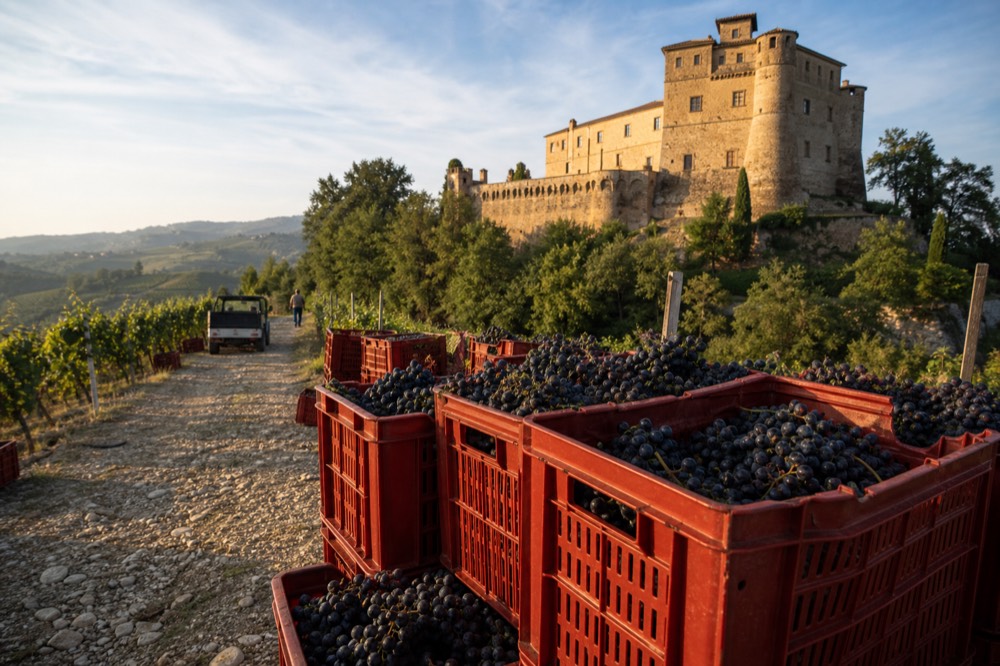
The consortium that protects Barolo and Barbaresco approved a 10% cut to maximum yields for the 2026 harvest, reducing the ceiling to 90 quintals per hectare for Langhe Nebbiolo and Barbera d'Alba, a supply-management decision that signals a region producing less but aiming higher. For a visitor, none of that changes the view from the saddle: September is simply the month when the postcard hills are also a working winery.
A harvest-season ride with a picnic stop is the classic way to see this, and the Barolo-region e-bike tour with a vineyard picnic is built around exactly that rhythm.
Is Summer Too Hot To Cycle In Piedmont?
July and August are the hardest months to ride, not because of rain, July is the driest at 37 mm, but because of heat, with average highs of 29.2 °C and 28.8 °C and the warmest nights of the year at 18.9 °C in August. Early-morning starts of 7 am or earlier make summer riding possible, but midday on the hills is genuinely hard work.
Recent summers have pushed past those averages. June 2026 brought record heat up to 39 °C in Alessandria province, followed by hailstorms and intense rain in the Langhe and Roero, and a supercell storm on 7 August 2026 dropped 80 mm of rain plus hail on the vineyards just before harvest. The 30-year table says July is dry; the 2026 news file says the heat is arriving earlier and hitting harder than the average suggests.
There is a practical offset. Many family-run cellars and restaurants close for part of August around Ferragosto on the 15th, so the midsummer visitor can face both the worst riding weather and reduced wine-tourism opening hours. If summer is your only window, plan rides for dawn, book tastings for late afternoon, and check that your chosen cellars are open before you commit to dates.
What Does Spring Offer: Cantine Aperte And Vinum?
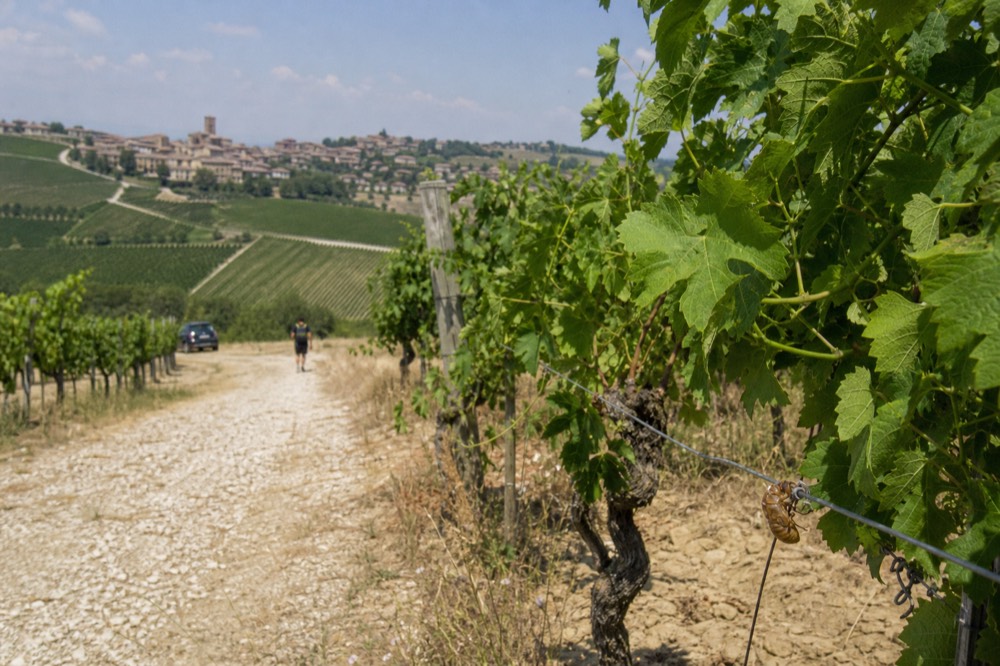
Spring is the second-best season to visit. Cantine Aperte opens cellars across the Langhe on 30 and 31 May, Vinum fills Alba's historic centre on 25-26 April and 1-3 May with 16 wine consortia, and average highs climb from 17.3 °C in April to 21.5 °C in May. The hills are green, the crowds are thinner than October's, and the vines are in full leaf.
Cantine Aperte is the single best-value wine weekend of the spring: participating cellars around Barolo and across the Langhe open their doors for tastings and visits, and several offer structured tasting flights with local products. Vinum, the 48th edition of which took place in Alba's centro storico, is the region's big indoor spring tasting, a chance to try Barolo, Barbaresco and the lesser-known DOCs side by side without driving anywhere.
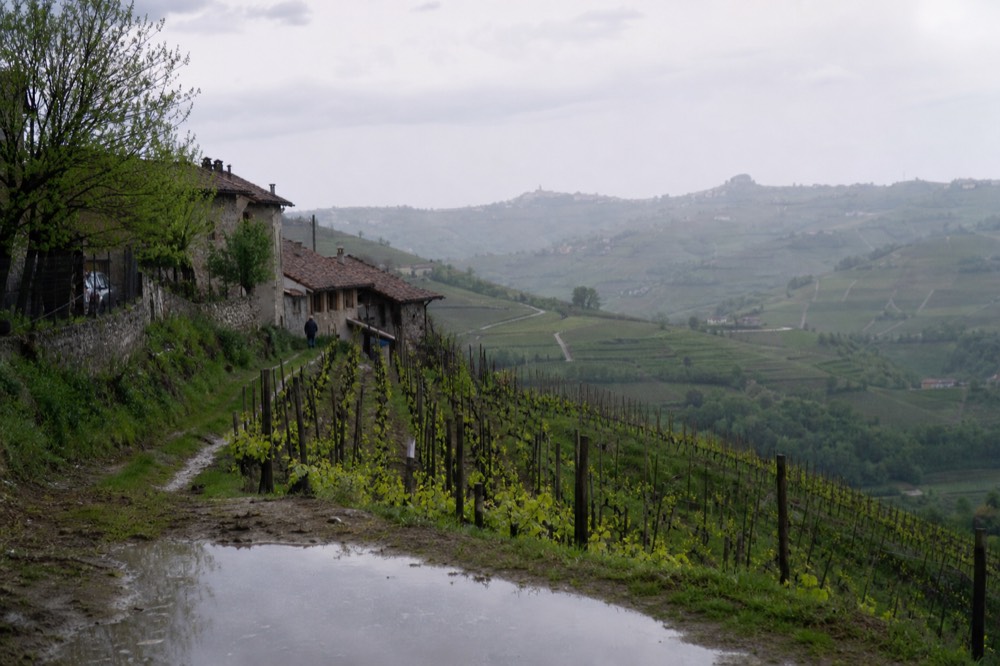
The trade-off is simple. Spring weather is good but less reliable than September's: April averages 89 mm of rain and May 88 mm, against July's 37 mm. You are betting on showers rather than heat, and the smart plan is a flexible one, ride on the dry days, taste on the wet ones.
For a fuller rundown of the riding itself, the cycling routes and terrain guide covers the roads, gradients and surfaces you will meet in each season, and the e-bike touring guide explains why pedal assist flattens the Langhe's climbing for riders who want the spring scenery without the sweat.
Is October All About Truffles In Alba?
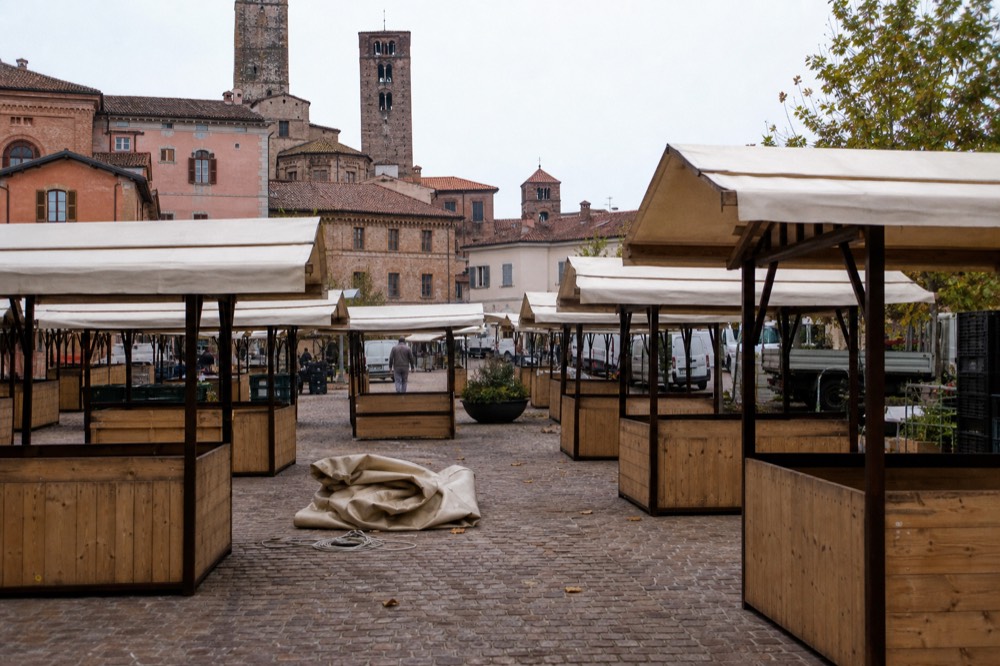
October belongs to the white truffle. The 96th International Alba White Truffle Fair runs 10 October to 6 December 2026, with the World Truffle Market open Saturdays and Sundays only, online tickets at €6 including entry to the MUDET museum. The legal truffle hunting season runs 1 October to 31 January, and the Fiera's opening weekend is the peak of the whole Piedmont year.
The fair and the season are different windows, and conflating them is the most common planning mistake. The Tuber magnatum hunting season, set by Regione Piemonte for 2026-2027, runs from 1 October 2026 to 31 January 2027, while the fair itself, verified on the official fair site, runs 10 October to 6 December with the market operating at weekends only. Come on a Saturday or the truffle market is closed, whatever the posters say.
October is also when the vines turn. The colour change has no precise start date, it begins after the harvest across October and November, with Nebbiolo leaves going yellow and Dolcetto turning red. Combined with the truffle fair, the harvest tail-end and rideable average highs of 17.6 °C, that makes October the month with the most going on, and the month that rewards booking earliest. The truffle hunting guide covers the season in depth, from the trifolau tradition to what a hunt actually costs.
Away from Alba, the Monferrato has its own autumn card: the scenic bike tour that pairs the hills with a visit to an infernot, the hand-carved underground cellars that are one of the six UNESCO components of this landscape.
When Is The Worst Time To Visit Piedmont?
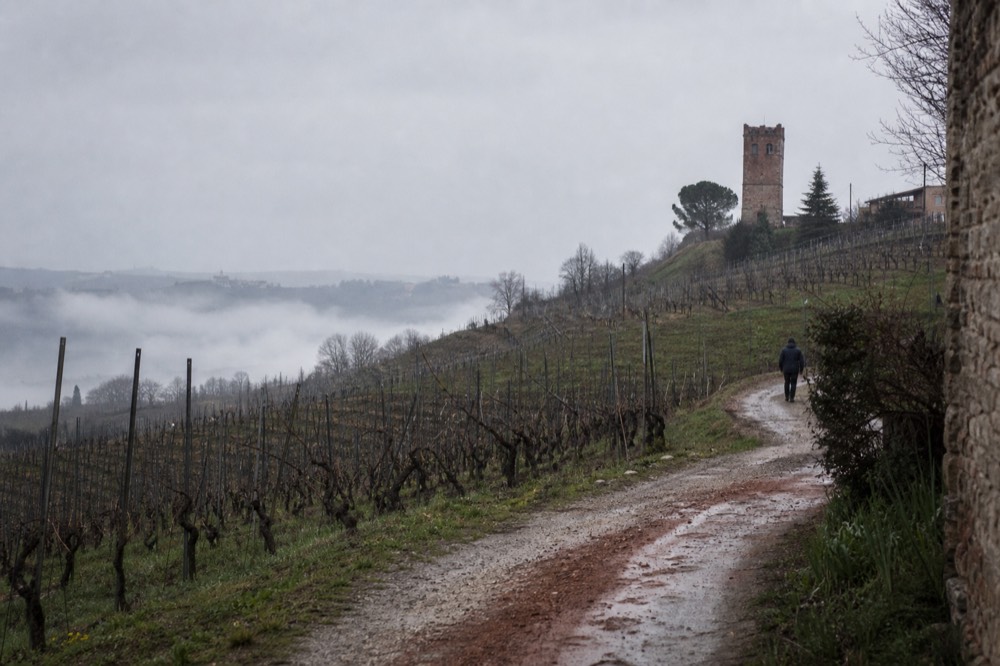
November through February is the hardest stretch. November is the wettest month at an average 115 mm of rain, December and January highs sit at 7.2-7.5 °C with lows at or below freezing, and winter fog on the Po plain is a real regional phenomenon. The vines are bare, many agriturismi quieten down, and riding days are short.
November does have one counterweight: bagna cauda season, the anchovy-and-garlic hot dip that is the region's signature winter dish, with festival weekends across Asti and the province through late autumn and winter. If you come in the off-season, come for the table rather than the bike, and expect fog on the plain, though the hills above it often sit clearer.
March is the transition month, average highs of 13.9 °C and 66 mm of rain, with pruning finished and the first events of the year appearing on the calendar. It can deliver beautiful riding days, but you take them as they come rather than counting on them.
| Window | Riding weather | Wine and food calendar | Verdict |
|---|---|---|---|
| Mid-Sept to late Oct | Highs 17.6-23.6 °C, 81-90 mm rain | Nebbiolo harvest, truffle fair from 10 Oct, vine colours | The six-week sweet spot |
| May to June | Highs 21.5-26.1 °C, 67-88 mm rain | Cantine Aperte 30-31 May, green hills | Best alternative |
| July to August | Highs 28.8-29.2 °C, driest but hottest | Ferragosto closures, heat | Ride at dawn or skip |
| March to April | Highs 13.9-17.3 °C, 66-89 mm rain | Vinum 25-26 April and 1-3 May | Flexible, shower-prone |
| November to Feb | Highs 7.2-11.7 °C, Nov 115 mm rain | Bagna cauda season, bare vines | For the table, not the bike |
How Do You Plan A Trip Around The Six-Week Overlap?
Pick your anchor event first, then work outward. The Douja d'Or wine festival runs 6-15 September in Asti, the Festa del Vino fills Alba on 20 and 27 September with an €18 tasting trail, the truffle fair opens 10 October, and the Nebbiolo harvest peaks between them. Choose one, book lodging within cycling distance of Alba, and reserve bike days before cellar days.
The September calendar is denser than most visitors realise. Asti's Douja d'Or ran 6-15 September 2026 in Piazza San Secondo, the Palio di Asti ran on 6 September, and Alba's Festa del Vino poured on two September Sundays with a Via del Vino tasting at €18 including glass and bag. Layer the harvest on top and mid-September to mid-October becomes a month where the problem is not finding something to do but fitting rides between the events.
| Date (2026) | Event | Where | Why it matters for planning |
|---|---|---|---|
| 6-15 September | Douja d'Or wine festival | Piazza San Secondo, Asti | Opens the autumn wine season, flat riverside riding nearby |
| 6 September | Palio di Asti | Asti historic centre | The city's biggest day, book lodging months ahead |
| 20 and 27 September | Festa del Vino, Via del Vino tasting at €18 | Alba centro storico | Tasting trail with glass and bag included, mid-harvest |
| 10 October to 6 December | 96th White Truffle Fair, market weekends only | Alba | The anchor event of the six-week overlap |
| 1 October to 31 January | Legal white truffle hunting season | Across Piemonte | Longer than the fair, hunts bookable through winter |
Logistics matter more inside the window than outside it. A direct train links Turin with Alba in a little over an hour and a half, and the assembled-bike supplement on regional trains is €3.50, valid to 23:59 on the ticket date, which makes a car-free harvest trip genuinely workable. The getting to Alba guide has the full transfer picture from the airports.
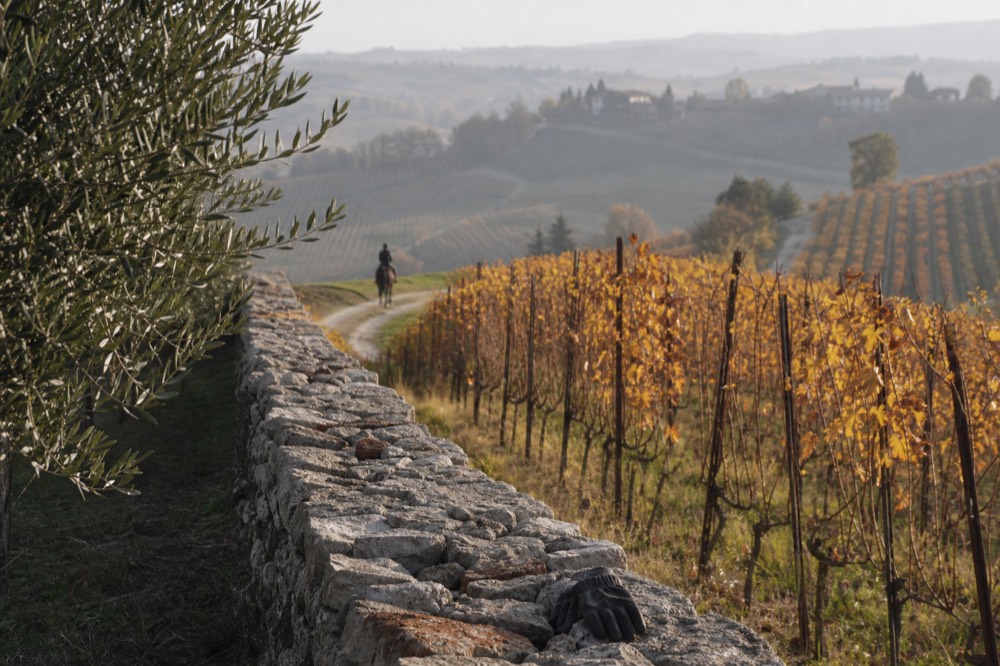
Whichever weekend you choose inside the overlap, the same three touring formats do the heavy lifting: a full guided day across Langhe and Roero, a flexible rental with tastings in Barbaresco, and a shorter hill-country loop for quieter dates.
The six questions below cover the core timing decisions: the best month overall, the best month specifically for cycling, when the harvest falls, whether August is a write-off, when the truffle fair runs and which month brings the most rain. Each answer is short, dated where dates are firm, and drawn from the same verified figures used throughout this guide.
Common Questions About The Best Time To Visit Piedmont
When is the best time to visit Piedmont Italy?
Mid-September to late October, when cycling weather and the wine calendar overlap. Average highs sit near 23.6 °C in September, the Nebbiolo harvest is underway, and the Alba white truffle fair opens on 10 October. May and June are the best alternative.
What is the best month for cycling in the Langhe?
September. It combines the year's most rideable temperatures, an average high of 23.6 °C, with the harvest in progress and 81 mm of rain spread across the month. May is the runner-up at 21.5 °C.
When is grape harvest season in Piedmont?
From mid-August into October. Early varieties and sparkling bases come first, Dolcetto and Barbera in early September, and Nebbiolo from late September, with Barolo fruit usually finishing around 10 October. Exact dates shift a week or two each year.
Is August a bad time to visit Piedmont?
For cycling, mostly yes. Average highs of 28.8 °C and the warmest nights of the year make midday riding hard, and many family-run cellars close around Ferragosto on 15 August. Early-morning rides and late-afternoon tastings can still work.
When does the Alba truffle fair happen?
The 96th International Alba White Truffle Fair runs 10 October to 6 December 2026, with the World Truffle Market open Saturdays and Sundays only. Online tickets cost €6 and include entry to the MUDET truffle museum.
What is the rainiest month in the Langhe?
November, at an average 115 mm across the 1991-2020 period, against July's 37 mm, the driest. November through February is the least rewarding window for riding, though bagna cauda season keeps the tables busy.