Cycling Monferrato And Roero: The Quieter Two-Thirds Of Piedmont's UNESCO Hills
Two thirds of the UNESCO vineyard landscape of Piedmont sits outside the Barolo zone, across the Roero and the Monferrato. The roads there are emptier, the tours cheaper, and the climbing gentler, which is exactly what most first-time riders are looking for.
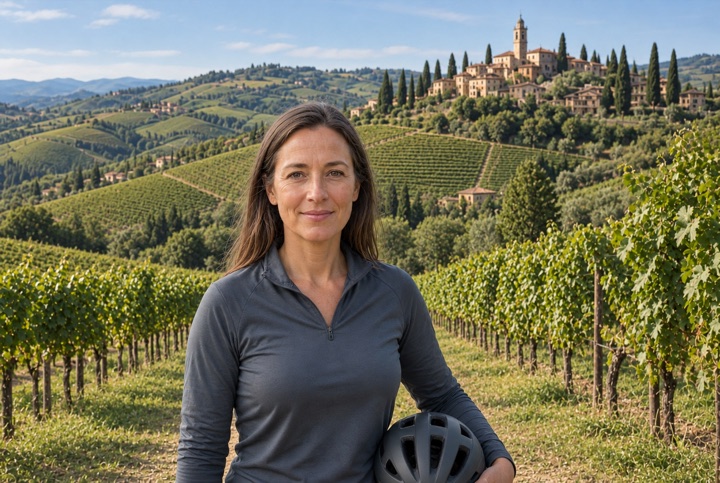 By Chiara Barbero, Piedmont Bike Tour Guide and Langhe Cycling Specialist
Short answer
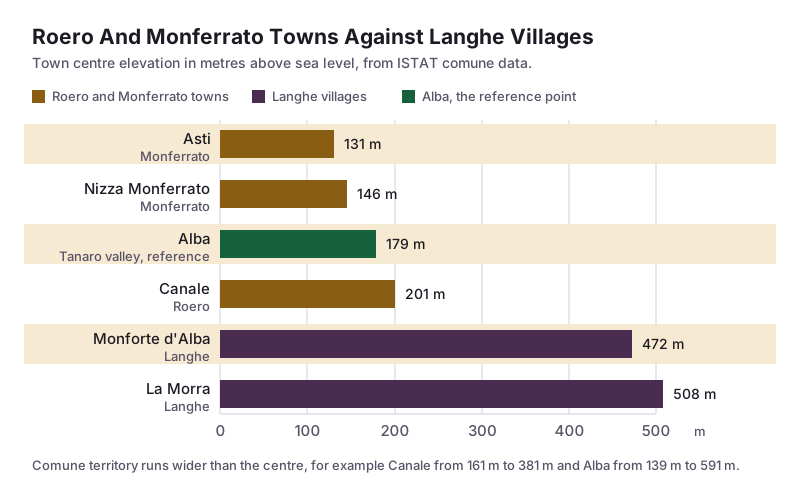
Monferrato and Roero hold three of the six UNESCO vineyard components, with village centres as low as 131 m against La Morra's 508 m. Riding is gentler than the Langhe, tours start from $46, and a 32.5 km cycle route between Alba and Canelli is funded but not yet built.
The UNESCO Vineyard Landscape of Piedmont: Langhe-Roero and Monferrato was inscribed on the World Heritage List in 2014 as a serial property of six components, and only two of them, the Langa del Barolo and the Grinzane Cavour castle, are what most visitors picture when they hear "Langhe". The other four, the Barbaresco hills aside, are the Roero and the Monferrato: Nizza Monferrato and its Barbera country, Canelli and the Asti Spumante hills, and the Infernot villages with their hand-dug underground cellars. That is the majority of the inscribed landscape, and it sees a fraction of the bikes.
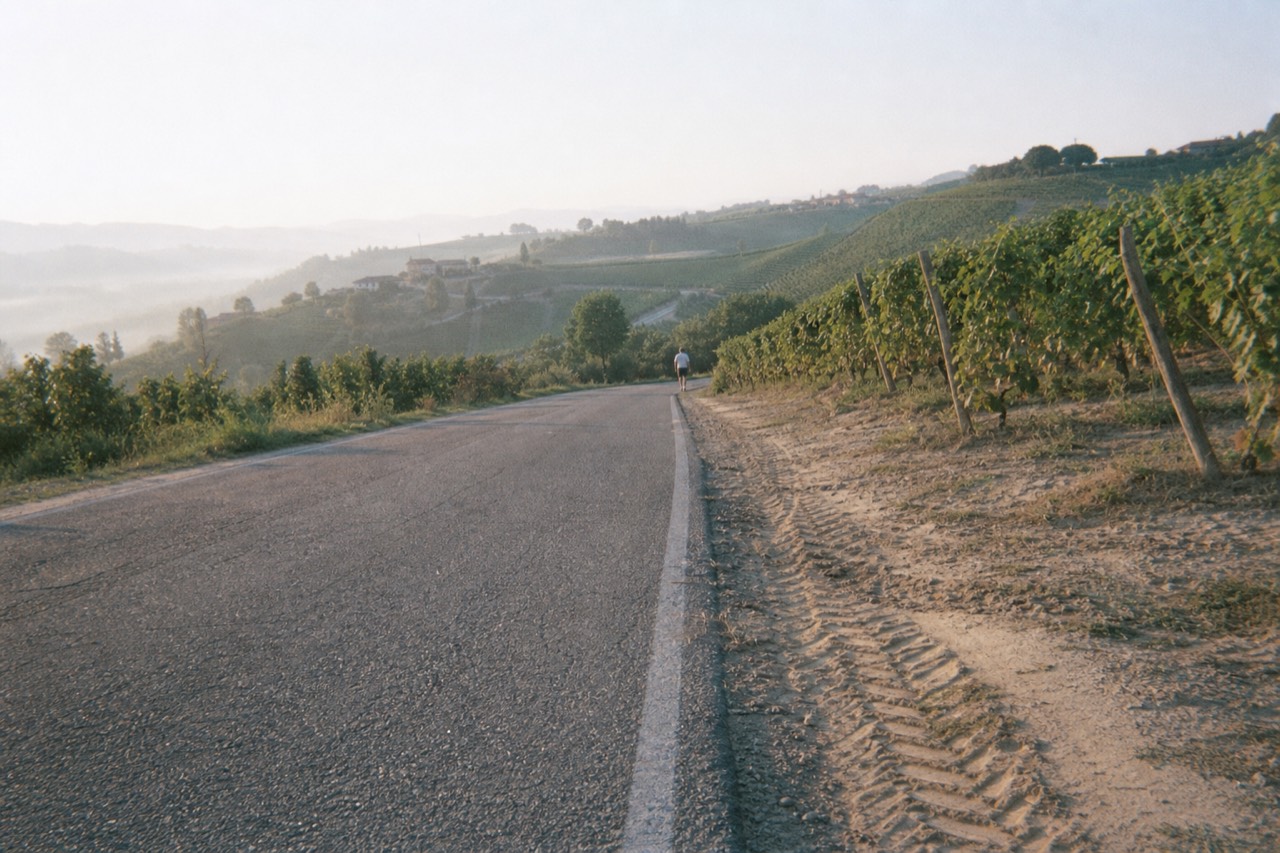
The practical difference for a rider is real. The Langhe side of the Tanaro is older marl and clay, giving the tall rounded hills of the postcards, with village centres like La Morra at 508 m. The Roero, on the north bank, is sandier ground cut by the Rocche, a line of erosion cliffs, and its towns sit far lower: Canale at 201 m. The Monferrato around Asti and Nizza Monferrato is gentler again, with Asti's centre at just 131 m. This guide lays out what that means for routes, tours, bases and the rules of the road, and it is written by Piedmont Bike Tours as a planning resource, not a diary.
What Are Monferrato And Roero, And How Do They Differ From The Langhe?
The two regions are the northern and eastern two-thirds of the UNESCO vineyard landscape: the Roero is the sandy, cliff-cut bank of the Tanaro north of Alba, and the Monferrato is the rolling Barbera and Asti Spumante country stretching east and south toward Asti, Nizza Monferrato and Canelli. Both are quieter than the Barolo hills, and both are lower, which changes the riding.
The property was inscribed in 2014 under cultural criteria (iii) and (v), covering 10,785.33 hectares with a buffer zone of 76,295.98 hectares, and the UNESCO listing itself names the components. Three of the six matter here: Nizza Monferrato and Barbera, Canelli and Asti Spumante, and the Infernot of Monferrato, the underground cellars carved into the local stone that give that component its name. Riders reach all of them on ordinary farm roads.
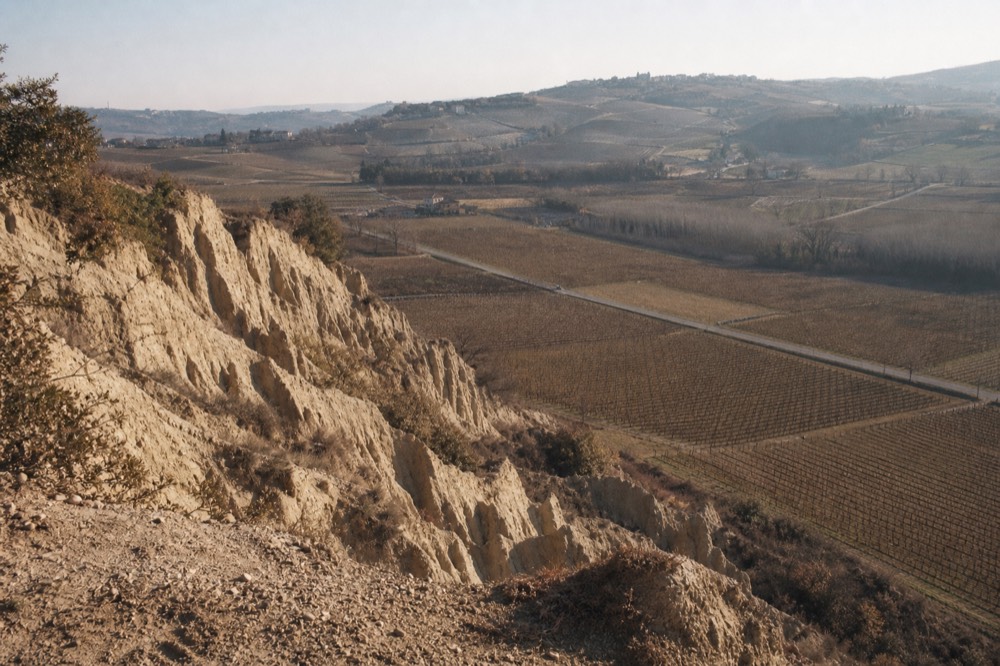
Geologically the split is simple and visible from the saddle. The Langhe south of the Tanaro is marl and clay-limestone, the smooth terraced hills of the postcards. The Roero on the north bank is younger and sandier, cut by the Rocche del Roero, a line of erosion cliffs and gullies that drop away from plateau vineyards. The Monferrato east of Alba is softer again, wide rolling ground where Barbera and Moscato dominate. You can read more on the contrast in our Barolo versus Barbaresco comparison, which covers the two Nebbiolo hills on the Langhe side.
How Hard Is The Riding Compared With The Barolo Hills?
Noticeably easier. The computed profiles show the Barolo villages loop from Alba carries about 877 m of climbing over 67.9 km, while the run from Alba down the Tanaro valley to Asti covers 31 km with almost no ascent at all, roughly 11 m, between a low of 116 m and a high of 174 m. Roero and Monferrato riding sits mostly between those two extremes.
The vertical facts come from ISTAT comune data. Canale, the Roero's main town, stands at 201 m with territory between 161 m and 381 m. Nizza Monferrato sits at 146 m, Asti at 131 m. Compare that with La Morra at 508 m or Monforte d'Alba at 472 m on the Langhe side, and the shape of each region is obvious: the Roero and Monferrato ask less of your legs. No named climb in any of the three regions has a verified gradient, so plan on height gained rather than percentages, and treat any route card quoting an average gradient with suspicion.
| Town | Region | Centre elevation | Territory range |
|---|---|---|---|
| Canale | Roero | 201 m | 161–381 m |
| Asti | Monferrato | 131 m | 102–282 m |
| Nizza Monferrato | Monferrato | 146 m | 125–302 m |
| Alba (reference) | Tanaro | 179 m | 139–591 m |
| La Morra (reference) | Langhe | 508 m | 186–556 m |
Distances from Alba are short. Canale is about 14 km away, Asti about 30 km along the flat Tanaro corridor, and the whole Roero ridge sits within an easy half-day loop. A rider who finds the Langhe loops punishing will find the north bank a relief, and a rider who wants one big day can still get it: the computed Alba to Mombarcaro profile in the Alta Langa logs about 1,040 m of ascent over 41 km, but that is the far side of the region, not the Monferrato.
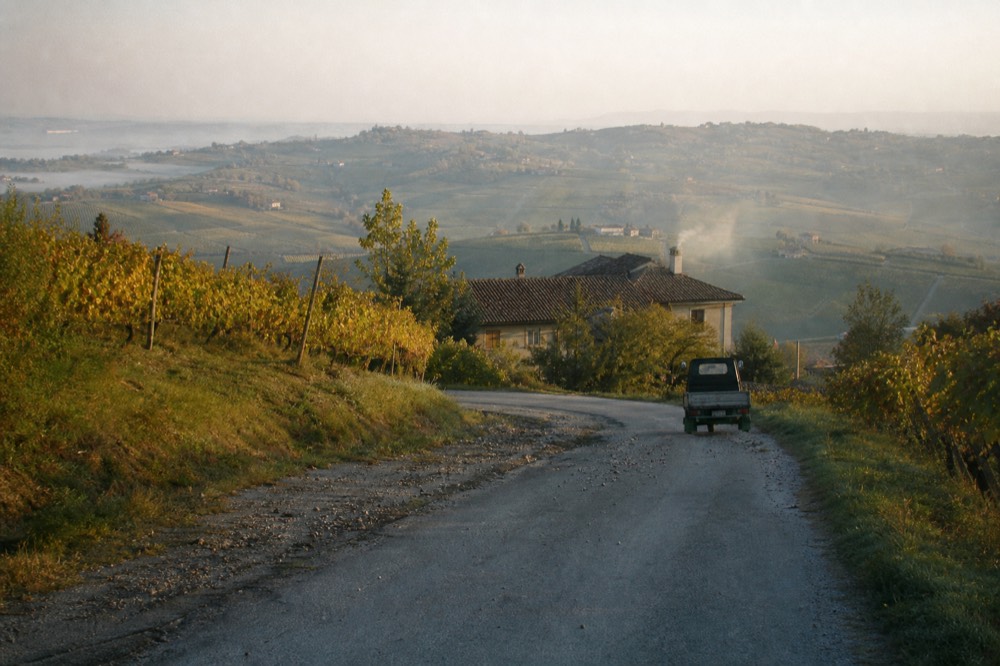
For most visitors, a guided day takes the guesswork out of route choice in terrain they have never seen, and the tour options on the quieter side of the Tanaro cover a wide spread of formats and prices.
What Does A Monferrato Bike Tour Actually Look Like?
A typical guided day runs four to seven hours on an e-bike, links vineyard roads with a cellar visit or a food tasting, and costs from $46 to $208 per person depending on length and inclusions. Rental-only options without a guide start from $52 and let you build your own loop across a full day.
The roster of tours on this side of the region is varied. The E-Bike Tour of Langhe & Roero is a roughly seven-hour guided day from $208 that crosses the Tanaro to put the sandy north bank in reach. At the other end, the Cisterna d'Asti e-bike ride keeps things short at four hours, rolling through Roero hills and vineyards from $46, a low-commitment taste of the Monferrato. The Monferrato Scenic Bike Tour and Infernot Secret Cellar Visit runs four to seven hours from $75 and pairs the riding with one of the hand-carved underground cellars that give the UNESCO component its name. There is also a mountain bike tour around Nizza Monferrato from $250 for riders who want the rougher tracks.
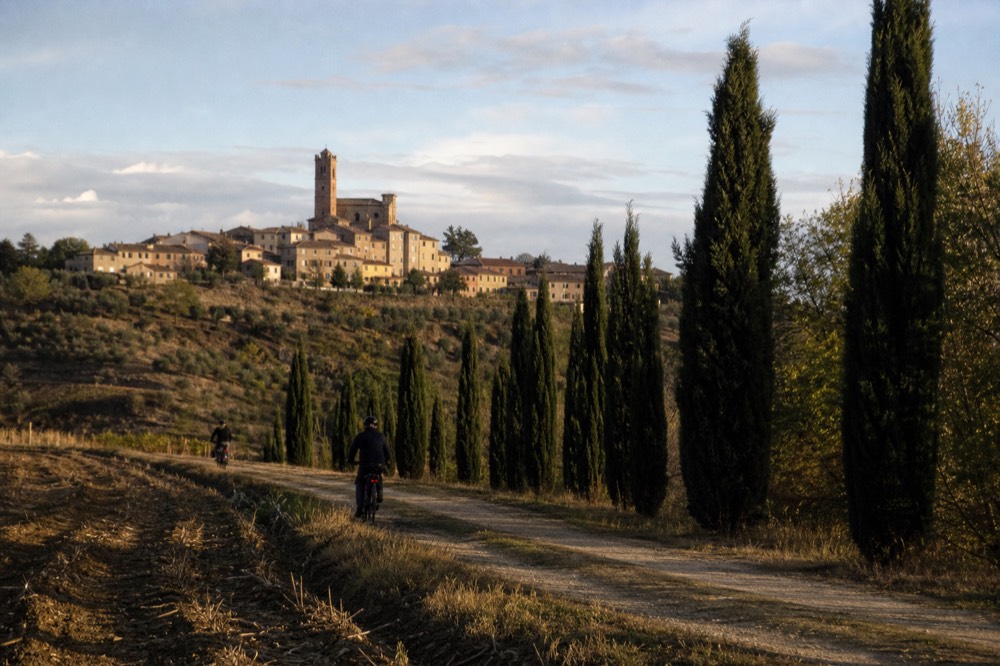
The Cisterna d'Asti tour deserves a specific mention for first-time visitors: it is a new listing with no reviews yet, so there is no rating to report, but the format, a half-day e-bike loop from a single base, is the least risky way to find out whether hill riding in this region suits you at all.
Not sure yet whether a guided day or a self-built loop fits you better? The guided options on the operator's live listing can be cancelled, so booking ahead costs you nothing if your plans shift.
Where Should You Base Yourself For Riding The Quiet Side?
Alba remains the best all-round base, since Canale is about 14 km away and Asti about 30 km on flat ground, but Asti itself is the stronger choice if your riding is entirely Monferrato, and Canale or Nizza Monferrato suit riders who want to wake up inside the Roero or Barbera country without crossing the Tanaro each morning.
Asti is the practical hub of the Monferrato: a real town of 73,604 people with the region's best rail connections, sitting at 131 m, so every ride starts downhill or flat. The Alba to Asti corridor along the Tanaro is the flattest riding in the whole area, effectively level over 31 km, which makes it a fine warm-up leg or an easy recovery day linking the two bases. Canale puts you inside the Roero with the Rocche on your doorstep, and Nizza Monferrato centres you in the Barbera hills of the UNESCO component named after the town.
| Base | Best for | Elevation | Trade-off |
|---|---|---|---|
| Alba | Both sides of the Tanaro | 179 m | Wine-village prices and crowds |
| Asti | Monferrato loops, rail access | 131 m | Less scenery on the doorstep |
| Canale | Roero riding, quieter roads | 201 m | Small town, fewer services |
| Nizza Monferrato | Barbera hills, deep Monferrato | 146 m | Farthest from the Langhe |
Our full where to stay in Piedmont guide breaks down accommodation across the region, and the guide to getting to Alba covers the rail and airport logistics for each of these bases.
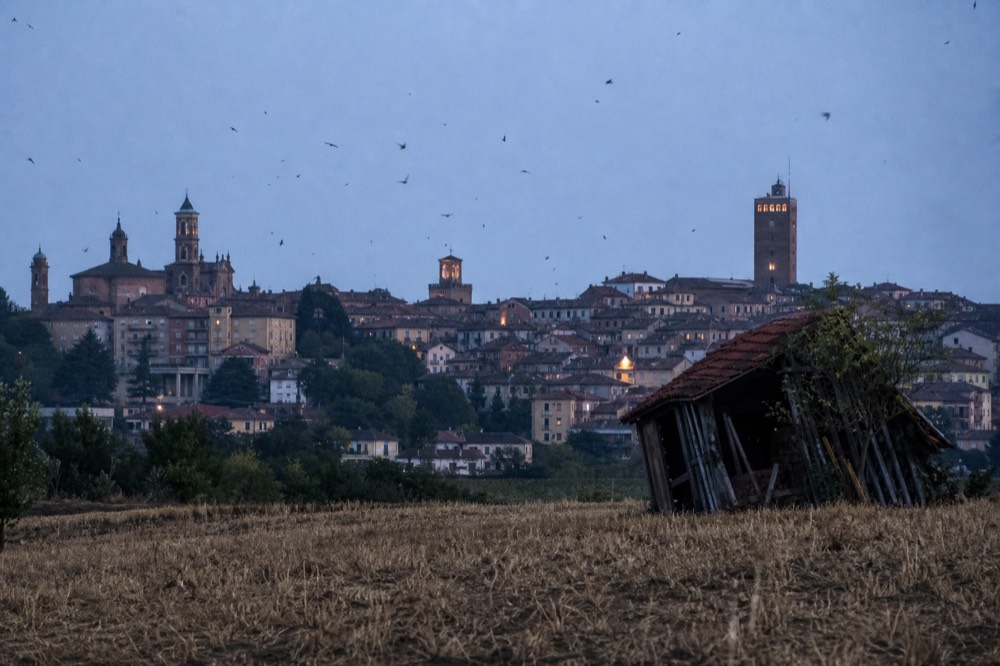
If you would rather have the crossing between the Langhe and the Roero handled for you, the guided e-bike day that links both regions is the one tour on the roster built exactly around that bridge.
What Are The Best Routes Once You Are Rolling?
The flat Tanaro corridor from Alba toward Asti is the anchor route, effectively level over about 31 km, and from it you can branch north into the Roero ridge around Canale or east into the Monferrato's Barbera villages. A full Roero loop from Alba is a comfortable e-bike day; the Monferrato rewards slower, food-led riding between cellar stops.
Start with the corridor. Alba's lowest ground sits at 139 m on the Tanaro and Asti's at 102 m, so the river route between them is close to level end to end, and the computed profile confirms it with about 11 m of cumulative ascent. Riders heading for the Roero branch north across the river at Cherasco or Canale and climb onto the sandy plateau, where the Rocche drop away in cliffs at the plateau's edge. The landscape characterisation here, sandier soils and erosion cliffs on the north bank against the Langhe's marl hills, is uncontroversial geology, but no specific sand percentage or cliff height is verified, so ignore any route description quoting one.
In the Monferrato the riding is gentler and the stops carry the day: the Infernot cellars of the UNESCO component, the Barbera villages around Nizza Monferrato, and the Spumante country around Canelli. Canelli is the heart of the Asti Spumante component, and a loop linking it with the surrounding hills is a full but manageable e-bike day from Alba or Asti. One caution for planning: the 32.5 km Ciclovia delle Colline Unesco between Alba and Canelli is funded with a 10 million euro regional grant, but it is not built, and no sentence should put a rider on it. The Comune di Alba's own announcement is the primary source on its status.
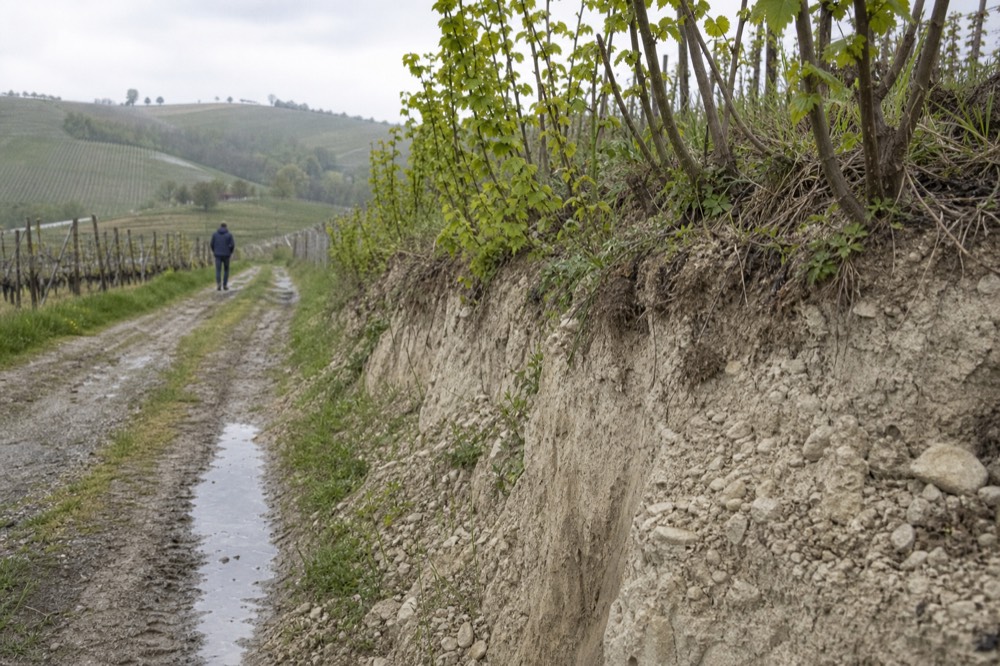
What Is Happening With Cycle Infrastructure On This Side?
The region is investing heavily but little is rideable yet: the Alba to Canelli cycleway is funded and unbuilt, a 41 km VenTo section in the Alessandria Monferrato was under construction from March 2026 with a June 2026 target that is not confirmed as met, and the Bormida cycle path already has working e-bike charging points in three Monferrato towns.
The honest summary for a rider planning a trip now: none of these projects changes today's route planning. The riding on this side of the Tanaro happens on ordinary farm and provincial roads, which are quiet but shared with tractors and the occasional car. Treat announcements of new cycleways as reasons to come back, not routes to book around.
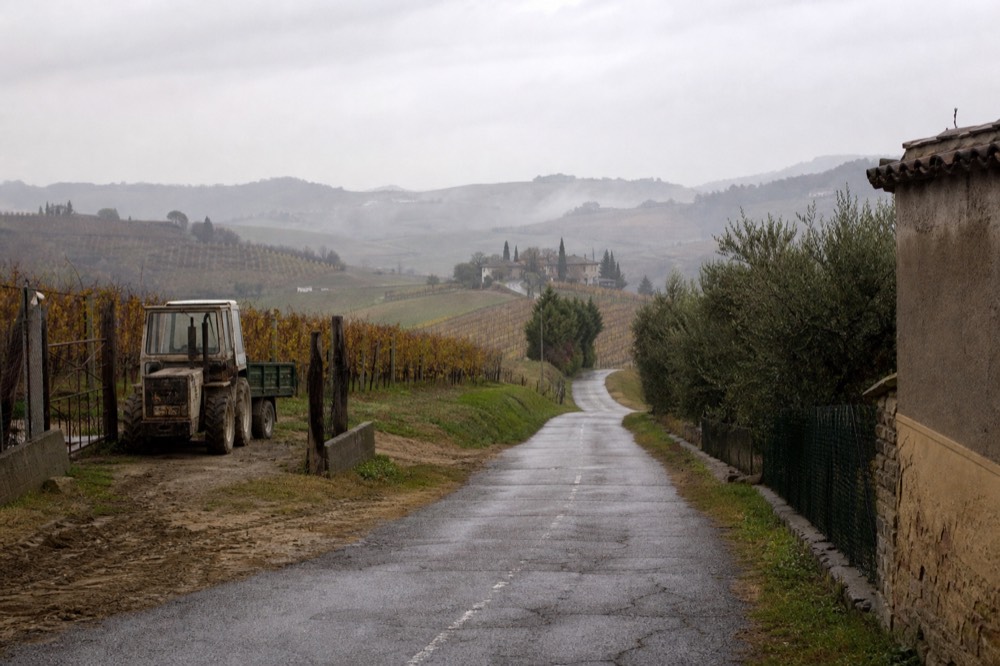
What Are The Rules Of The Road For Riders?
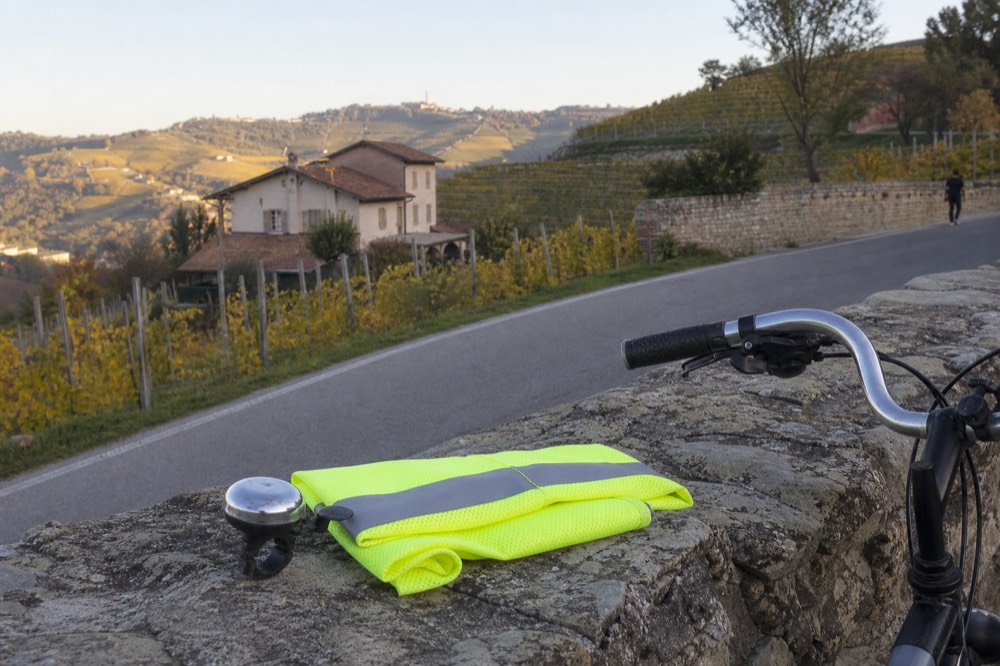
Italy has no helmet law at any age, but a reflective vest is mandatory outside built-up areas from half an hour after sunset to half an hour before sunrise and in tunnels at any hour, a bell is legally required equipment, and riders outside built-up areas must ride single file. Motor vehicles must give cyclists at least 1.5 m where road conditions permit.
These rules matter more here than in most regions, because the Roero and Monferrato are almost entirely outside built-up areas, and an autumn ride that runs past dusk crosses the vest threshold without you noticing. The published text of article 182 of the Codice della Strada is the primary source for the vest, single-file and two-abreast rules, and article 68 requires the bell, working brakes, front white or yellow lights, rear red lights and reflectors, and pedal reflectors. Most rental bikes carry all of it; most visiting road bikes do not carry a bell, which is a genuine legal requirement here.
| Rule | What it says | Where it bites |
|---|---|---|
| Helmet | No legal requirement at any age | Recommendation only, not law |
| Reflective vest | Mandatory outside built-up areas after dusk and in tunnels | Any evening ride in the hills |
| Bell | Required equipment on every bike | Rental bikes yes, brought bikes often no |
| Single file | Always required outside built-up areas | Group riding on farm roads |
| 1.5 m passing | Drivers must give it where road conditions permit | Narrow vineyard lanes |
Taking a bike on the trains that link the region costs little: a Trenitalia Regionale bike supplement is 3.50 euro, valid until 23:59 on the ticket date, on trains marked with the bike pictogram, and e-bikes are explicitly included. A folded folding bike travels free. The Trenitalia bike page sets out the full rules. That makes an Asti to Alba ride with a rail return, or the reverse, an easy one-way day.
When Is The Best Time To Ride The Quiet Side?
May, June and September are the strongest months: September averages a high of about 23.6 C at Alba against July's 29.2 C, and it coincides with the harvest. July and August are the hardest for heat, and November is the wettest month of the year at about 115 mm against July's 37 mm.
The climate figures are computed from the ERA5 reanalysis over 1991 to 2020, so treat them as typical conditions rather than station data. September stands out: warm enough for short sleeves, well off the summer peak, and the vineyards are full of harvest activity, with Dolcetto and Barbera picked from early September and Nebbiolo from late September into October. Our best time to visit Piedmont guide covers the full seasonal calendar, including the white truffle season that runs from 1 October to 31 January.
One planning note for the quiet side specifically: because the Roero and Monferrato see fewer visitors than the Barolo villages, the shoulder seasons here are genuinely quiet rather than merely less busy. October brings the vine colours, Nebbiolo leaves turning yellow and Dolcetto red, across October and November with no precise peak week. If you are riding on a tighter budget, the budget cycling guide lists the free and low-cost entry points, including free museum days and festival tastings.
For riders who prefer to skip the guiding entirely, the rental-plus-experiences format on for a full day of assisted pedalling at the lowest price on the Barbaresco side, this rental stands out, and it slots neatly into a self-planned loop on the quieter roads covered earlier.
These are the questions riders actually ask before booking a Monferrato bike tour, answered from the verified elevation data, the tour roster and the Codice della Strada. Each answer below gives the short version of a section above, so you can jump back to the relevant part for the full detail on routes, costs, infrastructure and the law.
Common Questions About Cycling Monferrato And Roero
Is the Roero easier to cycle than the Langhe?
Generally yes. Canale, the Roero's main town, sits at 201 m against La Morra at 508 m on the Langhe side, and the Roero's territory tops out around 381 m. The riding is rolling rather than mountainous, though the Rocche cliffs mean a few sharp edges on plateau routes.
Can you cycle from Alba to Asti?
Yes, and it is the flattest ride in the region: about 31 km along the Tanaro corridor with roughly 11 m of cumulative ascent. You can also take a bike on the train back with a 3.50 euro Regionale supplement, valid until 23:59 on the ticket date.
What is the Infernot in the Monferrato?
It is a hand-dug underground cellar carved into the local stone, characteristic of the Monferrato villages and protected as one of the six UNESCO components. Several tours, including the Monferrato Scenic Bike Tour and Infernot Secret Cellar Visit from $75, include a visit.
How much does a Monferrato bike tour cost?
Guided e-bike days on this side of the region start from $46 for a four-hour loop around Cisterna d'Asti, from $75 for the Monferrato scenic tour with an Infernot visit, and from $208 for the full Langhe and Roero crossing. Rental-only options with food and wine experiences start from $52.
Is the Alba to Canelli cycle path open?
No. The 32.5 km Ciclovia delle Colline Unesco is funded with a 10 million euro regional grant, but it is not built, and works were due to be assigned by September 2026. Plan your riding on the existing road network.
Do you have to wear a helmet cycling in Piedmont?
There is no helmet law in Italy at any age. However, a reflective vest is mandatory outside built-up areas from half an hour after sunset to half an hour before sunrise and in tunnels, and a bell is required equipment on every bike.
If a guided day across both sides of the Tanaro sounds like the right fit, these are the three options that best cover the quiet hills.