How To Get To Alba Italy From Turin, Milan And The Airports
Alba sits in a fold of the Langhe hills with no airport of its own and a rail network that sends most visitors through Turin. The routing is simpler than it first appears once you know which airport, which station and which train actually work.
 By Chiara Barbero, Piedmont Bike Tour Guide and Langhe Cycling Specialist
Short answer
Turin Caselle is the practical airport, roughly 90 km from Alba, with direct trains from Turin to Alba in around 90 minutes. Milan requires a change at Turin. Cuneo Levaldigi is closest at about 45 km but serves few routes. A bike supplement on regional trains costs €3.50.
Alba is a town of about 30,985 people at the centre of the Langhe, and it has neither an airport nor a direct train from anywhere outside Piedmont. Every visitor arrives by a two-step journey: a flight into Turin, Milan, Genoa or Nice, then a road or rail connection into the hills. The good news is that the second step is shorter than most people expect. Turin Caselle airport sits roughly 90 km away by road, and direct trains run from Turin's stations into Alba in around 90 minutes, so the wine villages are closer to their gateway city than many better-known Italian destinations.
This page works through every route in turn: which airport to choose, how the Turin and Milan connections actually operate, what the Asti line adds, how to bring a bike on the train, and when a rental car becomes the better answer. Along the way it covers the rules that catch visitors out, from the €3.50 bike supplement to the reflective-vest law that applies on rural roads after dark. If you are still deciding where to sleep once you arrive, the companion page on where to base yourself in Piedmont covers Alba, Barolo and Asti in detail.
Where Is Alba And Why Does Reaching It Take A Little Planning?
Alba sits at 179 m above sea level on the Tanaro river in southern Piedmont, about 71 km by road from central Turin and 30 km from Asti. It has no commercial airport, its direct rail links run only within the region, and the famous wine villages around it sit on small rural roads, which is why almost every journey ends with a regional train or a car rather than a single hop.
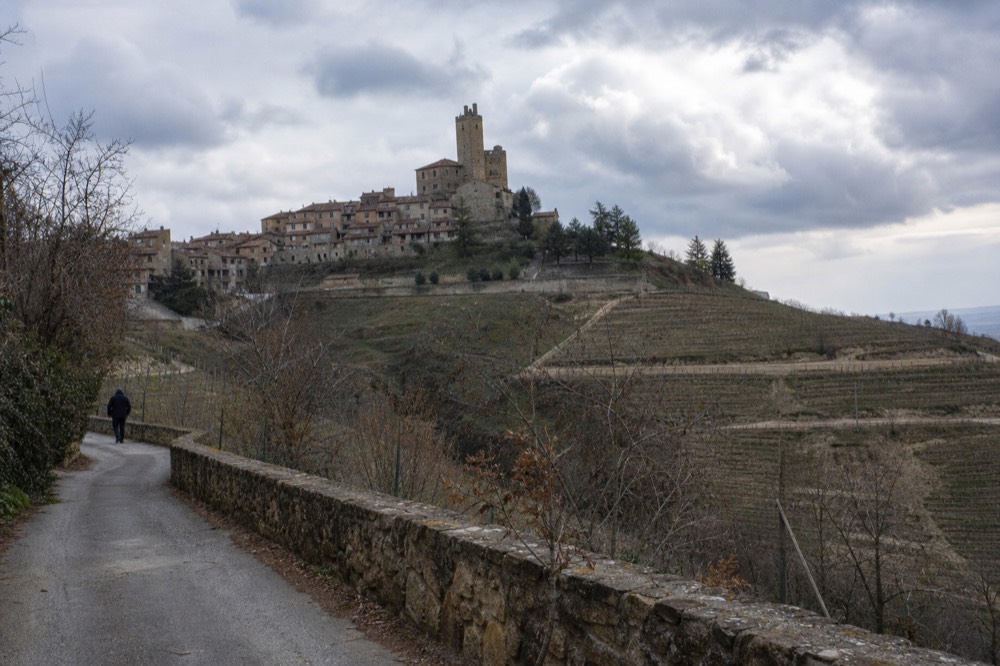
The town is the natural hub for the Langhe: every one of the famous Barolo and Barbaresco villages lies within about 20 km of its centre. Barolo itself is 13.9 km away, Barbaresco 13.5 km, La Morra 15.8 km. That concentration is the whole reason the routing question matters, because once you are in Alba you are effectively inside the wine region already, and the Barolo loop rides described in the Barolo bike tour routes guide all start from the same small area.
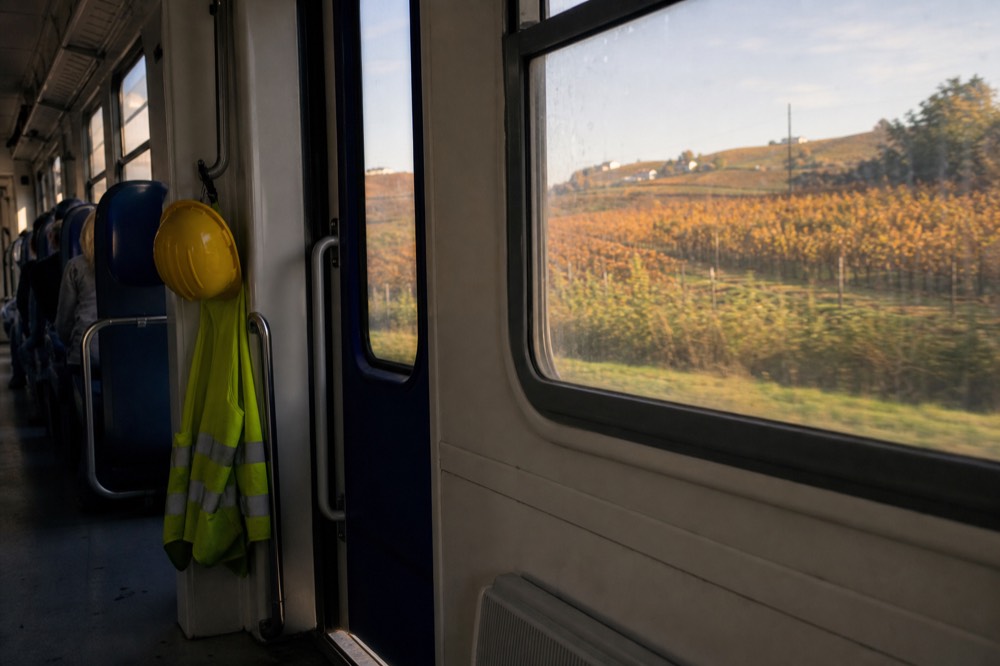
The planning difficulty is that the Langhe was never built as a destination you fly into. Its rail lines are regional, its airports are shared with Turin and Milan, and the last stretch of any journey is a slow, scenic road through vineyards. Treat that final stretch as part of the trip rather than an obstacle: the approach from Turin alone crosses some of the plain's flat farmland and then climbs into the first hills, and the difference between the Po plain and the Langhe is visible from the train window.
Which Airport Should You Fly Into For Alba?
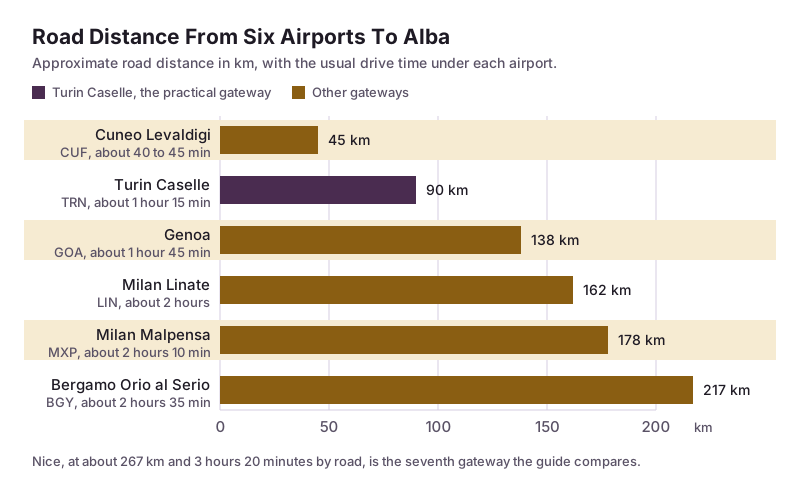
Turin Caselle (TRN) is the practical gateway at roughly 90 km and about an hour and a quarter by road from Alba. Cuneo Levaldigi (CUF) is closest at about 45 km but serves very few routes, Milan Malpensa (MXP) is about 180 km and over two hours of driving, and Bergamo, Linate, Genoa and Nice are all workable but slower. Choose Turin unless a cheap fare makes the extra distance worthwhile.
Turin Caselle's usefulness keeps improving. Wizz Air opened a base at Caselle in September 2026, adding routes to Barcelona, Bilbao and Valencia to the existing schedule, which widens the direct-flight options from across Europe. The airport connects to Turin by rail and bus, and from Turin you can continue straight to Alba by train without crossing the city by car. For anyone coming from outside Europe, the usual pattern is a long-haul flight into Milan Malpensa or a hub such as Zurich or Frankfurt, then a connection to Turin.
The distances below are real routed road distances, computed over the actual road network, so treat them as honest approximations rather than operator promises. Drive times assume normal traffic; the Turin ring road at rush hour can add real time.
| Airport | Road distance to Alba | Approximate drive time |
|---|---|---|
| Cuneo Levaldigi (CUF) | about 45 km | about 40-45 minutes |
| Turin Caselle (TRN) | about 90 km | about 1 hour 15 minutes |
| Genoa (GOA) | about 138 km | about 1 hour 45 minutes |
| Milan Linate (LIN) | about 162 km | about 2 hours |
| Milan Malpensa (MXP) | about 178 km | about 2 hours 10 minutes |
| Bergamo Orio al Serio (BGY) | about 217 km | about 2 hours 35 minutes |
| Nice (NCE) | about 267 km | about 3 hours 20 minutes |
Cuneo Levaldigi deserves a word of caution despite the short distance. Its route network is thin, seasonal and subject to change, so building a whole trip around a Levaldigi flight only makes sense if the schedule happens to fit. If it does, the 45 km transfer into Alba is the shortest of any airport in the region, and the drive crosses the plain before threading into the hills from the west.
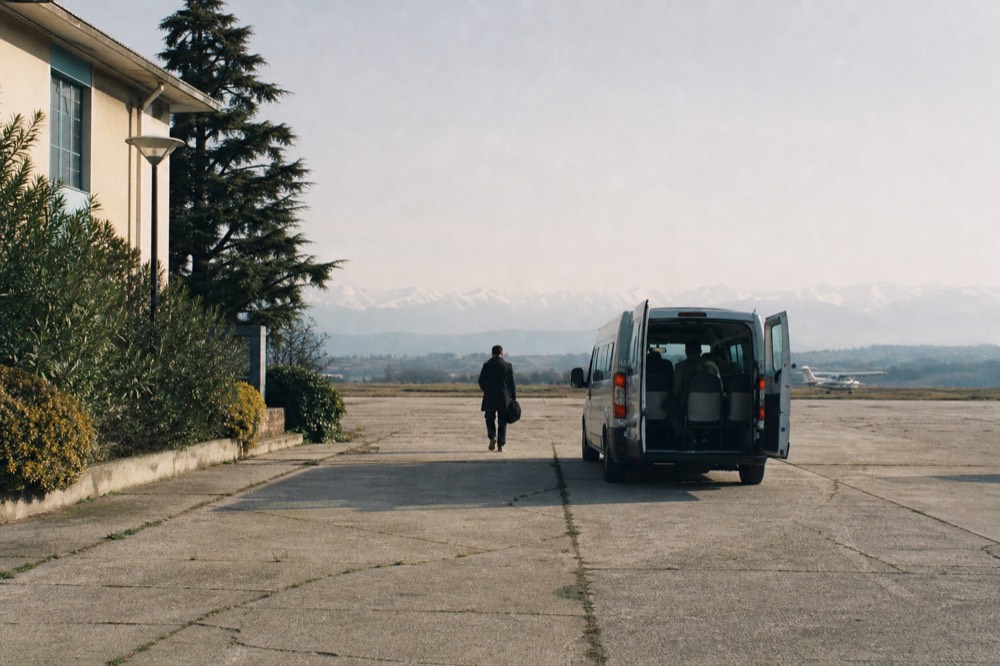
If your journey gives you a few hours in Turin either side of the transfer, the city is worth the stop, and two wheels are the fastest way to see it. The Turin options below are the three most-booked city rides on the site, and all of them start from central Turin within reach of the main stations.
How Do You Get From Turin To Alba?
Direct regional trains run from Turin to Alba on the Torino-Bra-Alba line with no change, taking around 90 minutes, and driving the roughly 71 km takes about an hour in normal traffic. The train is the simpler choice for anyone staying in central Alba, while a car wins if your accommodation sits in one of the hill villages.
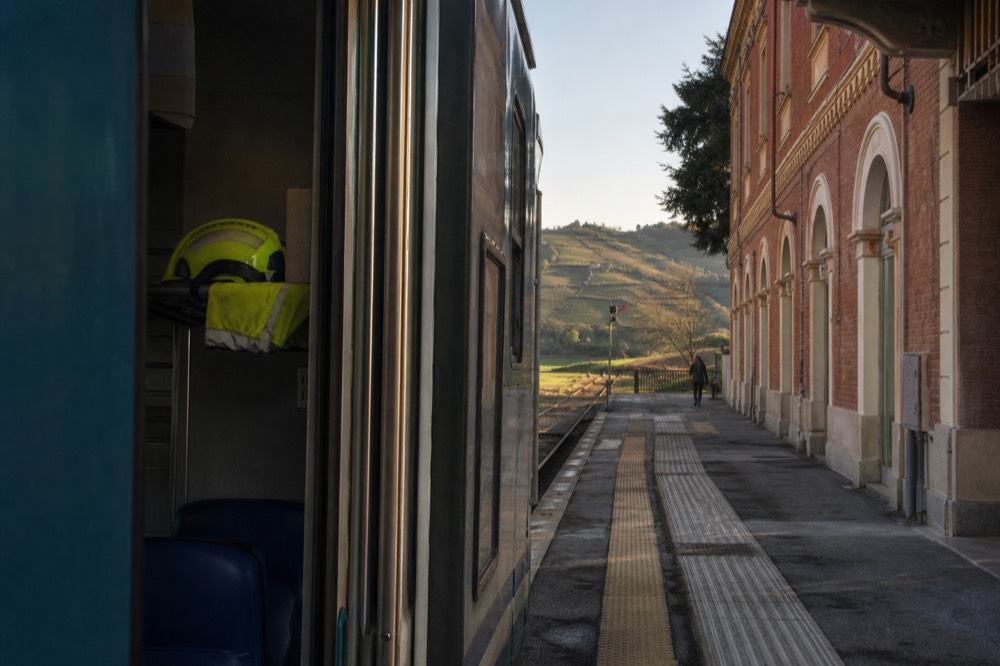
The Turin-Alba rail link is the backbone of every visit to the Langhe. Trains depart from Turin's Porta Nuova and Porta Susa stations and run south-west across the plain through Bra, and the journey needs no change of train. A little over an hour and a half is the honest figure to plan around; exact minute counts shift with the timetable, so check the operator's own schedule for your travel date. The trains are ordinary regional services, with space for luggage and, on marked services, for bikes.
Driving from Turin is straightforward: the route crosses the plain on fast roads and then follows the Tanaro valley toward Alba. The last stretch slows as the road enters the hills, and parking inside Alba's historic centre is limited, so if your base is the town itself the train is usually the less stressful option. If you are staying in Barolo, La Morra or Monforte d'Alba, a car saves the taxi hop from Alba station, and the drive from Turin to those villages takes about an hour and a quarter.
One budget detail for anyone spending a night in Turin before the transfer: the city's tourist tax rose in April 2026, and the official Comune di Torino schedule now runs from €3 per night in one- and two-star hotels up to €5 in five-star properties, with short-term rentals at €3.80. It is small money, but it explains why your Turin hotel quote and your final bill can differ.
A stop in Turin also answers the question of what to do with a spare half-day, and the city's most-reviewed guided ride is a natural fit between arriving and heading for the hills. The Turin: City Highlights Guided Bike Tour runs about three hours, is rated 4.6 across 497 reviews, and covers the centre's main squares and arcades from $35 per person, with the meeting point easy to reach from either main station. It is the same ride this site at Piedmont Bike Tours recommends most often to travellers breaking their journey through the city, precisely because it fits a transfer day so neatly.
The question worth asking at this point in the plan is simple: is a few hours in Turin better spent riding or eating your way around it? If the answer is riding, the highlights tour above covers the most ground in the least time, and booking ahead secures a place on the departure that lines up with your afternoon train to Alba. Free cancellation on the listing means the plan stays flexible if your flight runs late.
How Do You Get From Milan To Alba?
There is no direct train from Milan to Alba. Every rail journey requires one change, usually at Turin Porta Susa, with total travel time of roughly three hours; driving the roughly 156 km from Milan Centrale takes about two hours, and from Malpensa airport allow closer to two hours and ten minutes on the road.
The rail route is simple once you accept the change. Milan to Turin is a fast high-speed corridor with frequent departures, and from Turin you pick up the direct regional train to Alba described above. The connection at Porta Susa is the one to aim for, because it avoids crossing Turin between stations. Book the two legs as separate tickets and leave a comfortable margin, since the regional train to Alba runs a handful of times per day rather than hourly.
Driving from Milan gives you the flexibility the train lacks, and it is the only sensible option if you land at Malpensa late in the day. The route runs west across the plain on toll motorways and then south past Turin. Two practical notes: Italian motorway tolls add a modest cost, and arriving in the Langhe after dark on rural roads is worth avoiding, partly for navigation and partly because cyclists and tractors share those roads during the day and visibility matters.
| From Milan | Route | Realistic time |
|---|---|---|
| Milan Centrale by train | High-speed to Turin Porta Susa, change to regional train to Alba | about 3 hours |
| Malpensa by car | Motorway west and south past Turin | about 2 hours 10 minutes |
| Linate by car | Across Milan's ring, then west | about 2 hours |
| Bergamo by car | Motorway across the whole plain | about 2 hours 35 minutes |
For travellers who would rather break the journey than rush it, Turin rewards the overnight stop, and the e-bike version of the city tour suits exactly that kind of relaxed layover. The Turin E-Bike Tour: Explore the City and Its Best Viewpoint runs about three hours, is rated 4.9 across 371 reviews, and costs from $45 per person, with the pedal-assist bikes making the climb to the viewpoint above the city genuinely easy.
Can You Take The Train From Asti Or Elsewhere In Piedmont?
Yes. The Alba-Asti line reopened in September 2023 and links the two towns along the flat Tanaro valley, and from 14 June 2026 the Asti-Alba trains depart Alba at minute 05 and arrive Asti at minute 48 to improve connections toward Milan, making Asti a genuine rail alternative for approaching the Langhe from the east.
Asti station sits on the main Turin-Alessandria-Genoa corridor, so it often has more frequent long-distance connections than Alba itself. The Alba-Asti link, a little over an hour's ride along the valley, lets you arrive at Asti by faster services and complete the journey regionally. The 2026 timetable change, reported by Gazzetta d'Alba, aligned the Asti-Alba departures with the Milan-bound connections, which is a genuine improvement for anyone routing through Asti. The valley line is also one of the flattest rail approaches in the region, matching the essentially level road corridor between the two towns.
The one line to forget is Alba-Alessandria. It has been suspended since 2012 and remains suspended, so despite Alessandria looking close on the map, there is no rail route from there into Alba. Anyone approaching from the Monferrato side should route via Asti or come by road. For riders planning to explore the eastern hills once they arrive, the Monferrato and Roero cycling guide covers the quieter half of the region that this eastern approach opens up.
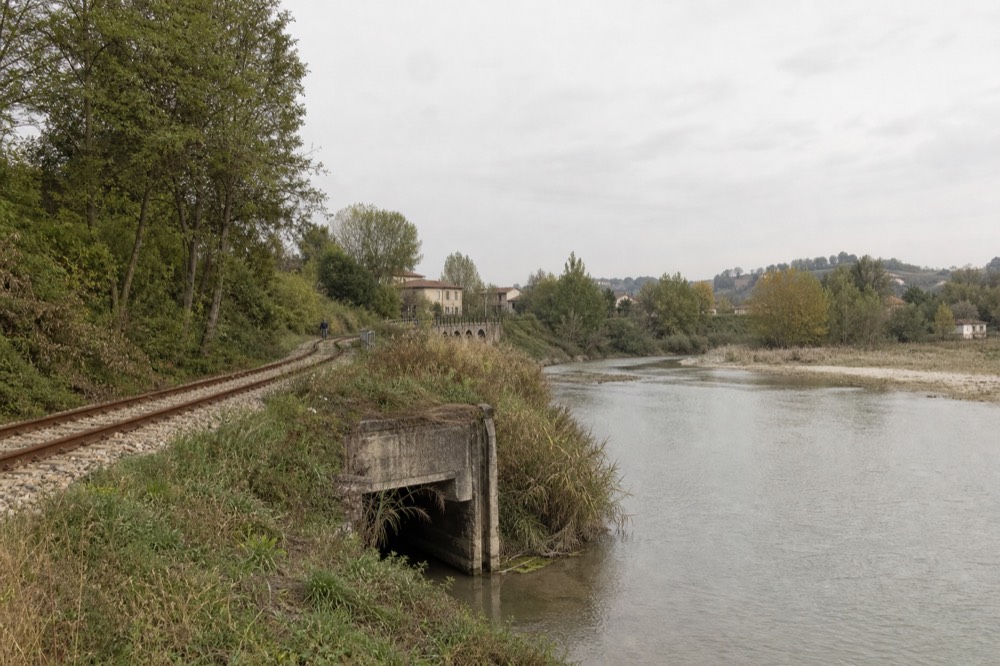
Autumn 2026 adds a slower, more atmospheric option. Historic trains are running on selected Sundays through the truffle and wine season: the Milan-Alba service in Gran Confort carriages on 11, 18 and 25 October 2026, and the Turin-Canelli service in Centoporte carriages on 1, 8, 15 and 22 November 2026. Fondazione FS announced both, as Il Sole 24 Ore reported, and they are aimed squarely at Langhe and Monferrato tourism. Seats on heritage services sell out early, so treat these as a booking decision, not a turn-up-and-go option.
Can You Bring A Bike On The Train To Alba?
Yes, on regional trains marked with the bike pictogram, for a €3.50 supplement valid until 23:59 on the ticket date. Folding bikes carried folded travel free on all regional trains, and e-bikes are explicitly included in the supplement, so a pedal-assist bike goes on the same terms as an ordinary one.
The rules come straight from the operator's own conditions of carriage. The supplement buys a place for an assembled bike on regional services that display the bike pictogram, and it lasts the whole ticket day until 23:59, which means you can ride the train out in the morning and back in the evening on one supplement. The alternative, if a service is full or unmarked, is to buy a second second-class ticket for the same journey and treat the bike as a passenger. On the Langhe's small regional trains, space is limited and the middle of the day is calmer than commuter hours.
A few legal points matter once you are off the train, because they apply to the roads around Alba immediately. Italy has no helmet law for cyclists of any age, but a reflective vest is legally required outside built-up areas from half an hour after sunset to half an hour before sunrise, and in tunnels at any hour. A bell is also required equipment. The Langhe is almost entirely rural road, so an evening ride back to your base crosses the vest rule easily. The full set of rules, including the 1.5 m minimum passing distance drivers must give you, is covered in the cycling in Piedmont guide.
| Bike on regional trains | Rule |
|---|---|
| Assembled bike | €3.50 supplement, on pictogram-marked regional trains |
| Supplement validity | until 23:59 of the day shown on the ticket |
| Folding bike, folded | free on all regional trains |
| E-bike (pedal assist) | included on the same terms as a normal bike |
| Alternative to the supplement | a second 2nd-class ticket for the same journey |
Should You Rent A Car For The Langhe Instead?
A car makes sense if you are staying in a hill village, travelling as a family, or visiting outside the main season when tour and transfer options thin out. It is unnecessary if you base yourself in Alba and plan to ride, because Alba's train station, the bike rental shops and the guided tours all start from the town, and the villages sit within an easy e-bike radius.
The honest trade-off is flexibility against parking and wine. The Langhe's village centres are small, old and congested in high season, and a car is a liability on a day of cellar visits unless someone in the group stays off the tasting list. Riders who base in Alba and use an e-bike cover the same ground without either problem: the Barolo villages loop from Alba runs about 68 km with roughly 877 m of climbing, which is a full but manageable pedal-assist day, and the flatter Barbaresco loop is about 36 km with around 457 m of ascent.
If you do drive, two practicalities are worth knowing. First, many rural Langhe roads are narrow, and tractor traffic during the September and October harvest is real, so allow more time than the map suggests. Second, if you plan to finish rides near dusk, the reflective-vest rule applies to you the moment you are outside a built-up area after dark, and the hills are almost entirely outside built-up areas. The best time to visit guide helps you pick dates that avoid both the August closures and the November rain.
| Your situation | Best approach |
|---|---|
| Staying in Alba, planning to ride | train in, rent or book bikes locally |
| Staying in Barolo, La Morra or Monforte | car, or train plus a short taxi |
| Day trip from Turin | direct train, about 90 minutes each way |
| Group with a designated driver | car, for cellar-hopping flexibility |
| Autumn truffle-season visit | book everything early; Alba's occupancy peaks in October |
For travellers whose Turin stopover is more about food than museums, there is a ride that combines both, and it pairs naturally with a morning arrival before the afternoon train to Alba. The Turin: Authentic Piemontese Feast Bike Tour runs about three hours from $58 per person, pairing a city loop with a proper Piemontese meal, which makes a fitting preamble to a week in the region that invented the dishes on the table.
What Should You Know Before Booking The Journey?
Book the Turin-Alba regional leg as its own ticket rather than a through fare, check whether your travel date falls on one of the 2026 timetable changes or heritage-train Sundays, and if you are bringing a bike, confirm the pictogram service before committing to a departure. Everything else, from tolls to parking, is manageable on the day.
A few details make the difference between a smooth transfer and a stressful one. The regional timetable on the Alba-Asti corridor changed in June 2026, so older forum posts and guidebooks may quote departure patterns that no longer hold; always check the operator's live schedule. The first-morning and last-evening trains on the wider Turin-Cuneo corridor return with the December 2026 timetable change, which matters for anyone planning early or late connections in winter. And if your dates fall in October or November 2026, the heritage trains to Alba and Canelli are worth booking ahead precisely because they are new and popular.
The Langhe's arrival experience is also changing on the ground. A 32.5 km cycle route between Alba and Canelli, the Ciclovia delle Colline Unesco, is funded with a €10 million regional grant and was due to go to works assignment by September 2026, but it is not built yet, so no cycling itinerary can use it today. What exists now is a working rail spine, real bike rental in Alba and the surrounding villages, and guided e-bike tours that start from the towns the trains reach. The e-bike tours in Italy guide explains why the Langhe's hill profile suits pedal assist so well.
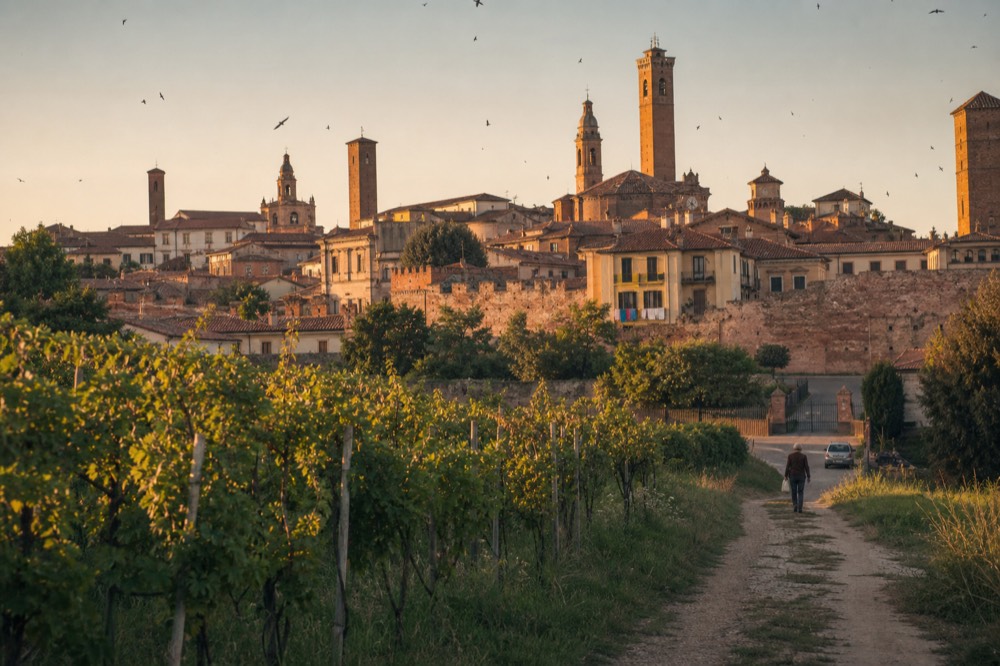
However you arrive, the pattern that works for most visitors is the same: land at Turin if the fares allow, ride the direct train into Alba, and pick a base that matches your transport. From there the whole question changes from how to get to Alba to which of the twenty villages within twenty kilometres to explore first, and that is a far more enjoyable problem to have.
The six questions below cover the practical details travellers ask most often about reaching Alba: the closest airport, the direct Turin train, the Milan connection, bike carriage and whether a car is needed at all. Each answer gives the honest figures, including the €3.50 bike supplement and the roughly 90-minute Turin-Alba rail journey, so you can plan the whole route in one place.
Common Questions About Getting To Alba
What is the closest airport to Alba, Italy?
Cuneo Levaldigi is closest at about 45 km by road, roughly 40-45 minutes, but it serves very few routes. Turin Caselle, about 90 km and an hour and a quarter away, is the practical gateway with a far wider schedule.
Is there a direct train from Turin to Alba?
Yes. Direct regional trains run from Turin's Porta Nuova and Porta Susa stations to Alba with no change, taking around 90 minutes. Check the operator's live schedule for exact departures on your date.
Can you fly directly into Alba?
No. Alba has no airport and no airfield for commercial flights. Every visitor arrives via Turin, Milan, Genoa, Cuneo or Nice and completes the journey by train or road.
How do I get from Milan to Alba?
There is no direct train. Take a high-speed service to Turin Porta Susa, then change to the direct regional train to Alba; the whole journey takes about three hours. Driving takes roughly two hours from Milan.
Can I take my bike on the train to Alba?
Yes, on regional trains marked with the bike pictogram, for a €3.50 supplement valid until 23:59 on the ticket date. Folding bikes travel free, and pedal-assist e-bikes are included on the same terms.
Do I need a car in Alba?
Not if you base yourself in the town and plan to ride: the famous wine villages all sit within about 20 km of Alba's centre. A car is worth having if you stay in a hill village or travel with family outside the main season.