Is Alba, Italy Worth Visiting?
A straight verdict on Alba as a travel destination: what the town genuinely offers, who should base there, who should skip it, and what it costs compared with the wine villages around it.
 By Chiara Barbero, Piedmont Bike Tour Guide and Langhe Cycling Specialist
Is Alba, Italy Worth Visiting?
Yes, for most travellers Alba is worth visiting, and for anyone exploring the Langhe it is close to indispensable. The town of about 30,985 people recorded nearly 281,500 overnight stays in 2025, the highest of any destination in Cuneo province, and every famous Barolo and Barbaresco village sits within roughly 20 km of its centre. The honest caveat: Alba is a working market town rather than a postcard village.
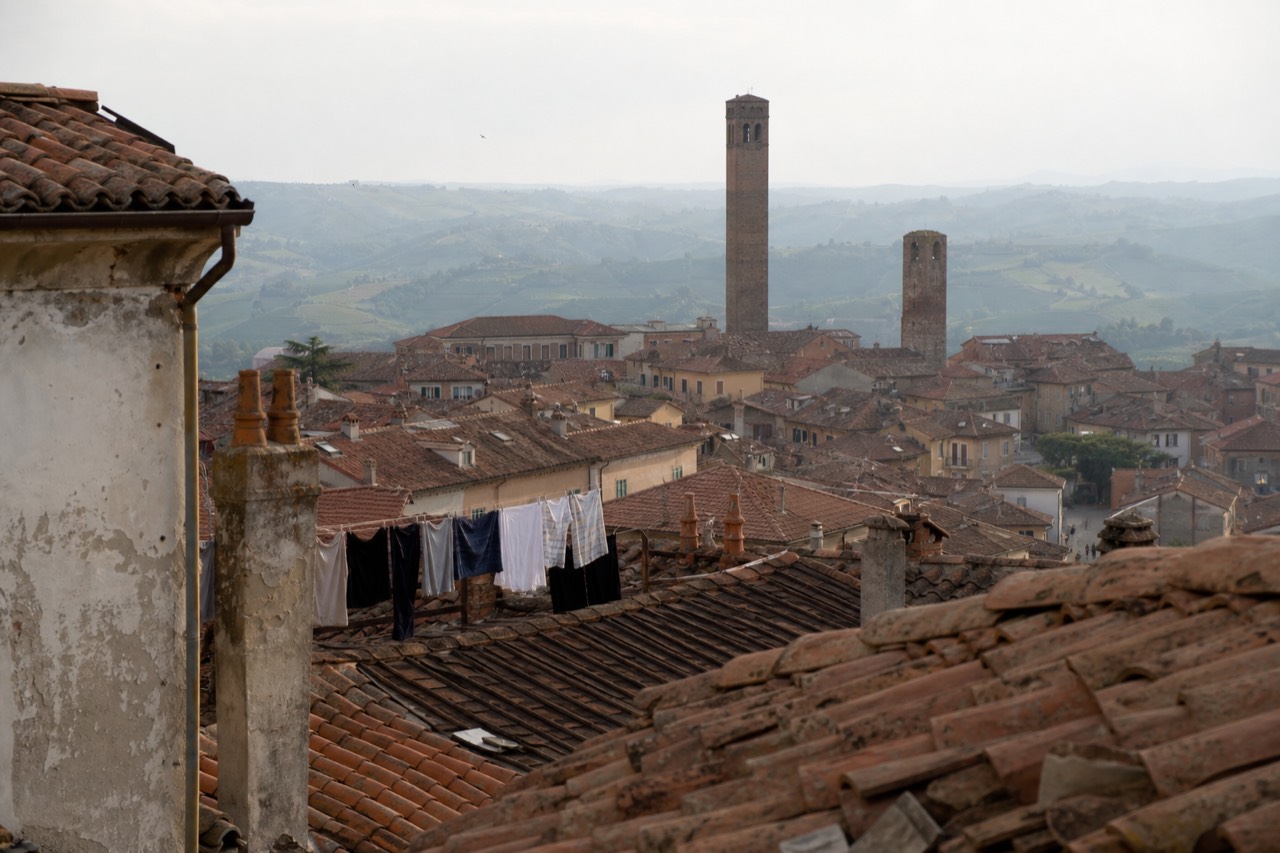
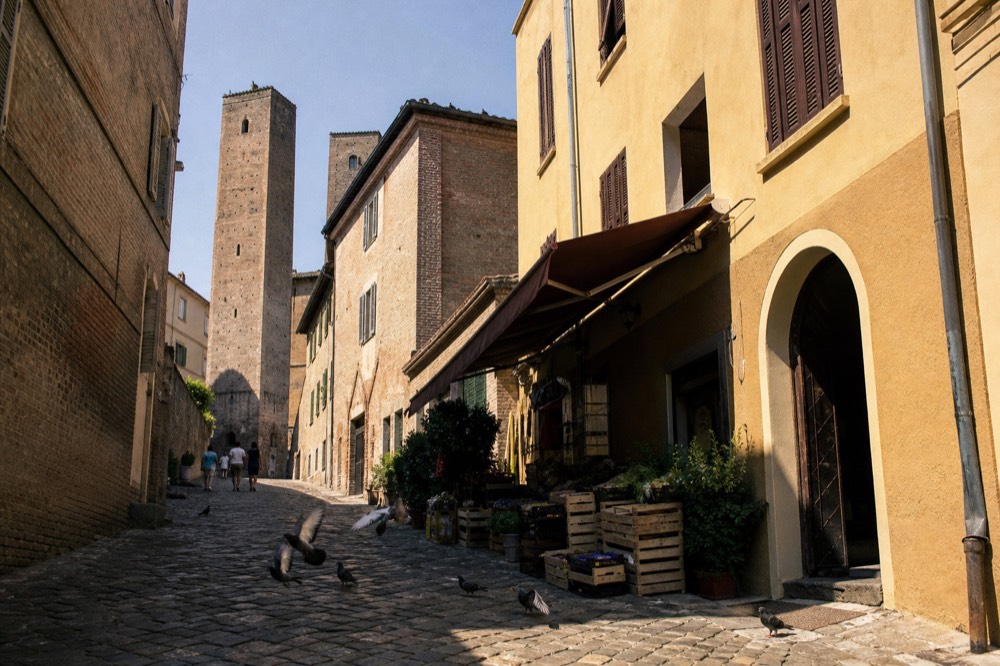
That distinction is the whole verdict in miniature. Alba is not beautiful the way La Morra or Neive is beautiful. It is beautiful the way a regional capital is beautiful: medieval towers, a tight historic core, a Saturday market that fills the streets, and food shops that punch far above the town's size. What it offers instead of a postcard is reach. From Alba you can reach Barolo in about 14 km, Barbaresco in about 13.5, La Morra in about 16, and the Roero town of Canale in about 14. No other settlement in the wine hills puts you within a short ride of this many of them.
The town also holds the region's calendar. The International White Truffle Fair, the 96th edition of which runs from 10 October to 6 December 2026, is staged here, not in the villages. So is Vinum, the spring wine fair whose 2026 edition ran across two weekends in late April and early May with 16 wine consortia in the historic centre. If your trip collides with either event, Alba stops being a convenient base and becomes the reason you came.
There is a counterweight worth stating plainly, and Gazzetta d'Alba reported it in detail: short-term rental accommodation across Langhe, Monferrato and Roero grew 500 percent over six years through 2025, squeezing the housing available to residents. Alba absorbs a large share of that pressure in peak weeks. The town is not yet overwhelmed the way some Tuscan hill towns are, but October weekends during the truffle fair are genuinely busy, and pretending otherwise would not help you plan.
For visitors arriving through Turin, the practical pattern is a day in the city first, then the train south. A guided city ride such as the Turin E-Bike Tour, rated 4.9 across 371 reviews and priced from $45 per person, covers the centre and the best viewpoint in about three hours, which is enough to see Turin without burning a whole day. The trio below compares it with two other Turin options.
What Makes Alba Such An Effective Base For The Langhe?
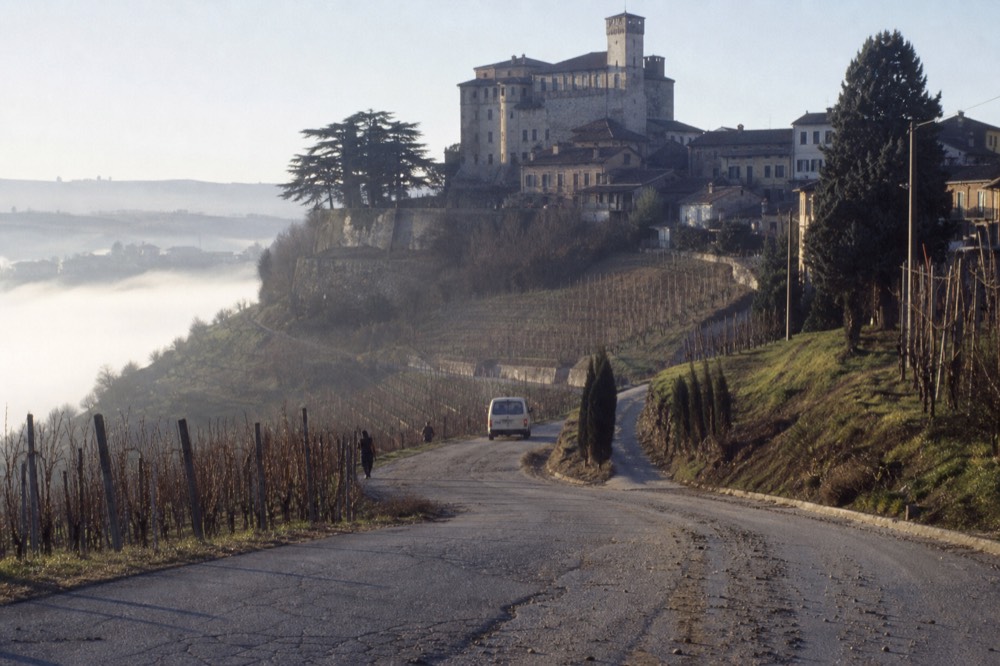
Alba works as a base for three verifiable reasons: geography, transport and opening hours. The town sits at 179 m on the Tanaro river, every major wine village lies within about 20 km, and direct trains link it with Turin in a little over an hour and a half. Its restaurants, shops and services also stay open year-round, which the smaller villages cannot claim.
Start with geography, because it is the strongest card Alba holds. The road distances below were computed by routing over the OpenStreetMap network, so treat them as close approximations rather than official figures, but the pattern they show is not in dispute.
| Destination from Alba | Roughly |
|---|---|
| Grinzane Cavour | 7.5 km |
| Barbaresco | 13.5 km |
| Barolo | 13.9 km |
| Canale (Roero) | 14.4 km |
| La Morra | 15.8 km |
| Monforte d'Alba | 19.6 km |
For a cyclist this is the ideal spread. A loop of the Barolo villages from Alba, taking in Grinzane Cavour, La Morra, Barolo, Novello, Monforte d'Alba, Serralunga d'Alba and Castiglione Falletto, measures about 67.9 km with roughly 877 m of climbing: a full but achievable day on an e-bike. The Barbaresco loop is gentler still, about 35.6 km with roughly 457 m of ascent. And when legs are tired, the Tanaro valley toward Asti is effectively flat, about 31 km with almost no climbing at all, which makes it the natural recovery ride. Our guide to cycling routes and surfaces in Piedmont breaks these profiles down in detail.
Transport is the second reason. Direct regional trains run between Turin and Alba with no change, taking around 90 minutes, and the Alba-Asti line reopened in 2023. From 14 June 2026 the Alba-Asti trains were re-timed to depart Alba at minute 05 and arrive Asti at minute 48, improving connections toward Milan. A cyclist can bring an assembled bike on any regional train marked with the bike pictogram for a €3.50 supplement, valid until 23:59 on the ticket date; a folded folding bike travels free. That is the whole rail toolkit for a car-free Langhe trip, and Alba sits at the centre of it.
One infrastructure note, because it gets misreported constantly: the 32.5 km Ciclovia delle Colline Unesco between Alba and Canelli is funded, with a €10 million regional grant, but it is not built. The Comune di Alba's own announcement says works were due to be assigned by September 2026. No sentence anywhere on this site will put a rider on that path until it exists, and any blog claiming you can ride it today is wrong.
The third reason is simply that Alba is a real town. Restaurants do not close for the whole of August the way some village trattorie do. Bike rental exists here. The hospital, the train station and the Saturday market are all within the same square kilometre. If something goes wrong with a trip, Alba is where things can be fixed, and that is worth more than most visitors realise until they need it.
Who Should Skip Alba And Sleep In A Village Instead?
Skip Alba as a base if your priority is atmosphere over access: the town is a working regional centre, not a romantic hilltop. Visitors who want to wake up inside a wine village, who have a car and do not need rail links, or who are travelling in a quiet season when village restaurants stay open anyway, will get more character from La Morra, Neive, Barbaresco or Monforte d'Alba for the same or less money.
The trade is a real one, and it is worth being blunt about it. Barolo village has 613 residents. Alba has 30,985. The experience of waking up in Barolo, of walking out of your door straight into a vineyard, cannot be replicated from a town apartment, and no amount of convenience compensates for that if it is what you came for. Neive, with about 3,192 people and one of the region's prettiest cores, and La Morra, perched at 508 m with the widest views over the Barolo hills, are the two villages most often named by returning visitors as the better sleep.
The cost of that choice is practical. Village restaurants close one or two days a week and some shut entirely in the low season. Public transport between villages is thin, so a village base effectively requires a car or booked tours. And the train station, the bike rental and the full Saturday market are all in Alba, which means a village-based visitor drives into Alba anyway for the things Alba does best.
A reasonable middle path: split the stay. Two or three nights in a village for the atmosphere, plus one or two in Alba for the market, the truffle fair if it is autumn, and the transport links out. Our guide to where to stay in Piedmont compares Alba, Barolo and Asti in more depth, and it reaches the same conclusion most long-weekend visitors do: Alba for the logistics, a village for the memory.
When Is The Best Time To Visit Alba?
September and October are the strongest months: the 2026 harvest began early, the white truffle season opens on 1 October, and the truffle fair runs from 10 October to 6 December, but those are also the busiest and most expensive weeks of the Alba year. May and June offer the best balance of weather and quiet, while July and August bring the region's worst heat and the August closure period around Ferragosto.
The seasonal logic is unusually legible in Alba because the town's calendar is anchored to two things: the grape harvest and the truffle. Nebbiolo picking in the Langhe began in early September 2026, accelerated by a record-hot summer, and growers described healthy, concentrated fruit despite the heat. By late September and early October the vines start to turn, Nebbiolo leaves going yellow and Dolcetto red, and the hills are at their most photographed. Then the truffle economy takes over: the legal white truffle hunting season in Piedmont runs from 1 October to 31 January, and the fair's Saturday and Sunday world truffle market is the public face of it (see Best Piedmont White). Online tickets for the 2026 market cost €6 plus fees and include entry to the MUDET museum.
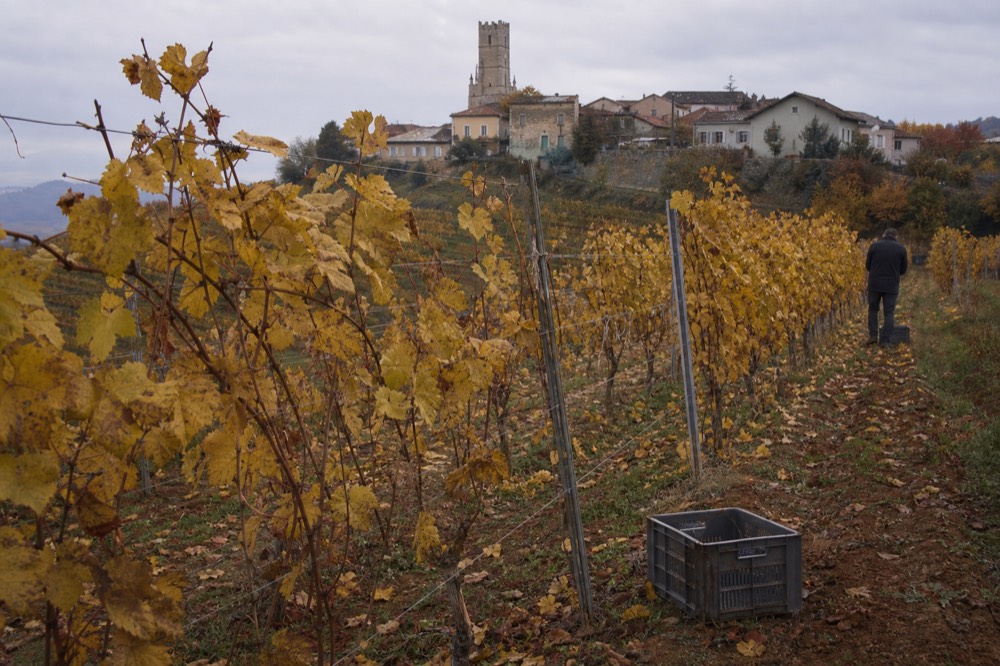
The honest warning about October: it is the peak. Alba short-let occupancy data points to October as the strongest month of the year, and the 2025-26 season saw white truffle prices at the Alba market run from roughly €2,500 to €7,000 per kilo after hot, dry October weather tightened supply. High truffle prices do not directly charge a hotel guest, but the crowding that comes with the fair does. Book early or come in late September instead, when the Festa del Vino fills the centre with 16 wine consortia and the truffle fair has not yet opened.
Summer deserves its own caution. Summer 2026 was the hottest on record in Piedmont, surpassing 2003, with an 18-day June heat wave in Turin, and the Langhe hills offer little shade on the climbs. July is the driest month of the year at Alba, averaging about 37 mm of rain against November's 115 mm, but average highs of 29.2 °C make midday riding unpleasant. May and June average 21.5 °C and 26.1 °C respectively, and the vines are green and healthy before the harvest crowds. Our month-by-month guide to visiting Piedmont covers the full trade-off.
How Much Does A Trip To Alba Actually Cost?
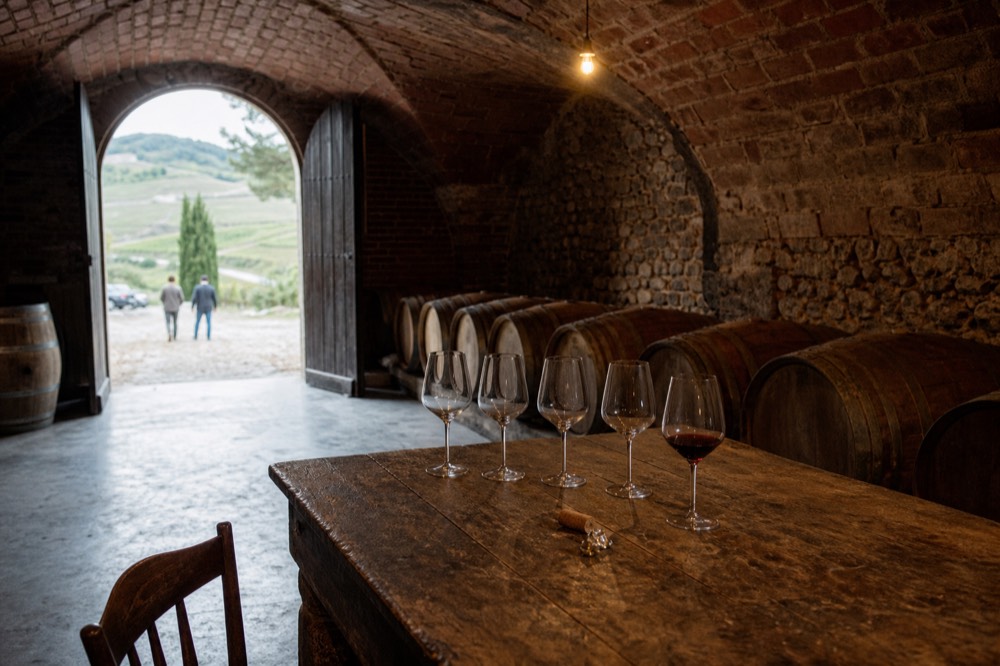
Alba is mid-priced for northern Italy: tastings with a cellar visit in the area are listed from around €25 to €50 per person, truffle hunting experiences are listed from €50, and the fair's tasting events run €18 to €30, while a guided e-bike tour of the surrounding vineyards starts at $93 per person and private options from $118. Accommodation peaks hard in October and softens in spring.
Those tasting and truffle figures are from-prices on operator listings, not averages, so treat them as a floor and check the specific cellar or experience. What they establish is the shape of a budget: the expensive line items in the Langhe are wine and truffles, and both are optional in a way that accommodation and transport are not. A visitor can spend a full day in the hills, picnic included, on a guided e-bike outing such as the Barolo Wine Region tour, about six hours through the vineyards from $93 per person, and spend nothing beyond that except lunch.
| Typical spend | Range to expect |
|---|---|
| Wine tasting with cellar visit, Alba area | listed from €25-50 per person |
| Truffle hunting experience | listed from €50 per person |
| Festa del Vino tasting, September | €18 including glass and bag |
| Truffle fair online ticket | €6 plus fees, includes MUDET entry |
| Guided e-bike vineyard tour | from $93 per person |
| Private e-bike tour, Barolo or Barbaresco | from $118 per person |
Two things keep costs down. First, the bike supplement on regional trains is €3.50 per day, so moving between Alba, Asti and Turin with a bike is cheap. Second, the law helps a visitor's packing list: Italy has no helmet requirement for cyclists of any age, so no one needs to fly one in, though a helmet is still sensible on the busier Langhe roads. What is legally required is a bell on the bike and a reflective vest if you ride outside built-up areas after dark or through tunnels, per article 182 of the highway code. Rental bikes in Alba should come with both, but check.
The verdict on value, then: Alba is not a cheap town in October, and it is a fair-priced one in almost every other month. The town repays the visitor who uses it as a launch pad, because the launch costs, the train, the bike, the rental, are all modest, and the expensive things are the ones you choose. That is the core case this site, Piedmont Bike Tours, makes for the town: not that Alba is the prettiest place in the Langhe, but that it is the one from which everything else becomes easy.
For the ride back out through Turin, the viewpoint e-bike tour above is the pairing this site recommends most often, and the trio below gathers the Turin options one last time for anyone building a city-plus-hills itinerary.
Common Questions About Visiting Alba
Is Alba, Italy worth visiting?
Yes for most travellers. Alba is the most practical base in the Langhe, with every major wine village within about 20 km, direct trains to Turin, and the region's biggest events, the truffle fair and the spring wine fair. It is a working market town rather than a romantic village, so come for the reach and the food, not for postcard views.
How many days do you need in Alba?
Two nights is the practical minimum: one day for a Barolo villages loop of about 68 km and one for the town itself, the market and a cellar visit. Three or four nights lets you add Barbaresco, the Roero across the Tanaro, and a truffle or harvest event if the season allows.
Is Alba better than staying in Barolo village?
Alba is better for transport, restaurants and services; Barolo village, with 613 residents, is better for atmosphere and waking up in the vineyards. Many visitors split the stay, a village night or two for the views and Alba for the logistics.
What is the best month to visit Alba?
September and October bring the harvest, the vine colours and the opening of the white truffle season on 1 October, but October is also the busiest month. May and June give warm, quieter riding weather with green vineyards and far fewer crowds.
Can you visit Alba without a car?
Yes. Direct regional trains link Turin and Alba in around 90 minutes, the Alba-Asti line runs daily, and guided e-bike tours and bike rental operate from the town. A car helps for reaching small cellars on your own schedule, but a car-free trip built on trains, e-bikes and booked tours is entirely workable.