Self-Guided Bike Tours In Italy: Riding The Langhe Without A Guide
A self-guided bike tour in Italy's Langhe region gives you the freedom to ride through Barolo and Barbaresco vineyards on your own schedule, without a guide. Rent an e-bike, follow quiet roads, and stop at cellars when you choose.
 By Chiara Barbero, Piedmont Bike Tour Guide and Langhe Cycling Specialist
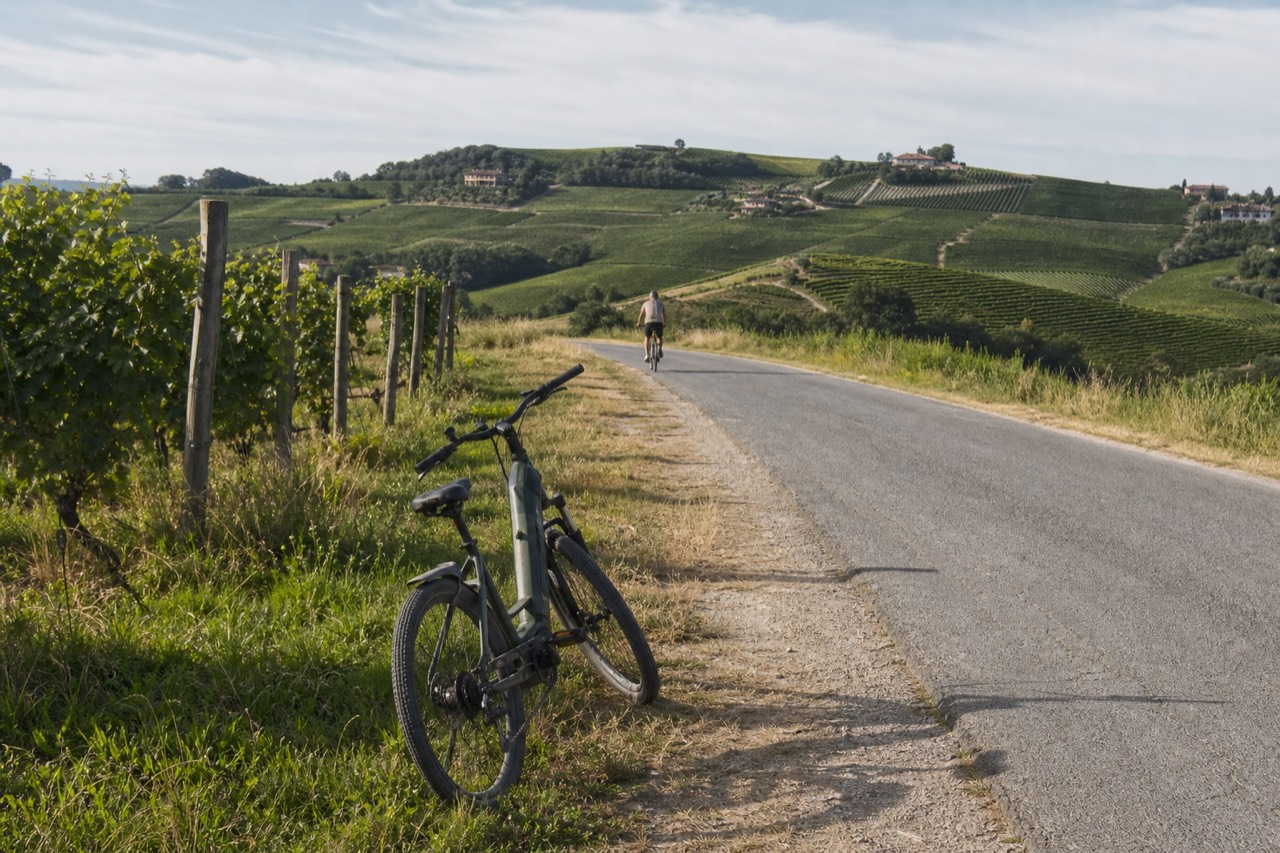
Short answer
Yes, you can ride the Langhe hills on a self-guided bike tour. Rent an e-bike from $52 per day, follow well-signed roads, and use offline maps to navigate the 11 Barolo villages. You'll miss pre-booked cellar visits, but you gain flexibility and save on guide fees.
A self-guided bike tour in Italy’s Langhe region strips away the fixed itinerary and the group pace. You rent an e-bike, pick a loop from Alba, and ride through Barolo and Barbaresco villages on your own schedule. The roads are open, the distances are short, and the hills, while real, are manageable with a pedal-assist motor. This guide covers what you need to know to ride independently, from navigation and route planning to the trade-offs of skipping the guide.
What Is A Self-Guided Bike Tour In Italy?
A self-guided bike tour means you rent a bicycle or e-bike and ride a pre-planned route without a guide. In the Langhe, you can rent an e-bike from $52 per day, follow well-signed roads through the UNESCO vineyard landscape, and stop at wineries on your own. You handle navigation, bookings, and pace yourself.
The Langhe is one of the few wine regions in Europe where self-guided cycling works so naturally. The 11 Barolo villages sit within a 20-kilometre radius of Alba, and the roads between them are quiet, paved, and rarely steep. You do not need a support van or a guide to find your way: the hills themselves orient you, and the distances are short enough that a wrong turn costs minutes, not hours. The rental operator’s listing typically includes a suggested route and a list of cellars that welcome drop-in visitors, though you should still call ahead during harvest or truffle season.
What you give up is the guide’s local knowledge: the family cellar that does not advertise, the shortcut through a hazelnut grove, the story behind a particular cru. But you gain the freedom to linger at a viewpoint, skip a climb, or change your mind at lunch. For many riders, that trade is the whole point. If you are new to the area, our cycling in Piedmont overview explains the terrain and the main riding zones.
How Do You Navigate The Langhe Hills Without A Guide?
Navigation on a self-guided Langhe ride is straightforward. The roads are well-signed, the villages are close together, and an offline map on your phone is enough to keep you on track. You will not need a GPS unit or a printed cue sheet, though a phone mount and a power bank are useful on longer loops.
The Langhe road network is a web of small provincial roads that connect every village. Signage is in Italian, but place names are clear, and the brown tourist signs pointing to “Barolo” or “La Morra” are frequent. A downloaded offline map on Google Maps or a cycling app like Komoot gives you turn-by-turn directions even without mobile signal, which can be patchy in the deeper folds of the Alta Langa. Cell service is generally reliable near the towns, but downloading the map before you leave Alba is the safer choice.
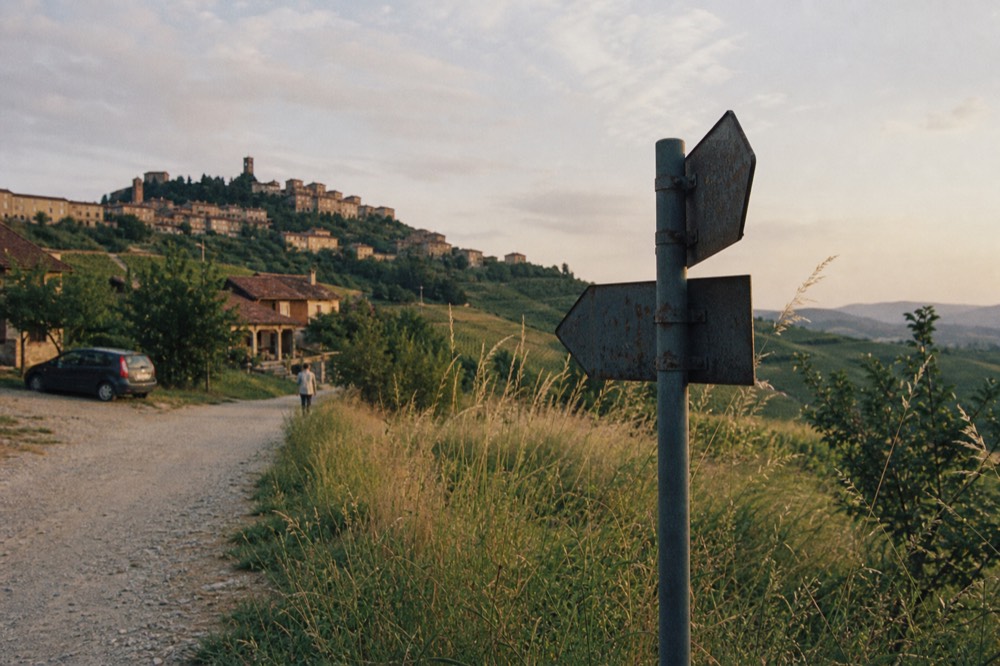
The distances between the key villages are short enough that you can correct a navigation error without losing much time. From Alba, Grinzane Cavour is only 7.5 km away, and even La Morra, the highest of the Barolo villages, is under 16 km. The table below gives the distances; all are short enough to reach in under an hour at a relaxed pace.
| From Alba to | Distance (km) |
|---|---|
| Grinzane Cavour | 7.5 |
| Neive | 13.4 |
| Barbaresco | 13.5 |
| Barolo | 13.9 |
| Serralunga d’Alba | 15.5 |
| La Morra | 15.8 |
These distances are real, routed over the road network, and they confirm that no village is far from Alba. For a deeper look at the individual routes, our Barolo bike tour routes guide maps out the classic loops in detail.
If you want to compare a self-guided rental with guided options that handle navigation for you, the three tours below cover the same hills with different levels of support.
What Do You Lose By Riding Without A Guide?
The main thing you lose on a self-guided Langhe bike tour is pre-arranged cellar access. A guide books tastings in advance, often at wineries that do not accept walk-ins. Without a guide, you will need to call ahead or stick to larger, visitor-friendly cellars. You also miss the commentary, but you gain complete flexibility and a lower cost.
The guided tours in the Langhe, like the Barolo scenic e-bike tasting or the Neive to Barbaresco cycling tour, include a guide who has already called the cellar, chosen the wines, and timed the stop to fit the ride. On a self-guided rental, that work falls to you. Some cellars in Barolo and Barbaresco welcome drop-in visitors, especially the larger ones with dedicated tasting rooms, but the smaller, family-run producers often open only by appointment. If you want to taste at a specific cru, you should contact the winery a day or two ahead.
The cost difference is significant. A self-guided e-bike rental starts at $52 per day, while a guided half-day tour with tastings starts around $186 per person. Over two or three days of riding, the savings add up, and you can use the difference to pay for tastings and lunch. The rental also gives you the bike for a full day, so you can ride longer and stop more often.
The table below compares the self-guided rental with two guided tours that cover similar ground.
| Tour | Type | Duration | From | Includes |
|---|---|---|---|---|
| Langhe: E-bike rental and food and wine experiences | Self-guided rental | ~1 day | $52 | E-bike, suggested route, food and wine experiences |
| Barolo: Guided Scenic E-Bike Tour with Wine Tasting | Guided tour | ~5 hours | $186 | Guide, e-bike, wine tasting |
| Neive: Cycling Tour from Neive to Barbaresco | Guided tour | ~5 hours | $186 | Guide, bike, cycling tour |
All three tours let you ride the same hills. The choice is really about how much you want to arrange yourself. For more on the e-bike experience, our e-bike tours in Italy guide explains why pedal assist suits the Langhe so well.
If you are leaning toward the rental, the operator’s listing is the place to check availability and cancellation terms.
Which Self-Guided Routes Work Best In The Barolo Hills?
The best self-guided route from Alba is the Barolo villages loop: Alba to Grinzane Cavour, La Morra, Barolo, Novello, Monforte d’Alba, Serralunga d’Alba, Castiglione Falletto, and back. It covers about 68 km with roughly 877 m of climbing, all on quiet roads, and passes every major Barolo commune.
This loop is the classic introduction to the Langhe. You can ride it clockwise or counter-clockwise, but starting toward Grinzane Cavour puts the longest climb, the pull up to La Morra, early in the day when your legs are fresh. From La Morra, the road undulates through Barolo and Novello before a gentle descent toward Monforte. The stretch from Monforte to Serralunga is the quietest part of the ride, with long vineyard views and very little traffic.
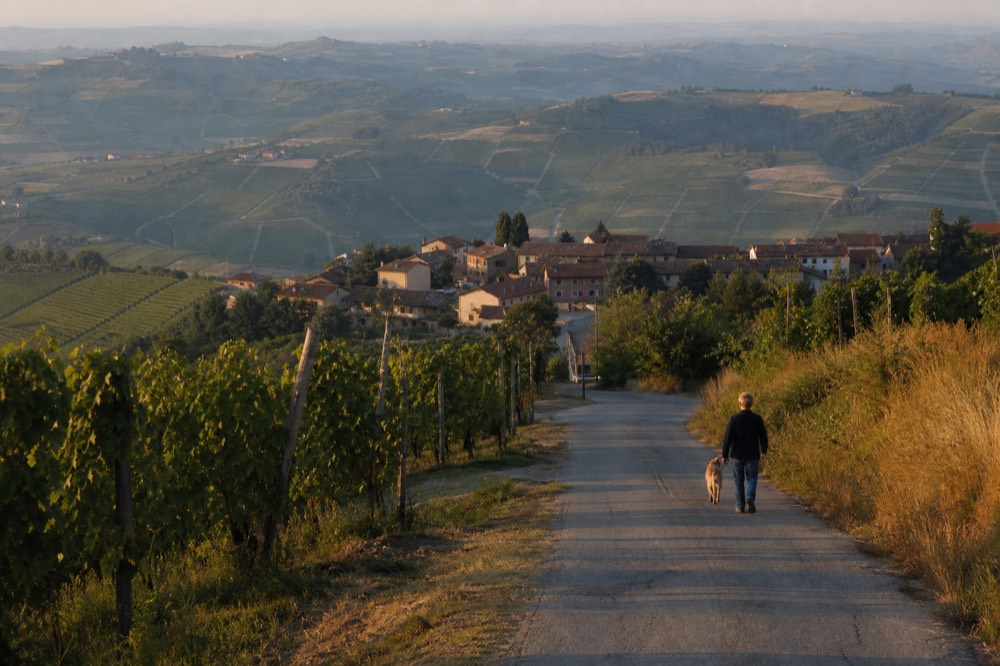
A shorter alternative is the Barbaresco loop, about 36 km with 457 m of climbing, taking in Barbaresco, Neive, and Treiso. This route is less demanding and works well as a half-day ride with a long lunch stop. For a flat option, the Tanaro valley run from Alba to Asti covers 31 km with almost no climbing at all, following the river on quiet secondary roads. This flat corridor is one of the few genuinely easy rides in the region, and it links two of Piedmont’s most interesting towns.
The rental e-bike from Alba gives you the range to attempt any of these loops without worrying about battery life. As Piedmont Bike Tours points out, the Langhe’s compact geography means you are never more than an hour’s ride from a village with a café and a water fountain.
If you want to ride the Barolo loop on your own, the rental below includes a suggested route and local food stops.
What Are The E-Bike Rules And Rental Costs In Italy?
E-bikes in Italy are limited to 250 watts of continuous power and 25 km/h of motor assistance. They require no licence, plate, or insurance, and are treated legally as bicycles. A rental e-bike in the Langhe starts at $52 per day. You must carry a bell and, if riding outside built-up areas after dark, a reflective vest.
Italian law treats a compliant pedelec exactly like a regular bicycle. You can ride it on any road open to bikes, including the provincial roads that connect the Barolo villages. The only equipment requirements beyond the bike itself are a working bell and, outside built-up areas from half an hour after sunset to half an hour before sunrise, a high-visibility vest. There is no helmet law for cyclists of any age in Italy, though wearing one is strongly recommended on the Langhe’s descents.
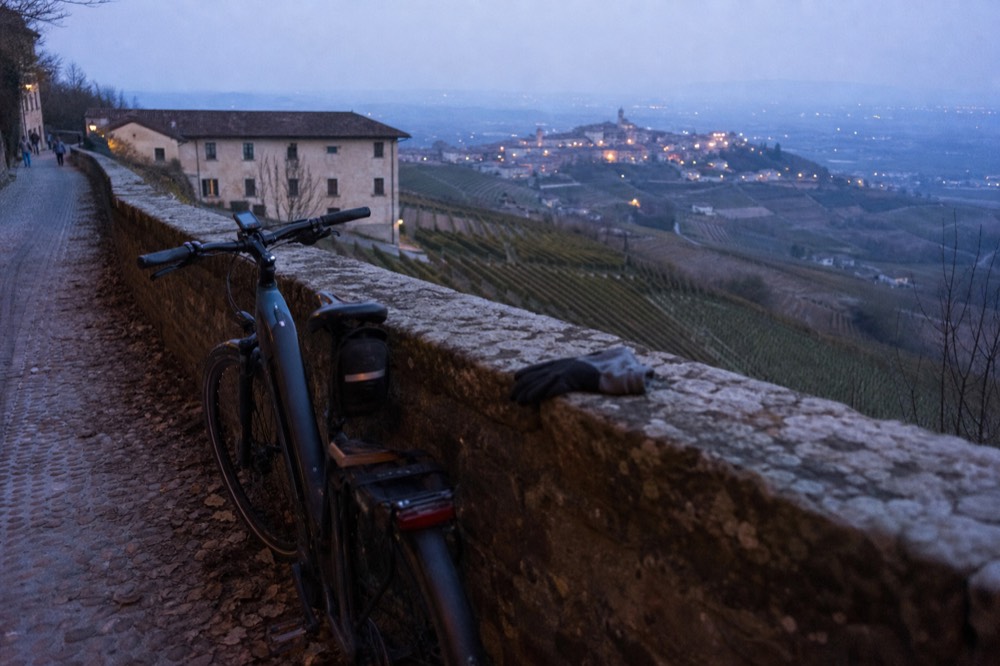
Rental costs are straightforward. The self-guided rental from Alba, listed from $52, includes the e-bike, a helmet, a suggested route, and pointers to food and wine experiences. You can also find road bike rentals in Castiglione Falletto and e-bike networks in the Roero, though the Alba-based option is the most convenient for a Barolo loop. If you want to explore the quieter side of the region, our Monferrato and Roero cycling guide covers the routes north of the Tanaro.
For riders who prefer a guide to handle the logistics, the guided e-bike tour below covers the same terrain with a pre-arranged wine tasting.
How Much Climbing Should You Expect On A Self-Guided Ride?
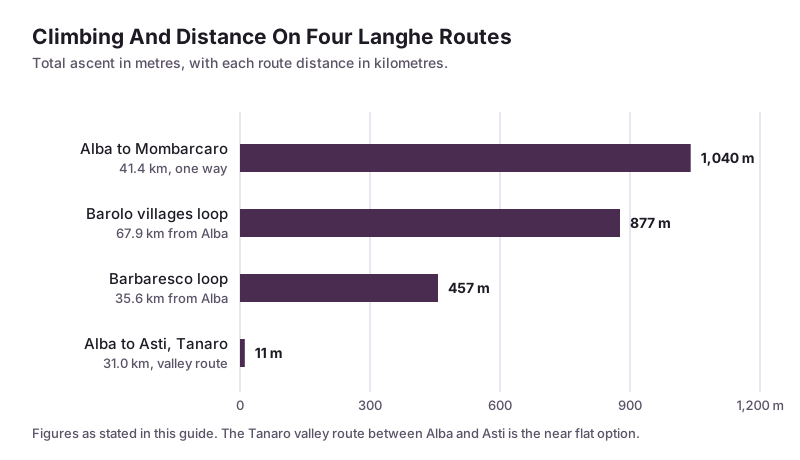
From Alba, the Barolo villages loop covers roughly 68 km and gains about 877 m, topping out near 521 m around La Morra. The Barbaresco loop is easier at 457 metres over 36 km. An e-bike makes both loops accessible to most riders, but you should still expect a few sustained climbs of 2–3 km.
The Langhe is not the Alps. The climbs are short, rarely exceeding three kilometres, and the gradients are moderate. The pull from the Tanaro valley floor up to La Morra gains about 329 metres of elevation, but it is spread over several kilometres and never feels steep. The Alta Langa, beyond Monforte and Serralunga, is a different story: the ride from Alba to Mombarcaro climbs 1,040 metres and tops out at 858 metres, the highest point in the Langhe.
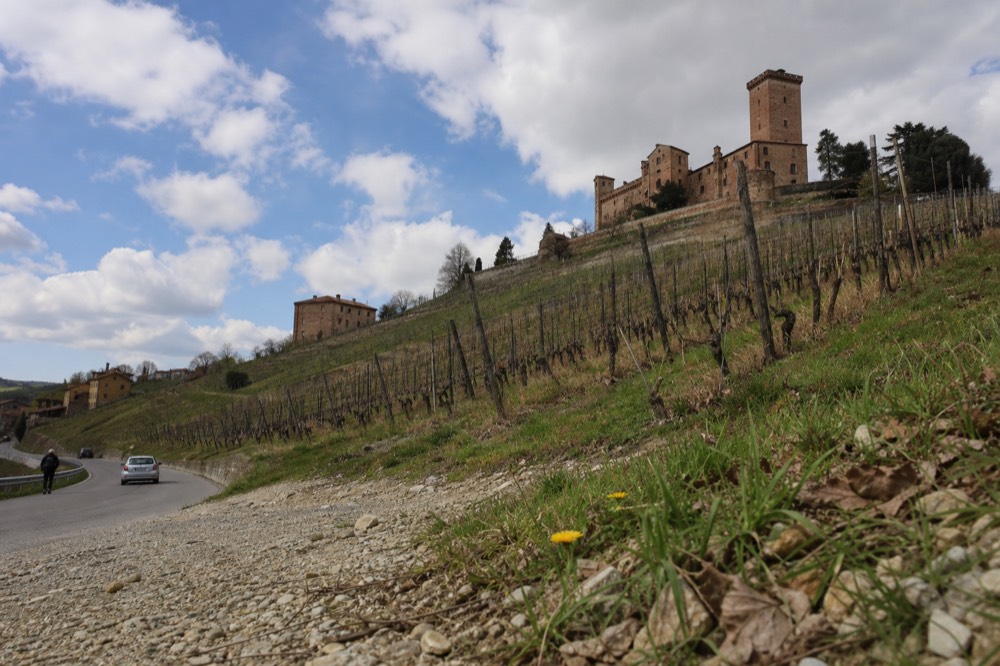
The table below puts the climbing in perspective across four common Langhe routes.
| Route | Distance (km) | Ascent (m) |
|---|---|---|
| Barolo villages loop from Alba | 67.9 | ~877 |
| Barbaresco loop from Alba | 35.6 | ~457 |
| Alba to Mombarcaro (one way) | 41.4 | ~1,040 |
| Alba to Asti along the Tanaro | 31.0 | ~11 |
The Tanaro valley run is the flat option, with almost no climbing at all. It is the route to choose on a rest day or if you want to link Alba and Asti without any effort.
When Is The Best Time For A Self-Guided Bike Tour In Piedmont?
May, June, and September offer the best riding weather in the Langhe, with average highs between 21°C and 24°C and manageable rainfall. September is the standout month, coinciding with the Nebbiolo harvest and the start of the white truffle season. Avoid July and August for the heat, and November for the rain.
The Langhe’s climate is continental, with warm summers and cold, foggy winters. Alba's 30-year averages put July first for heat, 29.2°C on average, and also for dryness, just 37 mm of rain. November flips the picture with 115 mm, the wettest of the year. The harvest runs from late August for early varieties through to early October for Nebbiolo, so a September ride puts you in the vineyards while the grapes are still on the vine.
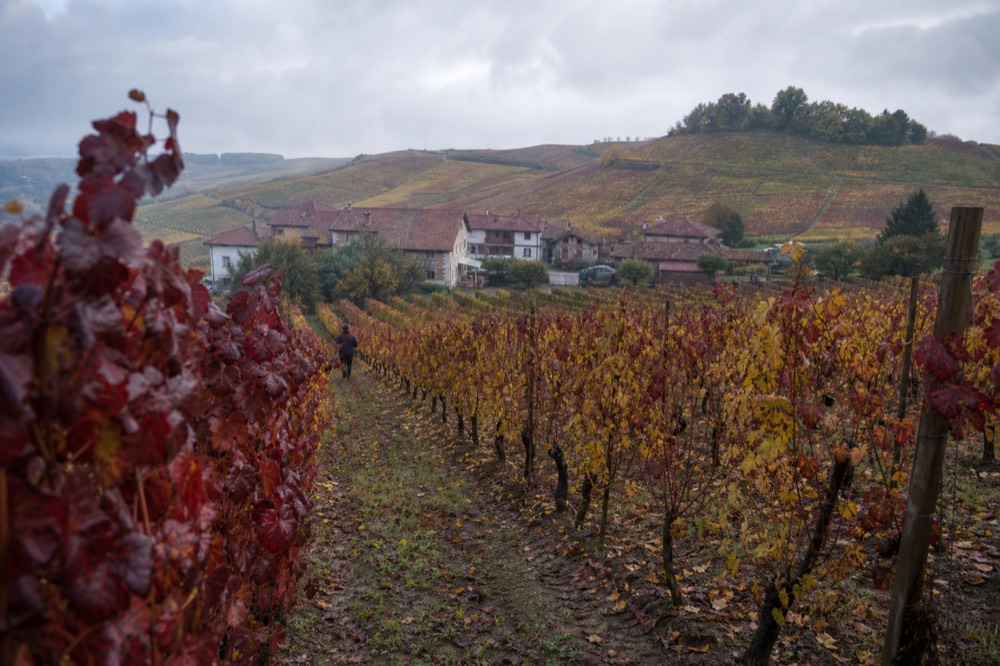
Alba's white truffle fair fills the calendar from 10 October to 6 December, drawing crowds and pushing accommodation prices up. If you plan a self-guided tour during truffle season, book your rental and your room well ahead. The riding itself is still pleasant in early October, though the days are shorter and the reflective vest rule kicks in earlier.
For riders who want a guided harvest-season experience, the cycling tour from Neive to Barbaresco runs through the same autumn landscape with a guide to handle the cellar visits.
What Should You Pack For A Day Of Self-Guided Riding?
Pack water, snacks, an offline map on your phone, a reflective vest, a bell, sunscreen, and cash for tastings. A power bank is useful for longer loops, and a lightweight rain jacket is worth the space even in summer. The rental e-bike usually comes with a helmet and a lock.
The Langhe hills have few shops between villages, and the water fountains in the town squares are not always obvious to a visitor. Carry at least two litres of water on a warm day, and refill at cafés when you stop. Cash is still preferred at smaller cellars and trattorias, though most larger wineries accept cards.
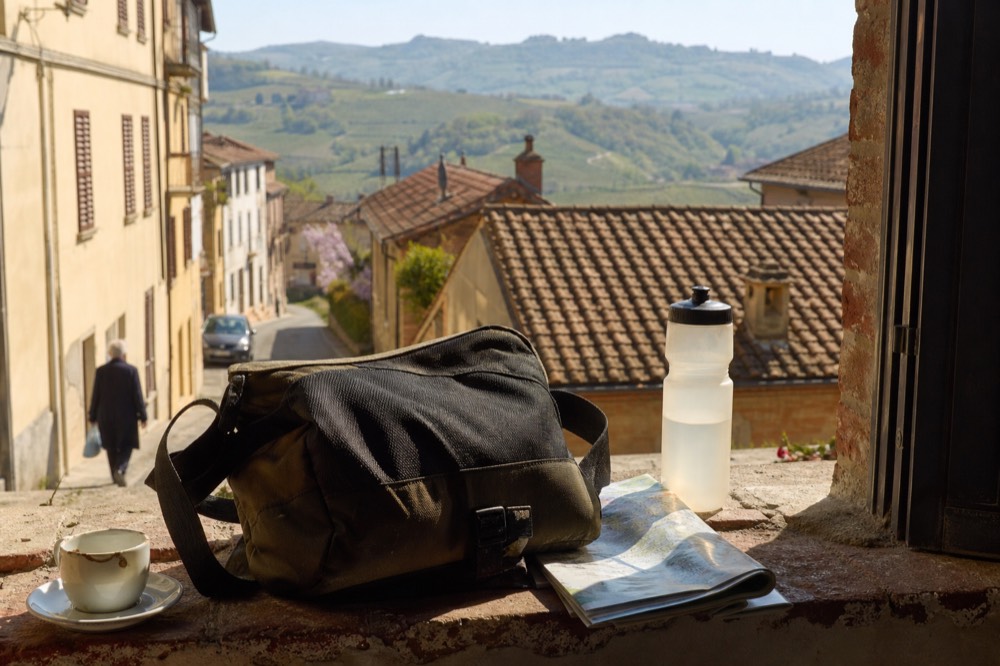
The reflective vest and bell are legal requirements in Italy, and the police do occasionally check. A vest that folds into a small pouch weighs almost nothing and can save you a fine. The bell is required equipment on any bicycle, and most rental e-bikes come with one fitted; check before you leave the shop. A small first-aid kit and a multi-tool are also worth the space, as bike shops are sparse outside Alba.
How Do You Book Wine Tastings On A Self-Guided Tour?
Book wine tastings by contacting the cellar directly, either by phone or email, a day or two before your ride. Some larger wineries accept walk-ins, but the smaller producers in Barolo and Barbaresco often require an appointment. The rental operator’s listing may include a list of cellars that welcome cyclists.
The Langhe’s wine tourism infrastructure has grown rapidly, and many cellars now have dedicated tasting rooms with set hours and fixed-price flights. Tastings typically range from €25 to €50 per person for a flight of four or five wines with a cellar tour, though prices vary. During the harvest in September and October, many producers are too busy to host visitors, so calling ahead is essential.
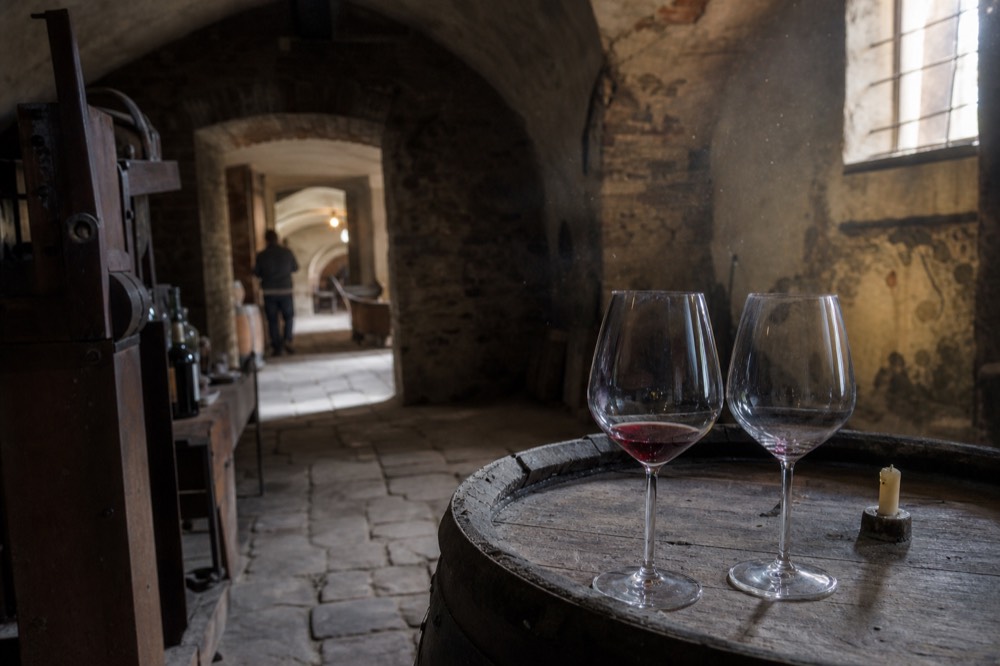
If you prefer to leave the bookings to someone else, the guided tours handle all the cellar arrangements. The trio of tours below covers the full range from fully independent to fully guided, so you can choose the level of support that suits you.
Common Questions About Self-Guided Bike Tours In Italy
Can you ride a self-guided bike tour in Italy without speaking Italian?
Yes. The road signs use place names, and most cellar staff in the Langhe speak some English. A few Italian phrases for ordering and thanking go a long way, but you do not need fluency to navigate or book tastings.
Do you need a guide to ride the Langhe hills?
No. The roads are open to cyclists, and the distances between villages are short. An e-bike rental with a suggested route is enough for most riders. A guide adds convenience and access to pre-booked cellars, but it is not required.
What is the cheapest way to do a self-guided bike tour in the Langhe?
Rent an e-bike from $52 per day and ride the Barbaresco loop, which is shorter and has less climbing. Book tastings directly with cellars rather than through a package, and stay in Alba or a nearby agriturismo to keep accommodation costs down.
Are the Langhe roads safe for self-guided cycling?
Yes. The provincial roads between the villages carry light traffic, and drivers are generally courteous. The main roads, like the SP3 and SP7, have more traffic, but you can avoid them by sticking to the smaller connecting roads. A reflective vest is required outside built-up areas after dark.
How long does a self-guided Barolo loop take?
The full Barolo villages loop from Alba takes about five to six hours of riding at a relaxed pace, plus stops for tastings and lunch. You can shorten it by skipping Serralunga or Novello and still ride through the core villages.
Can you rent a road bike instead of an e-bike for a self-guided tour?
Yes. Road bike rentals are available in Alba and Castiglione Falletto, though the hills are demanding without motor assistance. If you are a fit road cyclist, a standard bike works well, but an e-bike opens the Langhe to a wider range of riders.